
Cinema Palette! My Year Watching Every Ingmar Bergman Film!

December 21, 2025
In January of 2025, I decided to finally embark on my ambitious journey to watch every single film featured in the Criterion Ingmar Bergman Cinema collection. I was familiar with, and had seen, a handful of his classic movies; THE SEVENTH SEAL and THE VIRGIN SPRING, but I was otherwise going into this somewhat blindly. What follows are my Letterboxd reviews and initial reactions to each individual film, from the dates that I watched them. I hope it’ll encourage some of you out there to watch some of Bergman’s filmography, or even better, brave the entire box set as I have! Doing this year-long marathon is the inspiration for the upcoming podcast I plan to co-host with my friend Robert Meyer Burnett, “Cinema Palette,” where we do deep dives into celebrated directors in the hopes of turning some young cinepiles onto their work! A chance to celebrate the greatest auteurs cinema has had to offer. And here’s a great place to start! Enjoy!
JANUARY 2025:
SMILES OF A SUMMER NIGHT (1955)
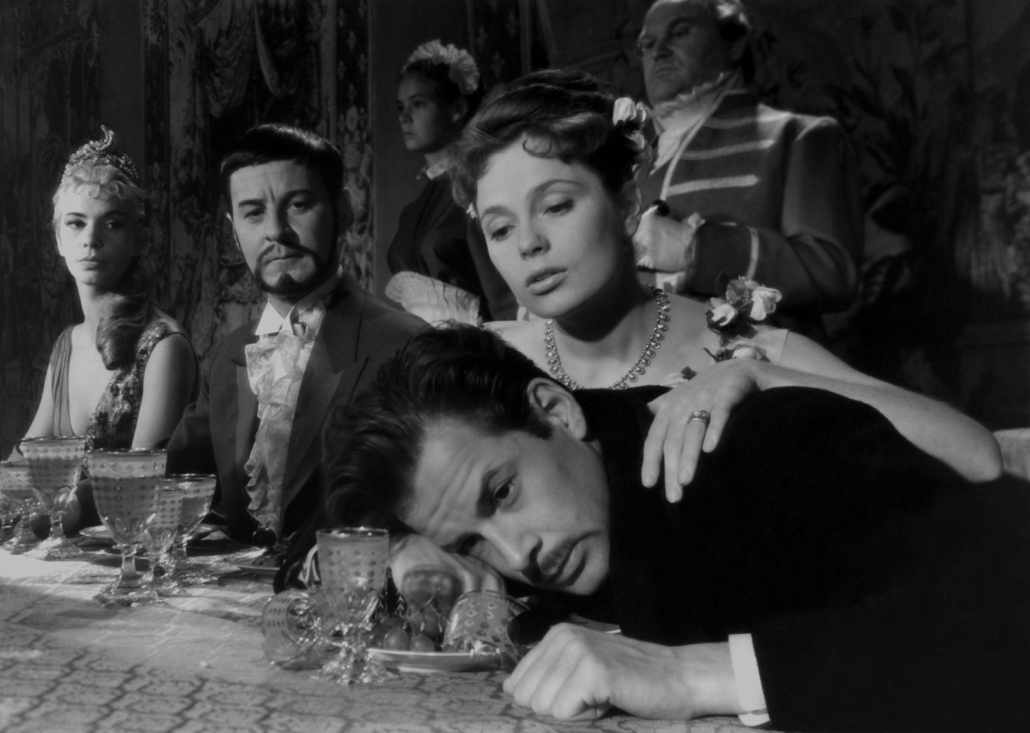
You know, I had seen only a few select films by Ingmar Bergman. But I picked up the epic Criterion boxset years ago and had yet to fully dive in. Well, this was the night! And what I love about this collection is it is fully curated like a Bergman Film Festival rather than going in chronological order. So the first film in this set is SMILES OF A SUMMER NIGHT.
I’m so glad I watched this completely blind because I was treated to a very funny, quirky, comedy of errors. A multi-faceted and complicated love quadrium! A lawyer is remarried to a very young wife. Who clearly has feelings for her husband’s more age appropriate son. Who in turn is having a tryst with the maid. Whereas the lawyer really still harbors feelings for his old flame, the actress! But she is the mistress to her current boyfriend, a soldier! Who is also married to a young woman. And one weekend, they are all invited to the same getaway spot to untangle this mess!
It’s a wonderful farce, and what caught me off guard is… here’s a Swedish movie. From 1955! That has complicated relationships, romantic feelings, and rich characters, and it was just as relevant and timely and relatable as ever! THAT is the power of truly great cinema. Excited now to continue my Bergman journey!
CRISIS (1946)
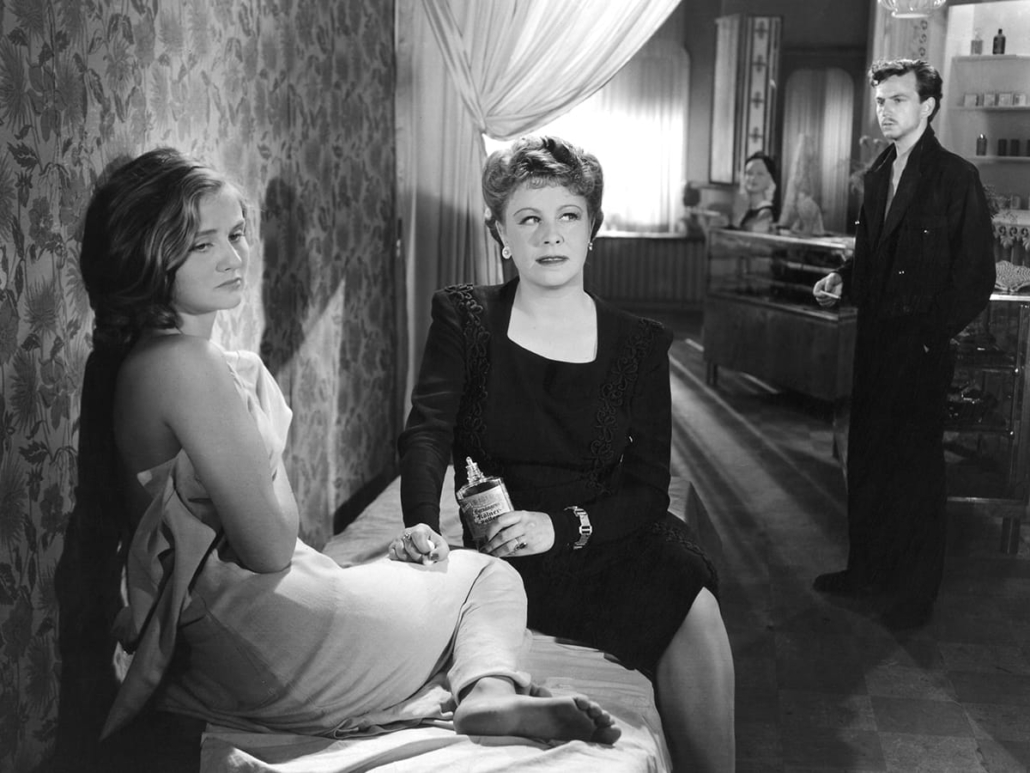
Continuing my own personal Ingmar Bergman film festival, courtesy of the epic Criterion Collection box set, film number 2 is: CRISIS.
Another beautifully told tale about the family we make versus the actual family we were born with. Mutti (Dagny Lind) is a humble, simple woman; the town’s piano instructor that’s been raising Nelly (Inga Landgré) for years. One day, Nelly’s biological mother, Jenny (Marianne Löfgren), arrives to town and after 18 years away is determined to bring Nelly back home with her to work in her salon in the big city.
It’s got a bit of a IT’S A WONDERFUL LIFE vibe to it in the sense that, what does Nelly really want out of her life? Is she bored with her simple-minded yet sweet Mother Mutti and living in this small town? Or does she want to work in the city for her real mom at an upscale Salon and make money to afford the more material things in life?
Great little film. And a timeless human story.
A SHIP TO INDIA (1947)
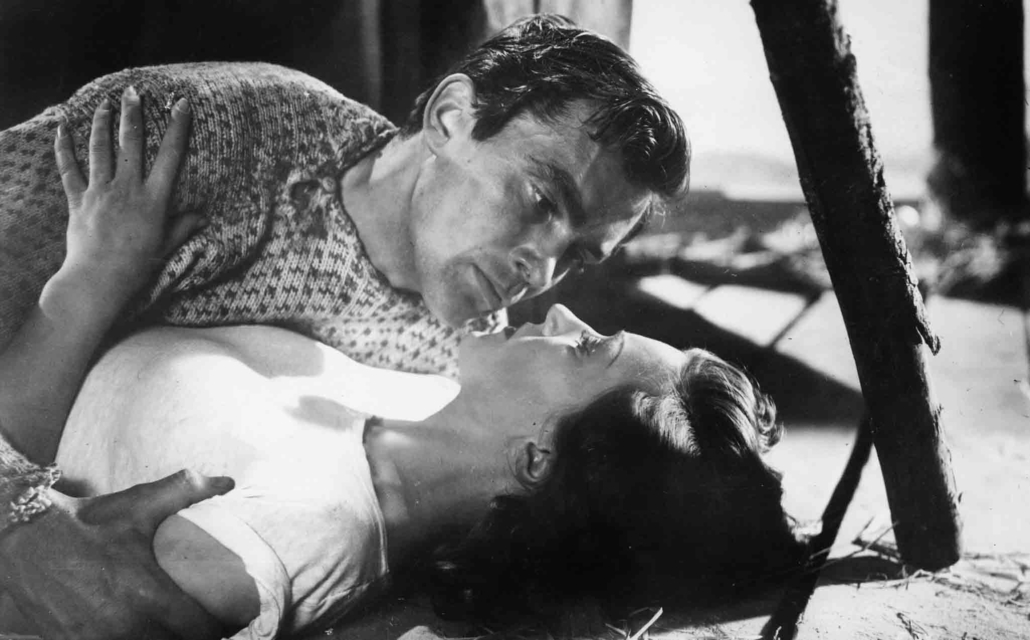
Bergman film number three! And now I’ve recognized a very odd pattern. Two of these three films I’ve watched so far have a older father character with a young mistress / wife who happens to form feelings for the son!
It’s not quite as scandalous as it sounds. After several years at sea as a sailor, Johannes (Birger Malmsten) returns back home for a night. While reconnecting with old friends, he’s also in search of his love Sally (Gertrud Fridh) whom he left behind. Through flashbacks, we learn of the complicated dynamic between himself, his parents, and Sally. In particular his contentious relationship with his domineering father (Holger Löwenadler), who is slowly going blind. He also desires to be his own man and break away from the shadow of his father.
Yet again, I’m in awe of the fact that these movies are all from a completely different time period, and a different country, and yet, being human is universal. Wish modern movies would take a queue from Bergman!
WILD STRAWBERRIES (1957)
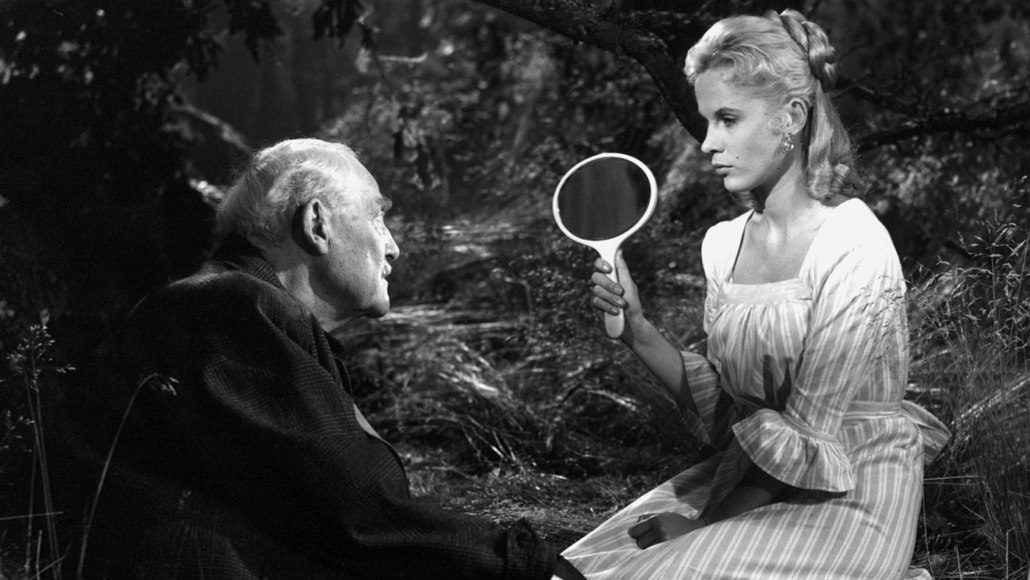
Movie number 4 from the Bergman box set and another, as the kids would say, banger.
An old doctor (Victor Sjöström) is in route to receive a lifetime award in his hometown and decides to drive with his daughter-in-law by car. Along the way, he reflects back to key moments and memories in his life, has bizarre dreams and visions of past events, and they end up picking up a slew of quirky young hitchhikers.
The IMDb synopsis reads, “After living a life marked by coldness, an aging professor is forced to confront the emptiness of his existence.” I mean, I guess, technically, that’s what the movie is about but that makes it sound dark as hell. I thought a lot of it was about finally reflecting back on memories where he was passive and finally FEELING something retroactively. The sadness, the anger, the heartbreak. Letting it all come to the surface.
Gorgeously shot and wonderfully acted, especially by lead Victor Sjöström.
Oddly enough, the whole movie is about him reflecting back on his entire life, and as it turns out, Sjöström died a short three years after this film came out. Gone, but forever immortalized in this beautiful movie.
Lastly, Victor’s one condition to do the movie, as I learned from Bergman’s introduction on the disc, was that he had to promise him a shot of whiskey every day at 5PM. A way to make sure the work day was over by then. LEGEND!
FEBRUARY 2025:
TO JOY (1950)
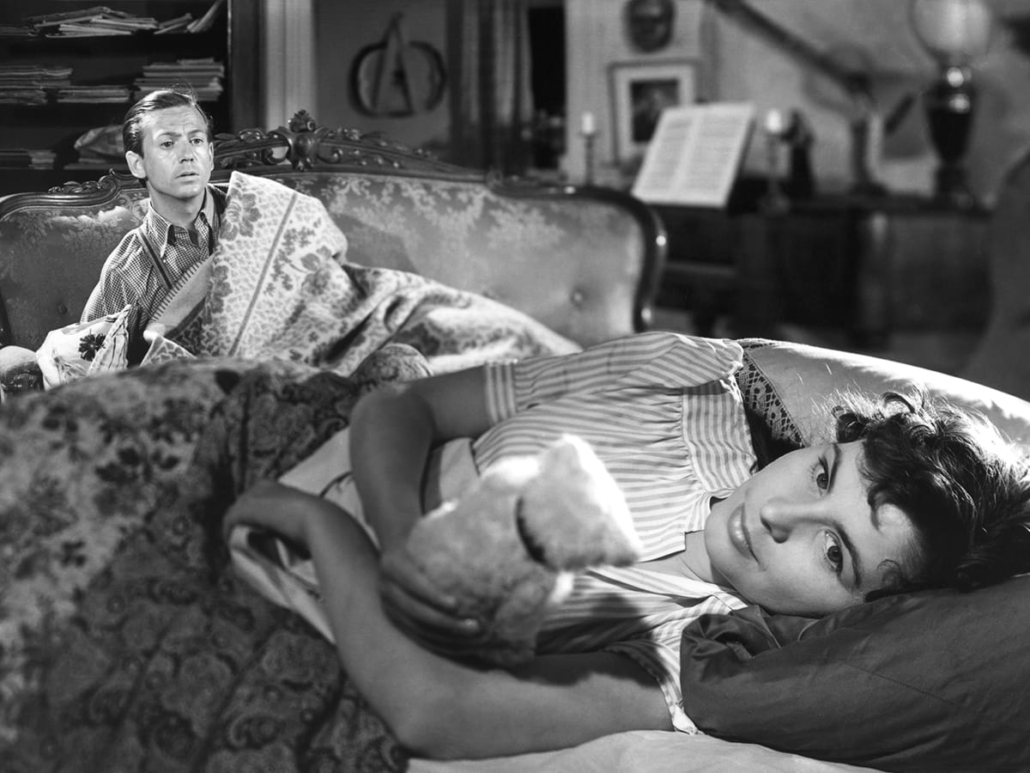
Movie number 5 in the Bergman collection!
And wow! Such a beautiful movie that skews comedic but has so, so much more to it. And also, did Woody Allen get his entire sensibility and style from this one movie?! I think so!
Stig (Stig Olin) and Marta (Maj-Britt Nilsson) are two musicians in the same orchestra that eventually start a relationship, fall in love, get married, have kids, break up, get back together and so on.
For context, and this sort of thing always blows my mind, this movie was made in 1950! And it’s got one of the most real, complex marriage dynamics I’ve ever seen. Such beautiful subtle moments shared between a couple. Like when one partner is sad and knowing the one thing to say that will snap them out of it.
It starts with how neurotic Stig is, but as it progresses, it really is about that intense bond with a true love. The good, the bad, the failures and disappointments, but also the humor and experiences together.
And the backdrop with music (all great classical selections, by the way) was unlike any of the other Bergman movies I’ve watched thus far. Just wow. What a true master, and what an incredible journey this box set has been taking me on.
SUMMER INTERLUDE (1951)
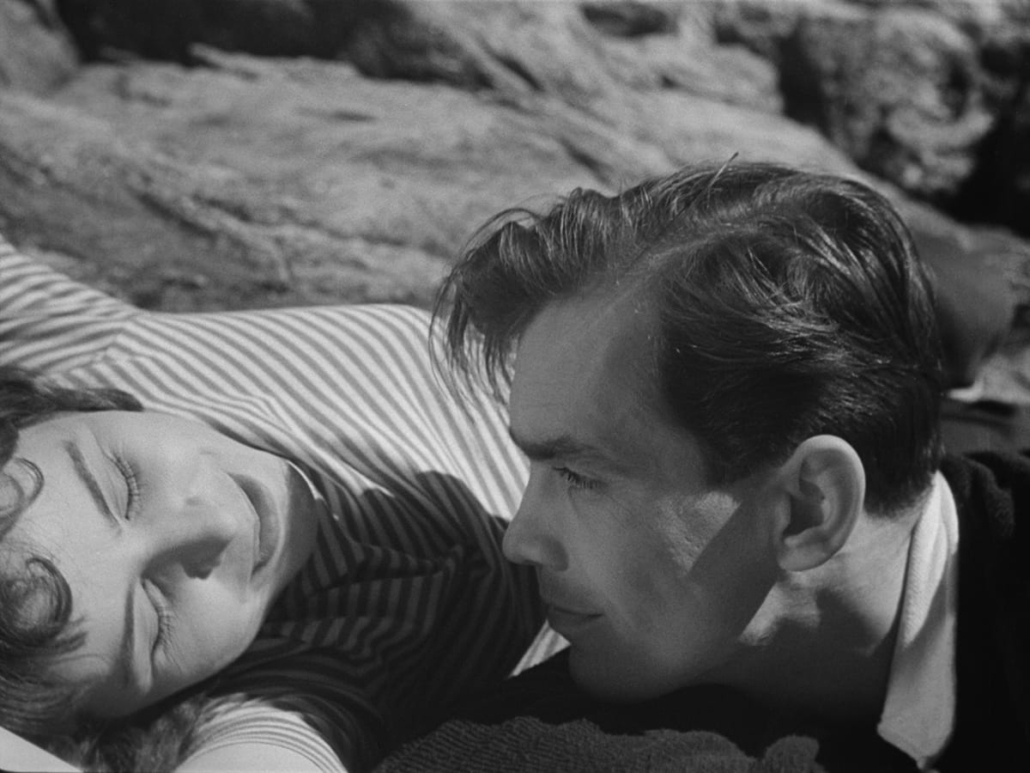
Film #6 in the Criterion Bergman box set! And this turned out to be a perfect follow-up to BEFORE SUNRISE. (Which I watched at the New Beverly on Valentine’s Day this year.)
I see why this one was paired with TO JOY in the box set because it features the same lead, Maj-Britt Nilsson as Marie. In this, she’s a dancer in a play and after receiving a mysterious package at the theater one night, it triggers her to relive her one great true summer of love when she was 13 with Henrik, played by A SHIP TO INDIA’s Birger Malmsten. (I love when directors re-use actors in their films. Stig Olin from TO JOY is also in this but in a small role as the Ballet Master.)
Their romance and chemistry is palpable. I just love the way they’re always smiling big for each other. There are some beautiful moments throughout, whether it be picking wild strawberries or making drawings on a record sleeve, which in one memorable moment, becomes an animated cartoon. But where there’s love, there is often also tragedy.
Seeing her in two movies now back to back. Nilsson is such a classic on-screen beauty. Of another time, yet timeless. She’s a stand out here, both in appearance and performance. (When she does her dancing recital, she wears make-up reminiscent of BLACK SWAN, perhaps?)
There’s one emotional bit where basically Marie comes to the conclusion that life is cruel and all of this is for nothing. It doesn’t mean anything. And she curses God for making us feel like this is all for nought. These words, from the filmmaker himself Ingmar Bergman, spoken in a movie he wrote and directed in 1951, and he’s been dead since 2007…. they do mean something. It wasn’t all for nothing. And that’s the beauty of truly great cinema. It can still mean something, even long after we’re gone…
SUMMER WITH MONIKA (1953)
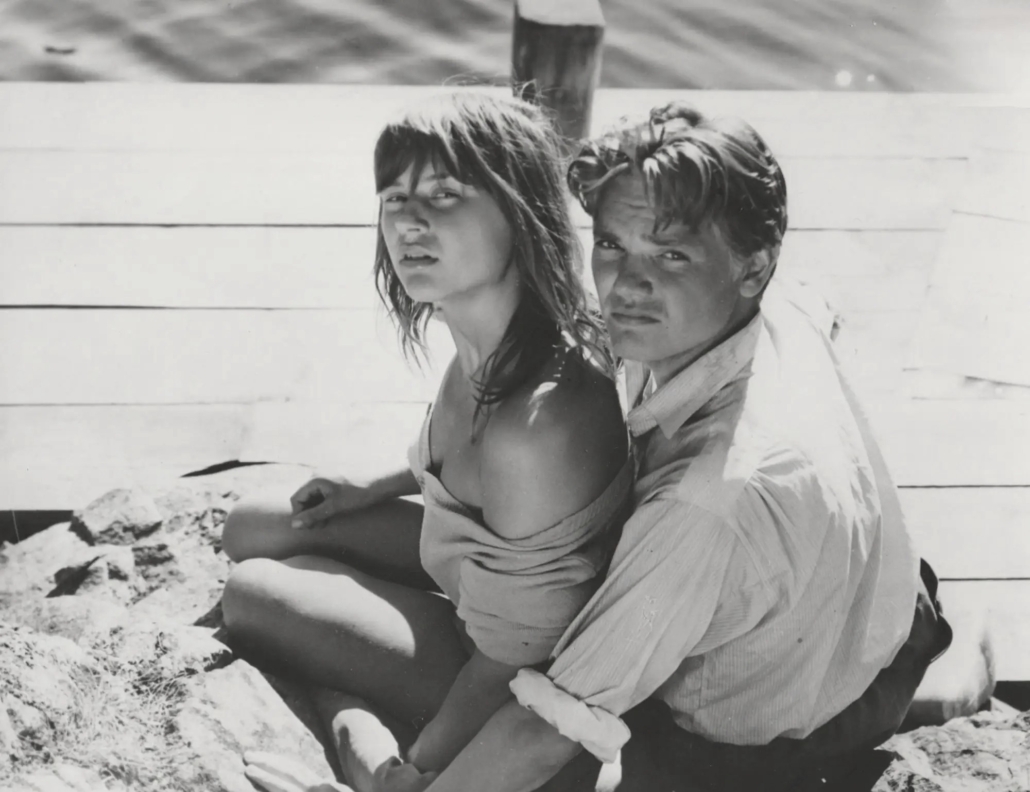
Film #7 in the Bergman box set!
SUMMER WITH MONIKA is about a young stockboy named Harry (Lars Ekborg) who meets a girl, Monika (Harriet Andersson) and they immediately start a passionate romance! It burns very bright for the whole summer as they take Harry’s father’s boat, and run away to a neighboring beach to shirk their responsibilities. But when it becomes obvious that Monika is pregnant, they need to return back to town and to their new life.
When love burns this bright, it also tends to burn out quicker. And hence the troubles within their marriage, by both being too young and not mature enough, come to the surface.
Yet again, another beautiful romantic film from Bergman that comes with complexities. This was quite good, but it’s my least favorite of the 7 films I’ve watched so far. Not surprising to read that this had a muted response upon release and eventually accrued a reputation as one of his more interesting and unconventional works. I guess it will depend on your own life experiences, but for me, it was hard not to see Monika as a bit of a monster by the end of it all!
Also of note: this is the first time Ingmar Bergman worked with new-comer Harriet Andersson whom he would have a romantic relationship with for several years after this, and she’ll be in a few more films in this box set!
Onward and forward!
DREAMS (1955)
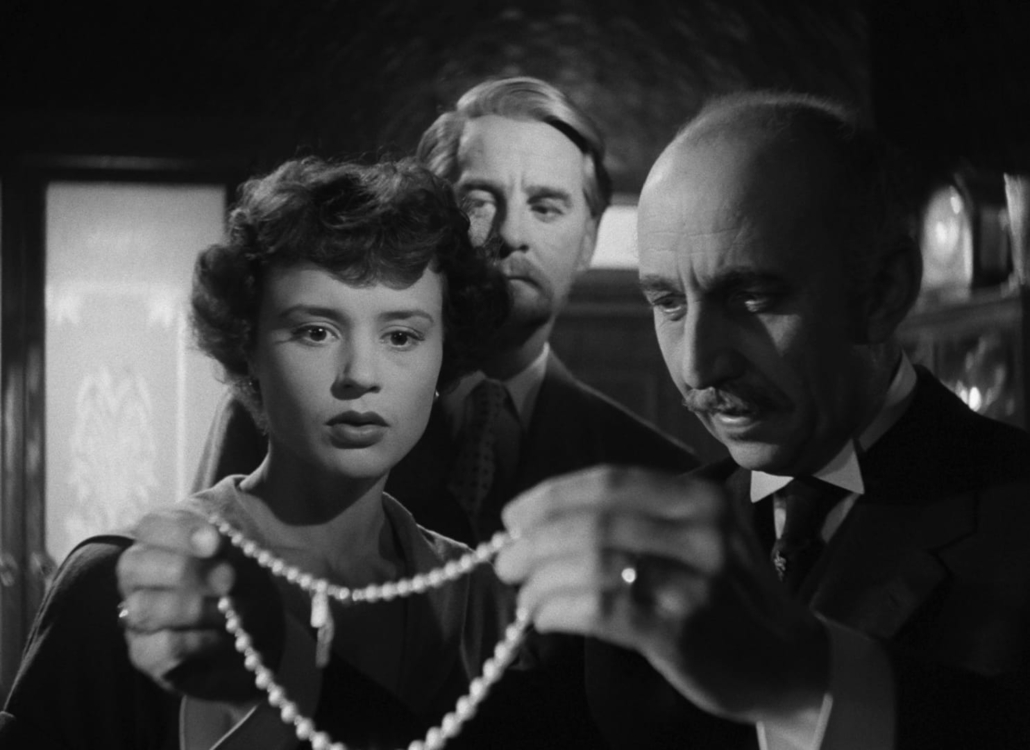
“People are so horribly cruel to one another.”
I hear that!
Movie Number 8 in my Criterion curated Bergman film festival, DREAMS.
This one follows two women, Susanne (Eva Dahlbeck), a fashion photographer, and Doris (Harriet Andersson), her model, as they both cope with their love woes.
For Susanne, she attempts to rekindle an affair she had with a married man. For Doris, it’s her constant bickering with her fiancé.
Doris finds herself bumping into the older Otto (Gunnar Björnstrand) who takes her on a whirlwind day of shopping, carnival rides, and more. For Susanne, she finds herself in a room with her former lover Henrik (Ulf Palme) trying to come to terms with what their relationship actually is.
What’s interesting is, obviously, Woody Allen is a huge fan and Bergman’s influence in his work is obvious. I thought TO JOY was the basic blueprint for all of Allen’s films, but this one might be an even closer match, especially the errr… entire plot line of a much older man courting a much-too-young woman.
As always, I’m impressed by the filmmaking on display and the gorgeous black and white cinematography. I kinda wish Bergman stayed a little longer in the horror ride at the carnival, but it’s just a few flashing seconds of skeletons. He hasn’t gone full horror yet! And I’d love to see that!
Been quite an adventure going through Bergman’s work. Bring on movie number 9!
MARCH 2025:
A LESSON IN LOVE (1954)
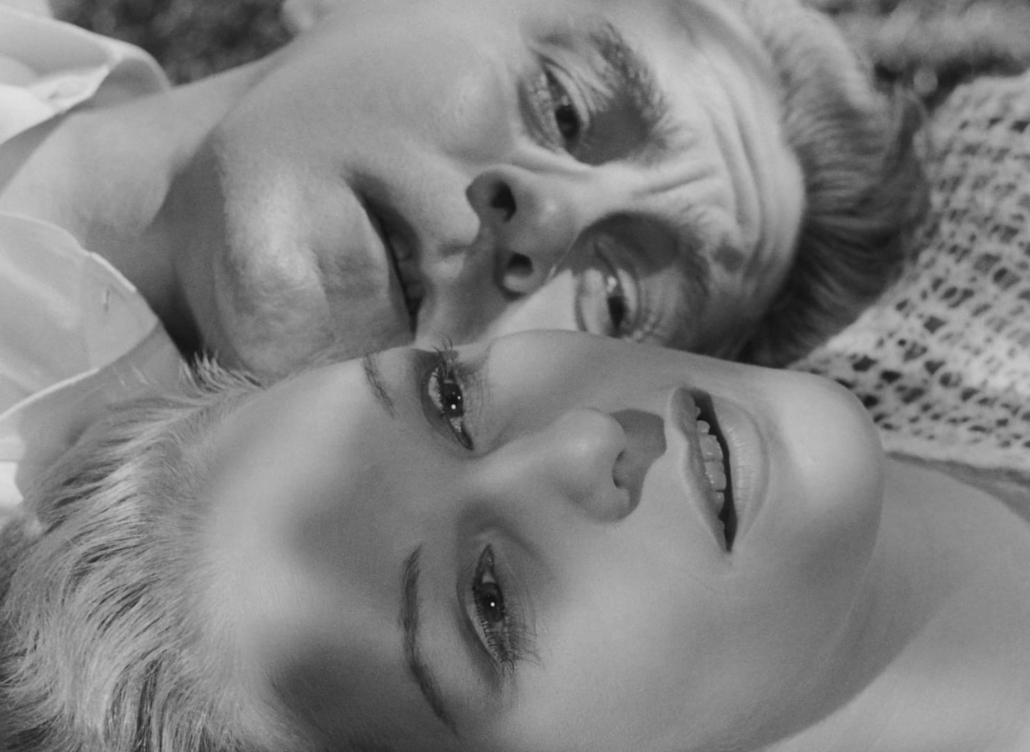
Movie 9 in the Criterion Bergman box set!
And this one is Bergman’s conscious attempt at a “comedy.” Again, I keep referencing Woody Allen movies as I’ve been discovering some of these quirky relationship films, but now that he’s intentionally trying to be funny here, this is the most Woody Allen-ish of the bunch!
A gynecologist (Gunnar Björnstrand) is finally breaking things off with his young mistress (Yvonne Lombard) because he wants to salvage his 15 year marriage to the mother of his two children (Eva Dahlbeck). It’s got fast paced fun dialogue, and all the trademarks of romantic comedies in which two people are sorting their true feelings out.
David (the man), had in fact stolen Marianne, (his wife) from their best friend Carl-Adam (Åke Grönberg) on their proposed wedding day! We learn a lot of this backstory while on the train ride to Copenhagen with David making a friendly bet with his traveling mate. It’s fun stuff.
“This comedy might have been a tragedy but the gods were kind. The teacher of this lesson is neither the author nor the actors, but life itself with its absurd twists.”
APRIL 2025:
SCENES FROM A MARRIAGE (1973) TV Version
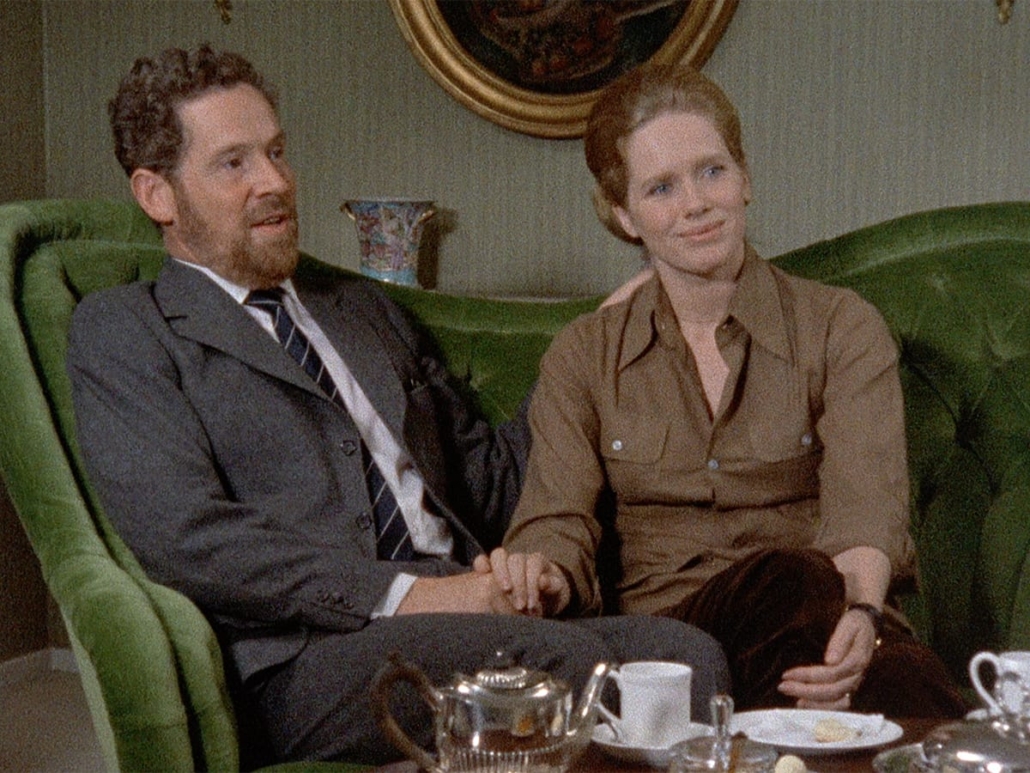
I had taken a little break from my Ingmar Bergman binge because I knew this one would take up 5 hours of my life! And I’d be following it with the 3 hour “theatrical” version shortly after. But the time has finally arrived, and just like with all of Bergman’s films, I couldn’t believe how quickly I was captivated by the whole thing.
The movie opens by introducing us to married couple Marianne (Liv Ullmann) and Johan (Erland Josephson), in the middle of a lengthy interview talking about why their 10 year marriage has worked so well. Bergman just has this incredible ability to make us feel like we’re eavesdropping on some reality-show or something. You immediately get the sense that Johan is the extravert of the duo and that Marianne doesn’t feel she has much to personally offer to the conversation. She’s content with her regular routine as doting wife and mother to their two small daughters. But alas, that’s just our introduction to them!
The rest of the story unfolds over 6 episodes over the next 10 year period of their relationship with truly shocking revelations along the way. (An abortion, an affair, attempted reconciliations, and more.) And the mundane way in which each is approached just feels like we’re watching a slice of real life.
The true magic is just seeing how much these two change and age in real time over the course of the entire mini-series. I can one hundred percent see what an influence this was on Richard Linklater, both with his BEFORE SUNRISE trilogy and BOYHOOD. Marianne does eventually come into her own and becomes a far more confident woman and mother, despite truly falling apart and begging Johan to stay when he first leaves her for an ill-fated affair with a much younger lover. And even Johan doesn’t fully understand why he’s made some of the life choices he’s made. It’s just a very human relationship story.
I’m so, so thrilled to see that one of the upcoming films in the box set is SARABAND, the unofficial sequel to this and Bergman’s final film some 30 years after SCENES FROM A MARRIAGE! I’ll be digging into that as soon as I watch the theatrical version of this. Viva Bergman!
JUNE 2025:
SCENES FROM A MARRIAGE (1973) Theatrical Version
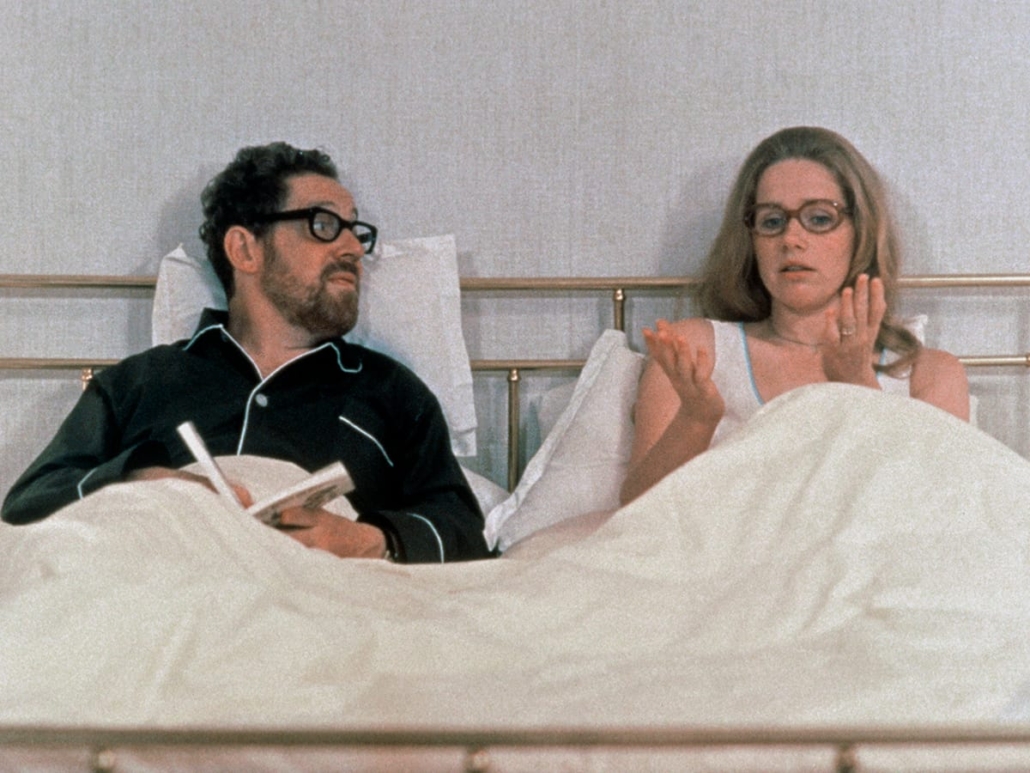
I took the longest diversion from my Bergman box set binge because SCENES OF A MARRIAGE was a pretty big hump to overcome! The set is curated as a “film festival” and when we get to disc 7, which is the 5 plus hour TV series version of SCENES OF A MARRIAGE, it’s tough to carve out the subsequent 3 hours for the” theatrical” movie version (which is disc 8). But I finally did it! And I’m glad I did.
This theatrical cut is a very interesting experiment. Yes, all the key beats of the original are in tact, but it moves at a much faster pace. And after the preliminary scenes with the home interview, the dinner with friends, and a glimpse of what it’s like at Johan’s job, in this version, it feels like the latter 2 hours are a play with only two actors. It’s been several weeks since I watched the longer version, so I don’t know if I’m just mis-remembering more characters, but this very much feels like we are only spending time, exclusively, with this one couple.
I had made an observation that this was clearly an influence on Richard Linklater, in particular BOYHOOD. This one feels much more like BOYHOOD in the sense that we shift a few years ahead within seconds and the passage of time feels almost unnoticeable. It’s still an excellently acted dramatic piece. And maybe, for time’s sake, this is the version I would come back to later, but I couldn’t help but feel like I was missing bits. I can’t imagine the monumental task of trying to whittle down a 5 hours tv show into a 3 hour movie. Worth seeing, but I think the longer version has the edge!
SARABAND (2003)
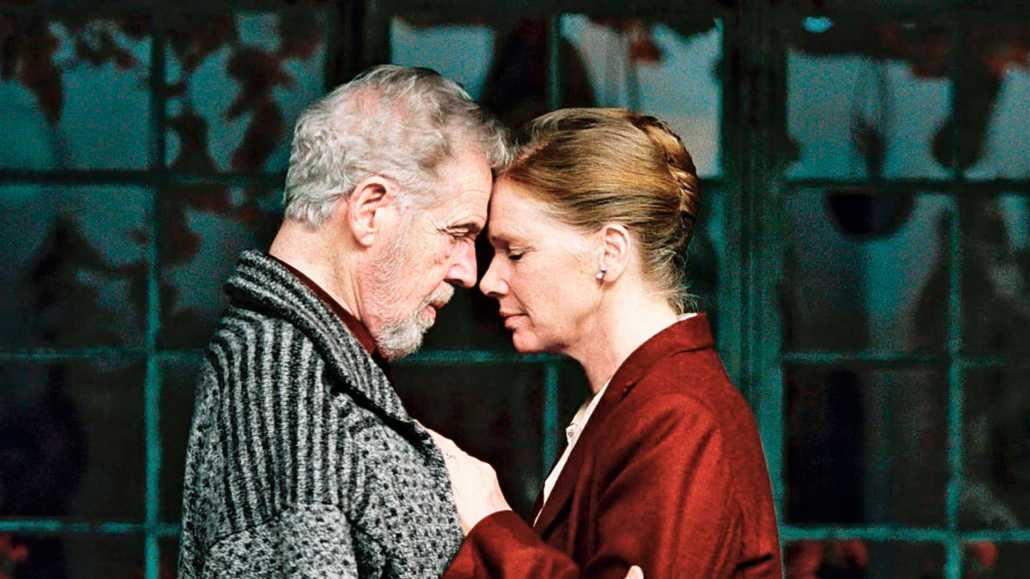
What an absolute joy this was to watch, especially immediately following the theatrical cut of SCENES OF A MARRIAGE! 30 years after the events of that film, Ingmar Bergman decided to revisit the couple Johan (Erland Josephson) and Marianne (Liv Ullmann) in what would turn out to be his final movie.
Told in a similar fashion to SCENES; broken up into 10 chapters with a prologue and epilogue, Marianne has a table with photos strewn across it, reminiscing of her life with Johan. We learn that he has since retired and after inheriting a large sum of money, lives a reclusive, quiet life in the hills in the countryside. Marianne herself has kept up her job as a divorce attorney, but has the sudden inkling to check up on her ex-husband, even though they haven’t spoken in nearly 3 decades.
When they do reunite, just seeing both Illman and Josephson (who came out of retirement to do this for Bergman!) together again brought a huge smile to my face. Seeing these aged actors at a different point in their lives! And the chemistry, the comfortability, the conversations they have, it all feels so natural and beautiful. And like we’re eavesdropping on old friends. Maybe it’s just coincidence that Richard Linklater made BEFORE SUNSET the year after this, but I can’t help but think this was the inspiration for him to revisit Celine and Jesse.
The scenes between Johan and Marianne are my favorite parts of this sequel, but there’s an entire other subplot happening simultaneously that pertains to Johan’s estranged son, Henrik (Börje Ahlstedt). This is where the timeline to the original is a bit fuzzy. If we do the math, Henrik is about 60 here, so the implication is he is an offspring from a marriage Johan had before Marianne. Which… isn’t surprising, because he’s completely clueless to the whereabouts of his daughters at the start of this.
Henrik is widowed but lives down the road with his beautiful, talented daughter Karin. He’s her mentor with music, but also overbearing, forcing her into a wife substitute role as opposed to treating her like his daughter. If she ever leaves, Henrik will not have the will to live and therein lies the guilt-induced dilemma for Karin (Julia Dufvenius). Karin’s newfound friendship with Marianne is one of the highlights. And although Johan has come across as a charming louse in both movies, he can be a bit of a mean monster, especially in one extended scene where he embarrasses and humiliates his son.
There are a lot of complex family dynamics going on here, and it’s fascinating because each of the ten chapters really feels like ten extensive scenes from a play. Much like the original film, this is mesmerizing, beautifully acted, and very, very human.
I had read in the accompanying book that Bergman initially made this for TV and didn’t like the video to film conversion look, so he almost didn’t release it! Which, would’ve been criminal because as his last film, and as a coda to one of his most celebrated works, it’s truly a special gift he gave us before he left this mortal coil.
FROM THE LIFE OF MARIONETTES (1980)

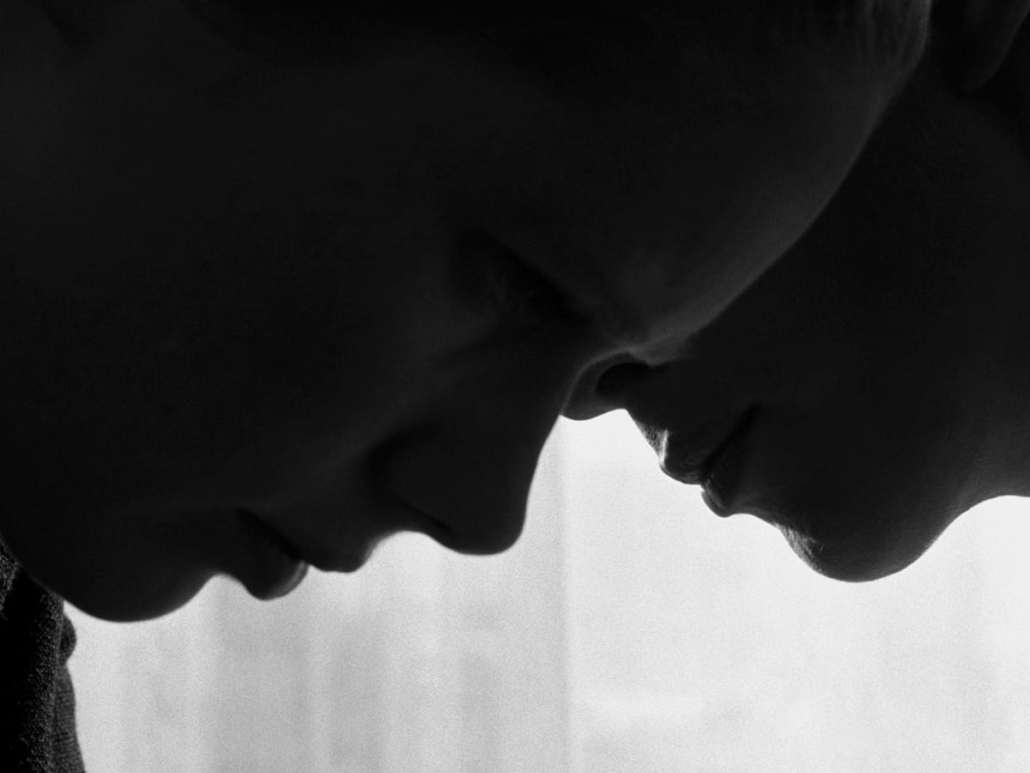
I know I shouldn’t be surprised by a Bergman film in starting color considering the last two, SCENES FROM A MARRIAGE and SARABAND were both in color, but I’ve been so used to seeing all of Bergman’s black and white films up until now. That made the opening of FROM THE LIFE OF THE MARIONETTES stand out all the more. Plus the fact that it’s such a colorful, vibrant, shocking prologue! It starts with a close up of two faces, about to be intimate, as if we’re spying on two lovers about to engage in the act. But it quickly turns to a slap and a struggle and a murder! Was Dario Argento an influence on Bergman for this murder sequence? This is from 1980 and the Italian Maestro had kicked off his “giallo” films a decade earlier. So, I have to believe so.
But wait, after the opening, the entire movie goes back to black and white?! I’m continually impressed by how each and every one of these Bergman films manages to capture me right away and draw me further and further in. The mark of a true master!
We come to learn that the killer in the opening is Peter Egermann (Robert Atzorn), and once he’s captured after performing the deed, we then spend the rest of the film flashing back and forward to reveal more and more details of his life that led to this murder. A month prior, he was confessing to his therapist that he was having fantasies of murdering his wife. What does this doctor do? Sends him on his way and has the wife come to him because he’s trying to have an affair with her! (Can’t trust therapists!) Katarina (Peter’s wife) and Professor Jensen’s conversation plays out while Peter hides in the shadows in effectively creepy fashion.
We also cut a few days after the murder to see police interviews with other individuals within the couple’s orbit. Katarina’s long time co-worker and partner, whom harbors his own secret feelings for Peter. Peter’s over bearing mother. We also get a lot of flashbacks of the very intense and passionate relationship between Peter and Katarina (Christine Buchegger). While they have problems like most couples, they also seemed deeply in love with each other too. I just love the way that Bergman lets each of these sequences play out. Like in one scene, Peter can’t sleep and goes to the kitchen for a drink. His wife joins him. And we linger on her walking around him at the table, taunting him a bit, with playful yet antagonizing dialogue, all in one shot.
I love the structure of this film; the idea of showing you a murder and then giving you bits from a month before, then a week later, then 5 days before, etc. Basically, Bergman is telling this story in the same format of a great novel. Where you want to devour each chapter and can’t wait to get to the next one (or “scene”). Maybe other filmmakers had done this at the time, but it feels so innovative here. (And by the way, to me, SCENES FROM A MARRIAGE and SARABAND also played out like a novel with their chapter” breaks.)
And then he closes the film back in color! I had to go back and watch the opening scene again after the movie finished because I wanted to rewatch it with the proper context. To summarize, this movie blew me away. Ahhh, and up next is Bergman’s “horror” film! Can’t wait!
HOUR OF THE WOLF (1968)
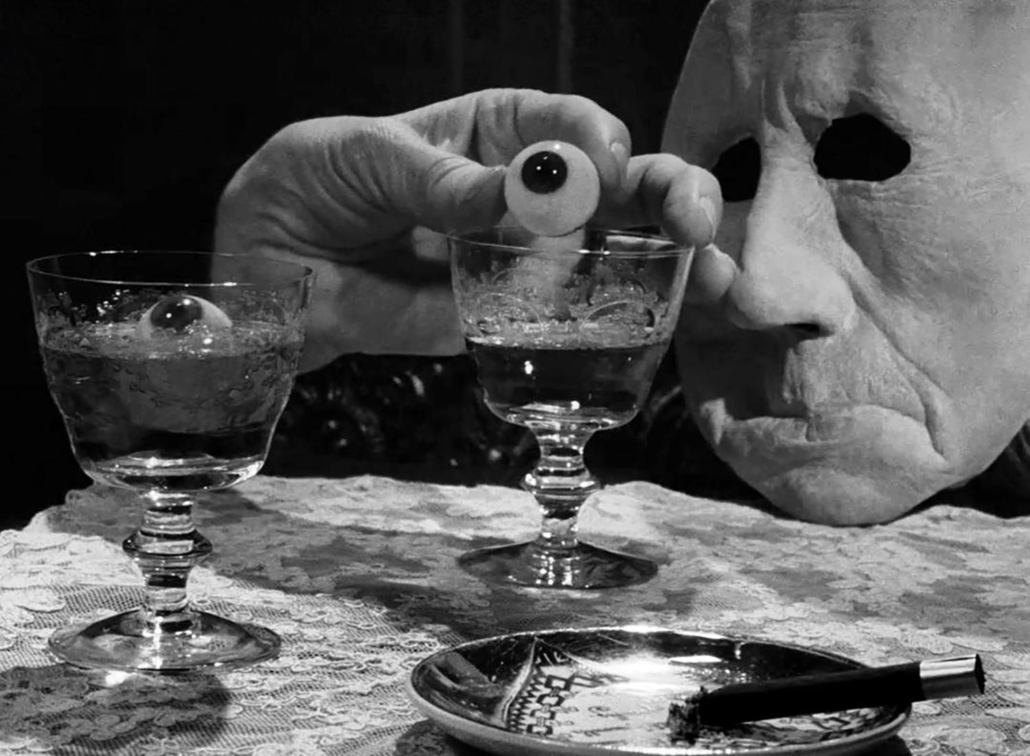
Film #14 from the Bergman box set, HOUR OF THE WOLF.
“It’s the hour when the most people die, when the most babies are born. It’s the hour when nightmares come to us.”
It’s funny, I was just saying in my last review that, so far, all of Bergman’s films manage to immediately capture my attention and grab hold of me with their wild imagination, powerful imagery, and complex yet human stories. This is the first one that I found to be a very tough pill to swallow! One that I found terribly difficult to understand the whole way through, and although I know this is regarded as one of his best works, is probably one of my least favorites of this binge thus far! (Bear with me for a moment.)
The film is bookended by a direct-to-camera conversation with Anna (Liv Ullman) talking about the disappearance of her husband and partner, renowned painter Johan Borg (the great Max Von Sydow). We then delve back to see a bit of their life on this semi-secluded island. (Apparently they’re vacationing there.) They seem happy enough, although Johan rarely sleeps and is often painting and, I think, having hallucinations. (One of the first of many unclear things ahead.) Things really start to get weird when the neighbors invite them over for a dinner party with the few other (strange) people vacationing at this spot. One of them, this odd guy with glasses at one point is just randomly running beside Jonah in creepy fashion until Jonah slaps him and tells him to shut up!
There’s also regular references to Veronica Vogler, a former love of Jonah’s whose relationship was apparently a huge scandal. As the film progresses, Jonah slowly but surely continues to lose his grip on reality, even flashing back to a time when he murdered a young boy. (But did he?) It culminates in a horror-esque sequence where all the weirdo characters are watching him as he tries to make love to Veronica.
Again, I didn’t fully “get” this one and was frustrated, for the first time since going on this Bergman marathon, for the lack of narrative clarity, something that’s so unlike everything I’ve seen up until now. I feel like maybe this is one I’ll have to come back to with fresh eyes after I’ve finished the rest of the box set and revisit within the context of where it falls in his career. I found Roger Ebert’s original review where he calls this a “deeply personal film” for Bergman, so I’ll have to rewatch it with that in mind.
That said, there’s always something noteworthy in every single one of Bergman’s films and there truly are some gorgeous nightmare-esque shots and images. In particular the little old lady randomly removing her face and eyes in one of the finales more grotesque moments! And man, how lucky and serendipitous was it for Bergman to find such incredible actors. His regular roaster of Max Von Sydow and Liv Ullman are so captivating to watch in every one of his movies, but especially in this one. Their performances alone kept me going through this otherwise confusing journey. But I’m happy to continue on this Bergman journey!
UPDATE on 7/9/2025: Two things I had to add to this review. David Cronenberg just did a “Criterion Closet” video and talked about his love of Bergman, and in particular how when he was making THE FLY, he came back to HOUR OF THE WOLF because he recalled a man being in such anguish that he was able to walk on the ceiling and he wanted to recreate that physical camera trick for THE FLY. Years later, John Landis had visited Bergman on his Island and amid his DVD collection, he saw a copy of THE FLY and told Cronenberg this. Synergy! The second thing is my friend Scott wrote a Letterboxd review of this where he says, “This is where David Lynch might have been born.” And now the narrative suddenly make sense when I think of it in the context of Lynch’s storytelling. Maybe this film did create David Lynch!
SHAME (1968)
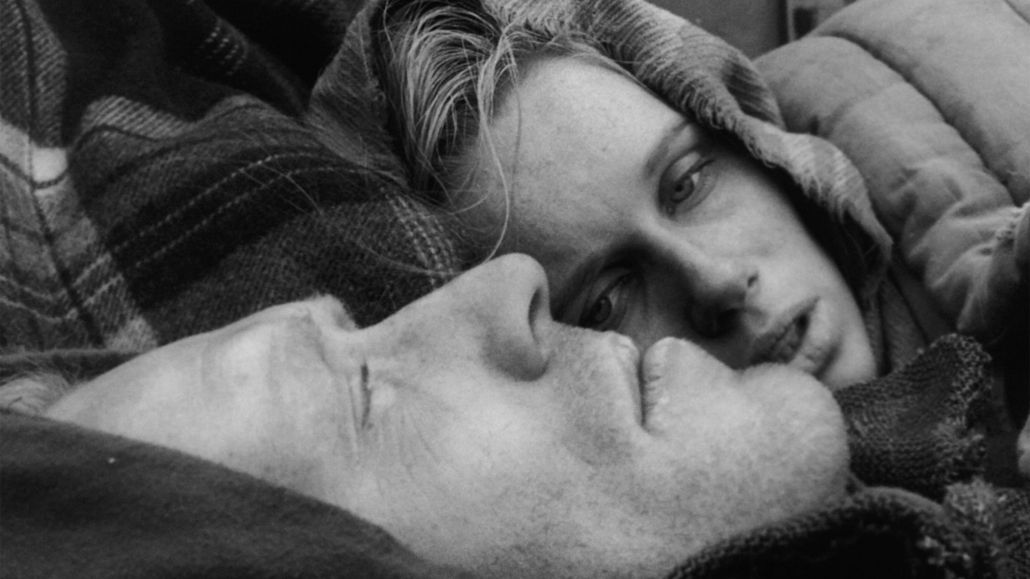
Wow. One of Bergman’s bleakest films!
Jan and Eva (Max von Sydow and Liv Ullman) are a couple of former violinists that now live on a secluded farm where they grow berries and vegetables to sell or trade in town. There’s always been a threat of a neighboring war, but they’ve never taken it seriously. But this one morning, planes fly overhead, bombs go off, a parachuter gets caught in one of their trees and (literally) all hell breaks loose and they’re right in the middle of it.
So, they attempt to flee but every where they go they’re confronted with another challenge. It’s actually quite intense and scary! As the obstacles continues to present themselves, their already strained marriage is put even more to the test and starts to dissolve under the duress.
What I liked about this film is the war is nondescript. It’s not based on any actual real-life war. It’s a vague civil war, and the couple isn’t overtly political or compassionate to either side. They’re just trying to go about their lives when it erupts in front of them, and they’re forced to comply with whatever soldiers are there at the moment. And shows how war must feel to most of the people stuck within the zones and are collateral damage. At one point, they’re held captive and accused of being traitors for doing a video interview that is very obviously doctored to make them look like sympathizers. They eventually get to go free and go home to their now desolate farm, but the Colonel in charge ends up starting an affair with Eva. (Was it just a way for her to get in favor with him so he’d leave them both alone?)
Jan starts as a pretty passive and scared character, but is forced to become more animalistic as the movie goes on. He goes as far as to kill (off screen) a young soldier that stumbles onto their land just for his shoes!
Bless Sydow and Ullman. I read that this is part of a trilogy of films they all did together, and it’s almost as if they’re playing the same couple in all three films, but with different context into their relationships. They’re such great actors and Bergman really was lucky to end up with these frequent collaborators. The filmmaking in this one is top notch, but it is a downer of a movie.
JULY 2025:
Fårö DOCUMENT (1970)
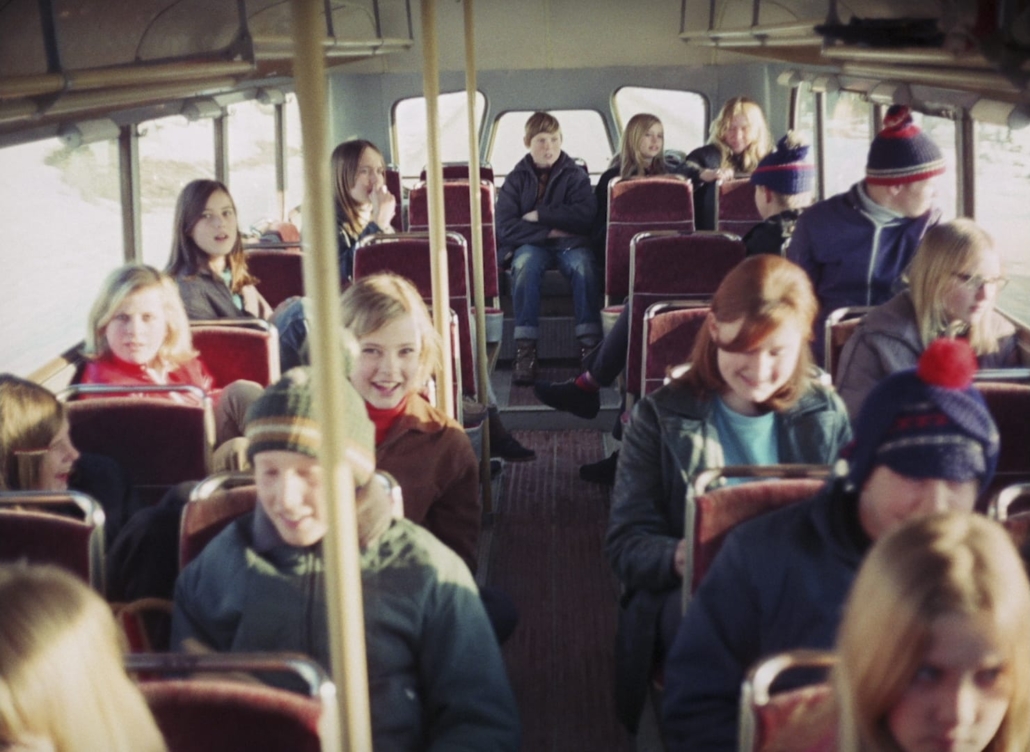
I’ve made it to Bergman’s documentaries on the Criterion Collection box set!
This is an odd one. A one hour TV documentary with Bergman interviewing the people of Fårö, a small community outside the Baltic Sea where Bergman ended up adopting as a home of his own in the latter part of his life.
It’s an interesting slice of life of the various people that occupy this small town, from librarians to farmers to kids. I do kind of love to learn about a place I’ve never known or been to. I was taken aback and had to fast forward through some very graphic footage of animals being slaughtered and prepared for the slaughter house! There’s also a section with goats giving birth that goes on a bit longer than it needs to! I prefer to hear from the locals about what life is like there every day as opposed to seeing the graphic parts of their lifestyles. The most interesting part is for me was towards the later half when Bergman interviews a school bus full of children. Almost all of them responding that they can’t wait to leave Fårö because it’s boring, there’s nothing to do there, and there are no real job opportunities. One young man contradicted what the other kids said and commented on how he doesn’t think he could ever live in a place not by the sea. A beautiful sentiment.
Yet again, a very different side to Bergman’s filmography that I’m intrigued to have seen.
Fårö DOCUMENT 1979 (1979)

The second of two documentaries that Ingmar Bergman made about his beloved Fårö. I read up a bit more before diving into this second film. My understanding is that his producers wanted him to use the small island of Fårö as a potential economic shooting location for his film THROUGH A GLASS DARKLY. He reluctantly agreed to scout it with no intention of using it, but a funny thing happened. It was literally love at first sight and he knew that he wanted to live there.
So, the first documentary from 1969 was intended to be the first in a series of short films talking to the locals. It aired on TV and he didn’t follow it up until this feature length film a decade later. And there was supposed to be a 1989 edition but it never came to be.
Since this one is a feature length, it’s much more completive, broader in scope, and plays out in much longer, scenic takes with a lot of room to breathe. One of the joys of taking this trip to Fårö is his follow up interviews with certain people from 10 years earlier. One of the highlights of the last film was in the closing minutes when he spoke to kids on a school bus and they were taking about their ambitions to leave because of lack of job opportunities and nothing to do there. Well, in the first 10 minutes of this, we see those same interview clips in black and white, and then it cuts to present day 1979, in color, where he’s talking to those same kids! And we learn their fates! He follows up with an older woman from the first film whose farm is now under the care of her nephew Per.
There’s an older gentlemen who wrote a letter of protest to the town and it became the first of many poems. There’s also this beautiful little slice-of-life segment with a fisherman, preparing his dinner, sitting alone at the table and finishing the scene with a wide shot far outside his house with him sitting alone in isolation in the one lit window of the house. The population of this town is something like 600-700 people, so while the community does help each other, there does seem to be a level of loneliness in this environment. (Maybe that’s what some, including Bergman himself, long for?)
The one sequence I had to fast forward through was, yet again, the slaughtering of a pig. This and the animal cruelty from the first film were both a bit too much for me.
Again, in a filmography that spans so many genres and that influenced so many filmmakers, it’s fascinating to see the maestro take a diversion into the documentary medium by shining the spotlight on the tiny little island he would eventually call home.
THROUGH A GLASS DARKLY (1961)
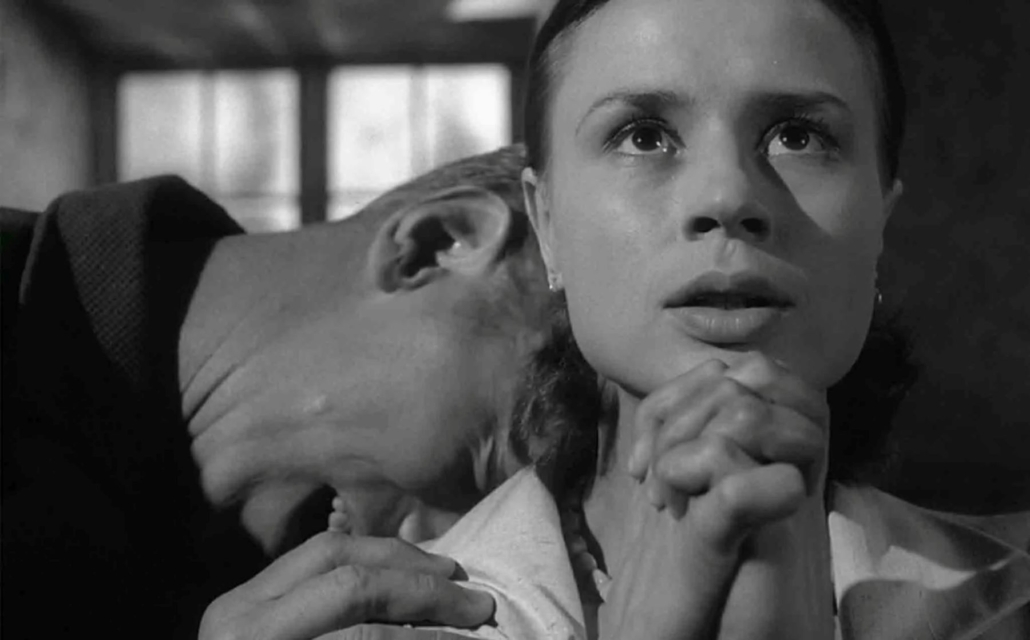
Bergman continued! And this is, from what I understand, the first part in a dramatic trilogy done by Bergman, this one about a family vacationing on a remote Island after the daughter, Karin (Harriet Andersson), is released from an asylum. Her father, brother, and husband are with her, and she’s dealing with mental illness. (Later confirmed to be “schizophrenia.”)
Structured like a three act play and running exactly 90 minutes, the father of the group (Bergman regular Gunnar Björnstrand) is well regarded author. Her husband (the great Max von Sydow) is the one who is walking the tight rope of keeping things together, despite his wife’s declining mental health from which there is more than likely no cure. And her younger brother (Lars Passgård) is the only one she trusts.
Throughout the 24 hour period in which the story takes place, David (the father) admits to writers block and an attempted suicide. He’s been using his daughter’s ailment as inspiration, which Karin discovers while reading his diary. She hears voices behind the peeling wallpaper that she believes to be God. And this is an examination of a family unit deteriorating in real time.
Beautiful directed and acted, this very simple four person cast set against this locale just feels like a play told cinematically. This was the first of Bergman’s films shot in Fårö which would eventually become his home.
The two things I can count on after every Bergman watch is I can reference the essay in the companion book that came with the Criterion box set, and I can also Google what Roger Ebert’s review of each film was.
AUGUST 2025:
WINTER LIGHT (1963)
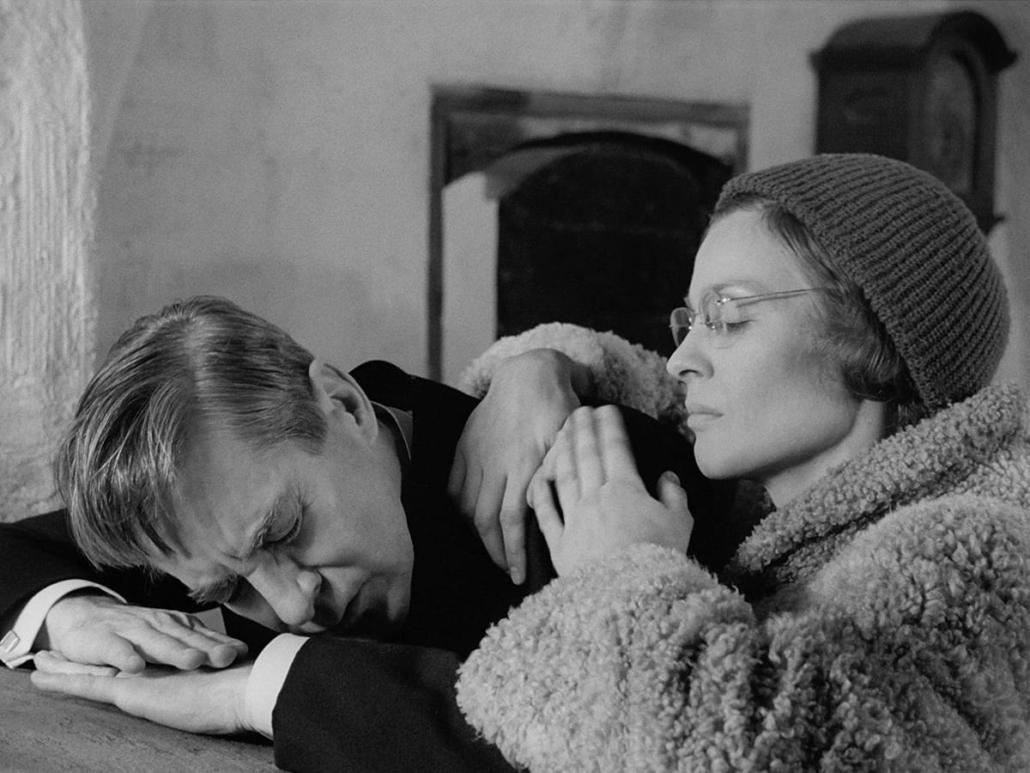
As with all Bergman films, it’s always good to come back to them after a brief time away and get wrapped up in his unique dramatic style, yet again!
In this one, a pastor (Gunnar Björnstrand) is questioning his faith, and wonders if anyone is actually listening to his message. A man, Jonas (Max Von Sydow), is living in perpetual fear and is contemplating ending his life, but his wife insists he speaks to the pastor for comfort. He’s scared of a potential pending nuclear war. And the other horrors of the world that fill most people’s days with dread, even if they’re unlikely to come to fruition. Still, it’s in one of their meetings that the pastor breaks down and reveals he has lost his faith and feels he is a terrible pastor. It’s after this that the man runs away and shoots himself! Yep, this gets pretty dark and bleak!
There’s one stand out monologue from Marta (Ingrid Thulin), the local school teacher who harbors feelings for the Pastor. It’s so good I had to circle back to it and watch again after the movie was over. He’s basically reading a letter that was left to him and it cuts a close-up of Marta speaking directly into camera for a six minute monologue with no edits. It’s just mesmerizing, and later on, the Pastor delivers an equally cruel long monologue back to Marta.
I have to believe Bergman knew how fortunate he was to have people like Gunnar Björnstrand and Max Von Sydow as his faithful leads for several of his films. Such great faces! These guys are some of the greatest screen actors of all time. And it’s always a treat to see them pop up in yet another Bergman film, especially together!
Also of note, the cinematography by Sven Nykvist is terrific. There are no camera moves in this entire movie, it’s all shot in static shots, sometimes with close ups of people’s faces, but more importantly, this really uses every aspect of black and white and, in particular, shadows to their fullest potential. Apparently Bergman and his DP spent an entire day in this church that they shot this in and made notes on how the lighting from the sun moved throughout this building over the course of a single day. It’s a lean 80 minutes and one of Bergman’s best, most personal films.
THE SILENCE (1963)
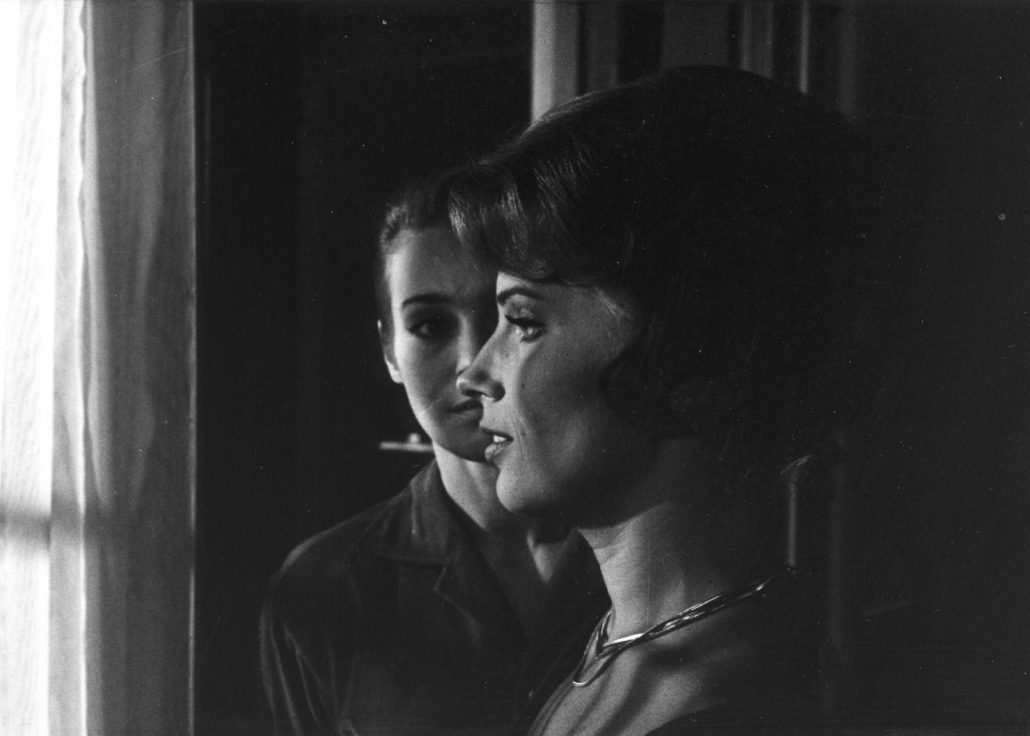
The final film of Bergman’s “faith” trilogy or “Silence of God” trilogy. These have, honestly, been tough pills for me to swallow and might be the sort of trilogy I need to come back to again at a later date with fresh eyes and new perspective. But as always, the filmmaking is impeccable, as is the acting, cinematography, and just the overall aesthetic.
As the title implies, this is Bergman’s attempt to make a film with as little dialogue as possible. There’s still quite a lot but, it’s got something like… 38 dialogue exchanges over the course of the 95 minute runtime?
Two sisters (Ingrid Thulin and Gunnel Lindblom) and a young boy (Jörgen Lindström) are distracted from their train ride “home” and forced to stay at an odd hotel over night. The boy kind of wanders. One of the sister’s is very ill. The other goes out and after voyeuristically seeing a couple engage in sex, brings home her own suitor. I’m sure there’s a metaphor about the sisters representing two alternative points of view, but I was more into the randomness of the boy walking around the hotel. It’s a strange, sparse movie.
According to Catherine Wheatley who writes the segment in the accompanying Criterion book about this trilogy, Bergman was very inspired by the work of playwright August Strindberg. Whereas in Roger Ebert’s review, he notices traces of French legend Jacques Tati. (Tati has got a Criterion boxset with his complete works which I have to get!) And speaking of influences, there’s an old man; a porter who roams the hotel hallways, making faces at the little boy and coming to the aid of his sick aunt Ester. This guy is straight out of a David Lynch movie, or could easily have been someone that appeared in TWIN PEAKS. In fact, he’s like the bellhop that sees a gunned down Agent Cooper and gives him the thumbs up! I’ve seen lots of influence from Bergman to modern filmmakers; from Woody Allen to Richard Linklater. But it wasn’t until reading my buddy Scott’s review of HOUR OF THE WOLF that he pointed out that had to be one of David Lynch’s favorite films. I can now see a direct through-line from Bergman to Lynch!
Another thing I love about each new Bergman film that I watch is that I can find a Roger Ebert review online right after. Having been a huge fan of his work, Ebert often wrote of and frequently revisited Bergman’s filmography. And honestly, I miss genuine, sincere film criticism versus the ridiculous” hot takes” we get nowadays. People like Ebert and Pauline Kael wrote reviews that feel timeless and important. And reading Ebert’s thoughts gives me a bit more clarity into contextualizing what each of these films meant to Bergman and his overall legacy.
Again, so happy to be on this Bergman journey. Next up in the box set is a film I have seen and am looking forward to rewatching, THE VIRGIN SPRING! The original version of the story Wes Craven would later tell in LAST HOUSE ON THE LEFT!
SEPTEMBER 2025:
THE VIRGIN SPRING (1960)
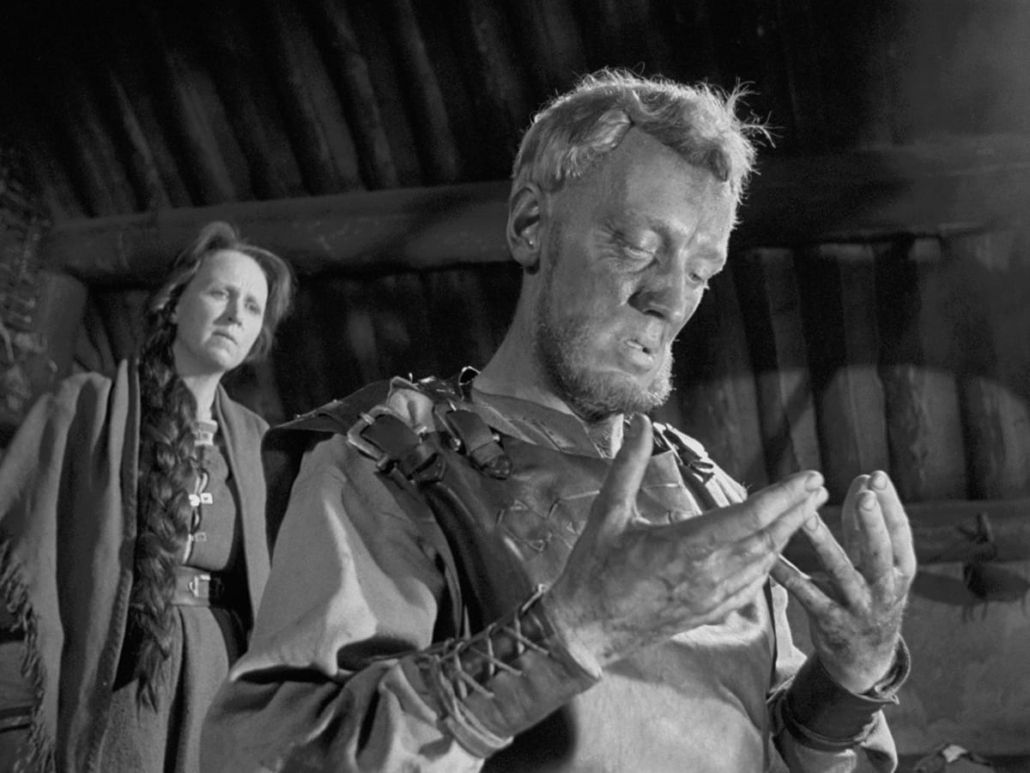
I’d seen this once before and I think this may be my favorite Bergman film.
It’s visually beautiful, lyrical in every way, sparse in dialogue, and very emotional. We’re introduced to a simple family. The older daughter (Gunnel Lindblom) is pregnant and distraught at her lot in life. She’s very jealous of her beloved younger sister, Karin (Birgitta Pettersson). Her parents send Karin on a mission to deliver candles to their community church in town, something that only a virgin can do. She leaves late in the day and her older sister follows. Along the way, Karin stumbles upon a trio of vagabond brothers. Full of innocence and pure kindness, she offers them company and shares her meal with them, despite running late for his church errand. (Her sister, several paces behind, watching from the trees.) Things get ugly fast, as some men are just… well, evil.
What happens next is unspeakable. Karin befalls a horrible violation, and end, at the hands of these men. Horrified by the crime they’d just committed, they take refuge at the closest farm they can find, which just happens to be Karin’s parents! Eventually, they discover that these men they are giving shelter to are responsible for their daughter’s demise, and they take their revenge!
Yes, if it sounds familiar, it’s been done several times since, most notably in Wes Craven’s LAST HOUSE ON THE LEFT, which borrows the entire structural plot from VIRGIN SPRING, but does it in a much more explosive and mean-spirited way. (I love Craven but I’ve never liked his LAST HOUSE ON THE LEFT.)
Max Von Sydow plays the vengeful father. And the acting this guy does just with his facial expressions is an absolute marvel. I also found the closing 5 minutes to be among the most emotionally devastating of Bergman’s entire filmography. Somehow, a movie with some of the most horrible things in it is full of so many beautiful moments and shots. That is true art. And that is true to life.
Definitely one of Bergman’s best. Up next in the Criterion box set? THE SEVENTH SEAL!
THE SEVENTH SEAL (1957)
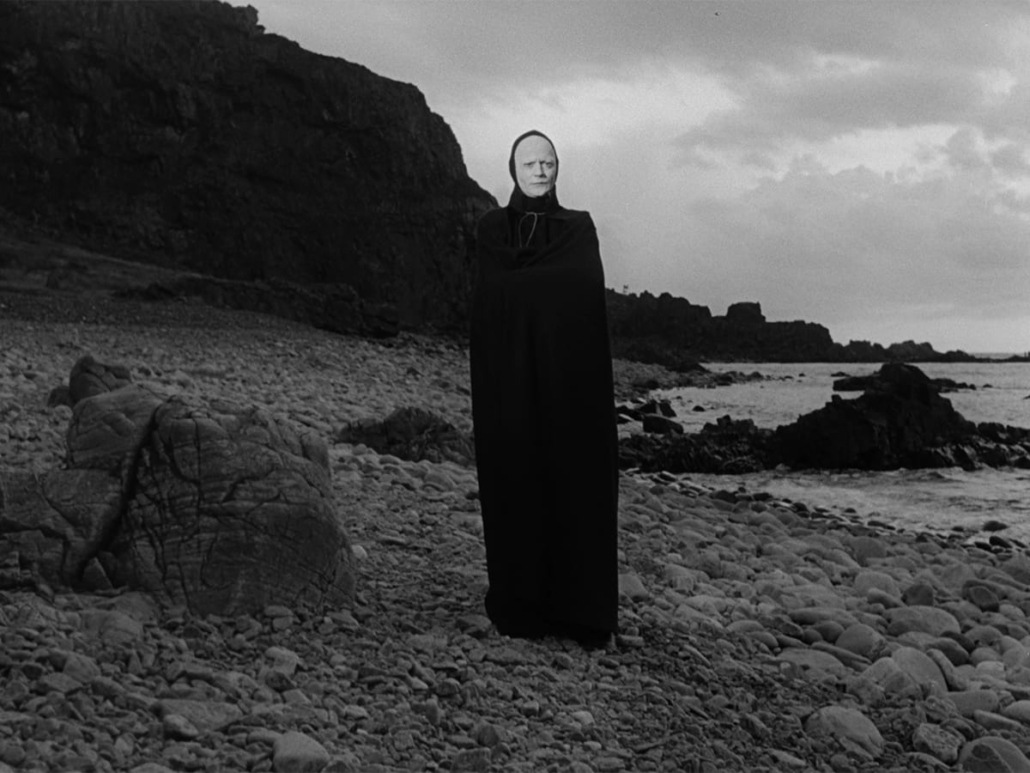
I had seen THE SEVENTH SEAL before, but this time I was watching it after having experienced 22 other Bergman films! And was able to fully appreciate his regular stable of actors including Max von Sydow, Gunnar Björnstrand, and Bibi Andersson.
It could be the one film where all of his aesthetics and style are fully on display. Arguably his masterpiece, and a trademark “Bergman” film. Equal parts humorous (darkly so!) and morbidly dramatic. With indelible images that have permeated pop culture and been spoofed and parodied repeatedly over the years. It’s the quintessential movie that would define “art house” cinema.
But really, it’s a contemplative movie about faith. Or lack thereof.
Sydow is a Knight that comes across Death! As in a bald man in a cloak ready to take him to the afterworld. He stalls by challenging him to a game of chess. (Bill and Ted did this too!) And so, we occasionally return to this game of chess for his soul throughout the movie. We also meet a cynical squire, a caravan of actors, a painter at a church, and even a supposed witch, ready to burned at the stake.
There are some stills in this that are timeless to me. Like the skull mask that one of the actors wears to portray death in their play, hanging on the tree. Or just about any image of Sydow playing chess with Death. The final images depicting the literal Danse Macabre. But also strangely funny stuff, like Death cutting down a tree to get to an actor! (It was his time, after all!)
An extraordinary piece of cinema. And the first “Janus Films” release, which eventually led to “Criterion.”
THE DEVIL’S EYE (1960)
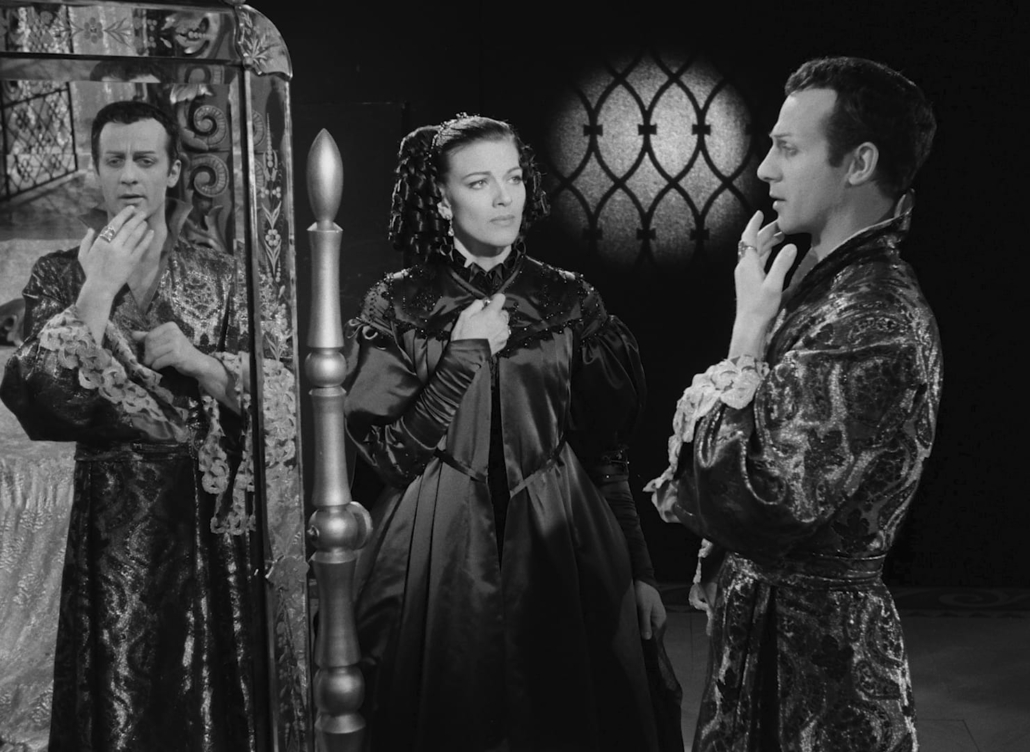
“Ladies and gentlemen, I apologize but we must briefly discuss hell.”
This is how Gunnar Björnstrand as our narrator begins this film!
This is pretty wild. For some reason, a bunch of aristocrats in Hell want to spoil things on Earth by defiling (!) Britt-Marie (Bibi Andersson), the daughter of a vicar AND a virgin, before her wedding day. Who do they send? Well, Don Juan, of course. Currently serving an eternity in hell.
So, Don Juan (Jarl Kulle), along with his faithful servant Pablo (Sture Lagerwall) head to Earth, accompanied by a trickster Demon to breach the chastity of this young innocent girl. What Don Juan doesn’t expect is to fall in love with this girl, who isn’t quite as innocent as everyone thought!
This is short, sweet, and darkly funny in a very droll way. Beautifully shot and acted with a lot of quirky comedy of errors. Pablo is obsessed with bedding the vicar’s lonely wife! Britt-Marie wants to kiss 50 different men before she actually marries. Even the Demon, who disguises himself as a black cat, at one point gets tricked into a cabinet because the vicar is obsessed with they idea of capturing his own devil. It’s so weird but fun!
I thought it was odd that in this high definition presentation, you can clearly see that Britt-Marie (Bibi Andersson) has a split lip! But they DO actually reference it towards the end. Oh, the title is a reference to the fact that Satan (Stig Järrel) has a stymied eye and thinks having Don Juan commit this heinous act will cure it.
ALL THESE WOMEN (1964)
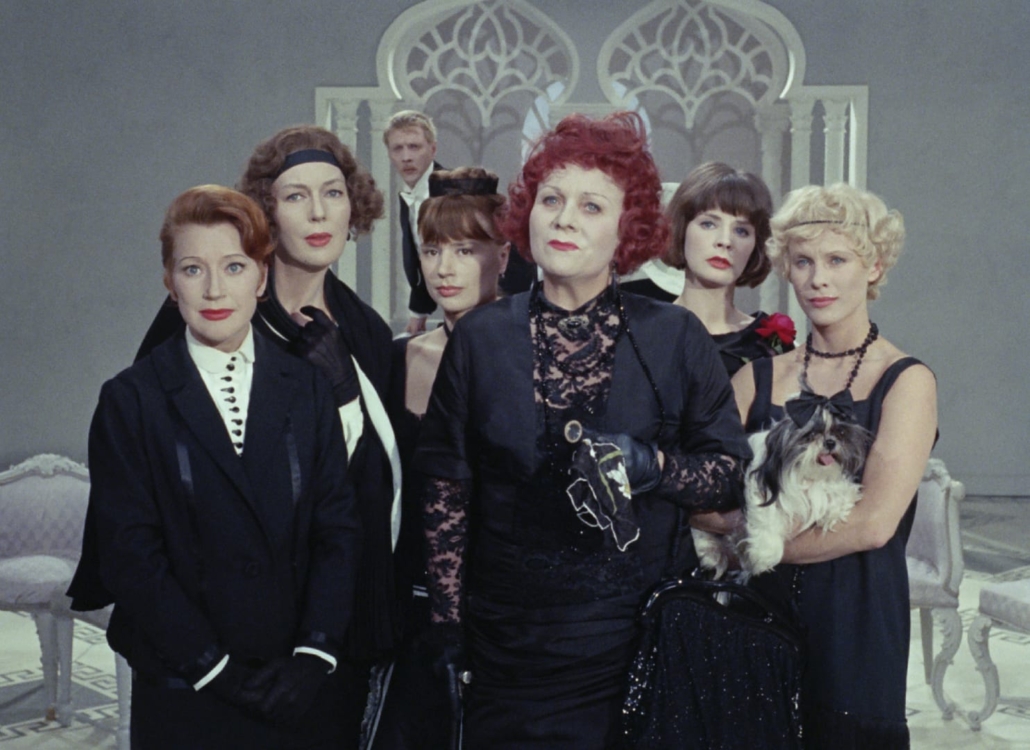
This opens with the title card, “Any resemblance between this film and so-called reality has to be a misunderstanding.”
Which immediately made me chuckle. And then we’re treated to what appears to be a funeral scene for an unseen person. Several woman, mourning and dressed in black, each come to the center of the frame, in front of the coffin and say, “He looks the same and yet so different.”
Flash back a few days and we realize we’re following a bumbling critic named Cornelius (THE DEVIL’S EYE’s Don Juan, actor Jarl Kulle) as he goes to the home of renowned cellist Felix to write a biography on him. There, he meets his servant and various wives, mistresses, and lovers. Felix gets around!
From there, this is the most “Woody Allen-esque” of Bergman’s comedies. It even has the quirky jazz music in between farcical visuals. One of the funniest bits is when Cornelius is about to make love to one of Felix’s many wives, we get a title card telling us that love-making will be depicted as the following to avoid censors. It cuts to a black-and-white segment of the two ballroom dancing.
A few things that stand out. This is Bergman’s first film in full color. This was also the movie that Roger Ebert, a huge Bergman fan, considered his absolute worst movie. It’s co-written by Bergman’s SCENES OF A MARRIAGE actor Erland Josephson and meant to be a spoof of Fellini’s 8 1/2. And for an 80 minute comedy, it’s not very funny and feels like an eternity! (I came back to it on three occasions.)
Still, even what is considered “bad” Bergman is better cinema than most of the crap the major studios are putting out these days!
SAWDUST AND TINSEL (1953)
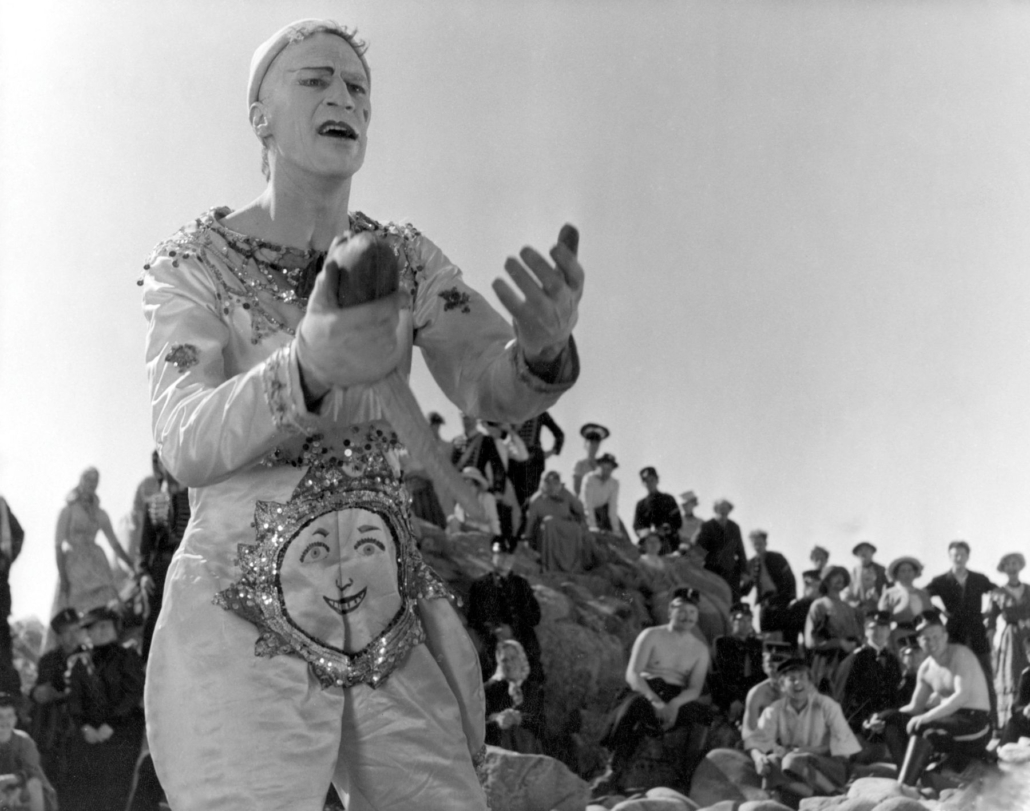
I was honestly taken aback by how sad, bleak, and melancholy Ingmar Bergman’s SAWDUST AND TINSEL turned out to be! It’s from the first decade of his career, following a circus troupe with very quirky and odd, troubled characters. There comes the embarrassment that stems from these long term relationships. Of rejections of all sorts. Perhaps Tod Browning’s FREAKS was an influence? Can’t be too sure, because this is its own beast.
We open the film with a surreal flashback to Frost (Anders Ek), the circus’ clown finding out that his aging wife Alma (Gudrun Brost) is out bathing nude in the ocean with a group of sailors. He strips down to drag her out of the water and is met with the shouts and humiliation of all these sailors. Most of it is shown as an almost silent film with no audible dialogue. We then shift focus to the circus owner Albert (Åke Grönberg), married to a very young beautiful woman Anne (Harriet Andersson). The financial strain on their traveling show, coupled with the fact that they lost a slew of their costumes due to bad weather, forces them to (practically) beg for help from the local actors troupe. Although they do end up lending them the costumes they need, it’s only done after the head actor (Gunnar Björnstrand) humiliates them. One particular actor, Frans (Hasse Ekman) sets his sights on Anne as a conquest.
While Albert goes to visit his estranged wife and children, he starts questioning his relationship with Anne and wondering if he should return to the domesticated life he so loathed. Meanwhile, Anne, out of curiosity goes back to see Frans whose flattery and lies tends to work in his favor. It’s a bit sad what happens to them both.
The circus does put on their show that night, but not without a very embarrassing duel between Albert and Frans. A lot of the trademark Bergman-isms supposedly begin here, his more surreal and abstract visual, storytelling style. But what’s fascinating about this is how vulnerable the whole thing feels. In other words, it’s not a feel good movie. If you’ve ever felt inadequate in your personal relationship, this movie captures all those insecure feelings and exploits them in a way that’s hard to watch. But I think for Bergman that was the point. From what I read, he was facing the failings of his own personal relationships through this film.
THE RITE (1969)

This is 16 years after SAWDUST AND TINSEL, but I see why they paired those two together in the Criterion Bergman boxset, because they tackle very similar themes in completely different points of Bergman’s career, and with a lot of the same actors.
This one, originally intended as a TV movie, is a lean 72 minutes and plays out like a stage play. Three actors, Thea (Ingrid Thulin), Sebastian (Anders Ek) and Hans (Gunnar Björnstrand) are being questioned by Judge Abrahamson (Erik Hell); both together and then separately as he tries to determine the appropriate punishment for their supposedly lewd and “obscene” show they’ve been putting on. It plays out in “chapters,” almost like reading a novel, and each segment becomes more and more of a battle of the minds, as each conversation seems to be about the Judge, on his moral high ground, gains power and control of his interviewees. Or does he? Does he secretly want to indulge in the obscene things these actors are supposedly guilty of in their stage “performance?”
By the finale, we get to see the performance for ourselves.
This one, while fascinating and compelling, especially some of the long dialogue scenes, like with Sebastian recounting how he murdered his best friend, showing very little remorse; is definitely more on the abstract and experimental side for Bergman. It feels very much to be his own personal reaction to his critics opinions of his own work.
Erik Hell (whom I don’t think I recognize from any of the other Bergman films) and Gunnar Björnstrand are the stand outs. Gunnar and Sydow always deliver in Bergman’s films.
THE MAGICIAN (1958)
The one thing I truly appreciate about this epic Ingmar Bergman Cinema box set that Criterion Collection has put out is the way they’re curated it like a film festival as opposed to presenting it in chronological order. So, as I arrive at THE MAGICIAN, it’s an interesting watch now that I come into it with the context that this was after two of his most well regarded hits, THE SEVENTH SEAL and WILD STRAWBERRIES, but right before his err…. “No God” trilogy? (I think it’s proper name is the Questioning of Faith trilogy? Or The Silence of God Trilogy?) THROUGH A GLASS DARKLY, WINTER LIGHT, THE SILENCE. A trio of films that probably made a huge impression on a young budding director named David Lynch for their surrealism and inconclusive narrative. THE MAGICIAN fits somewhere smack in the middle of those two Bergman styles.
On one hand, it merges multiple genres. Most of it is quite funny and absurd! And yet, there is one sequence towards the finale that is absolutely Bergman going full horror.
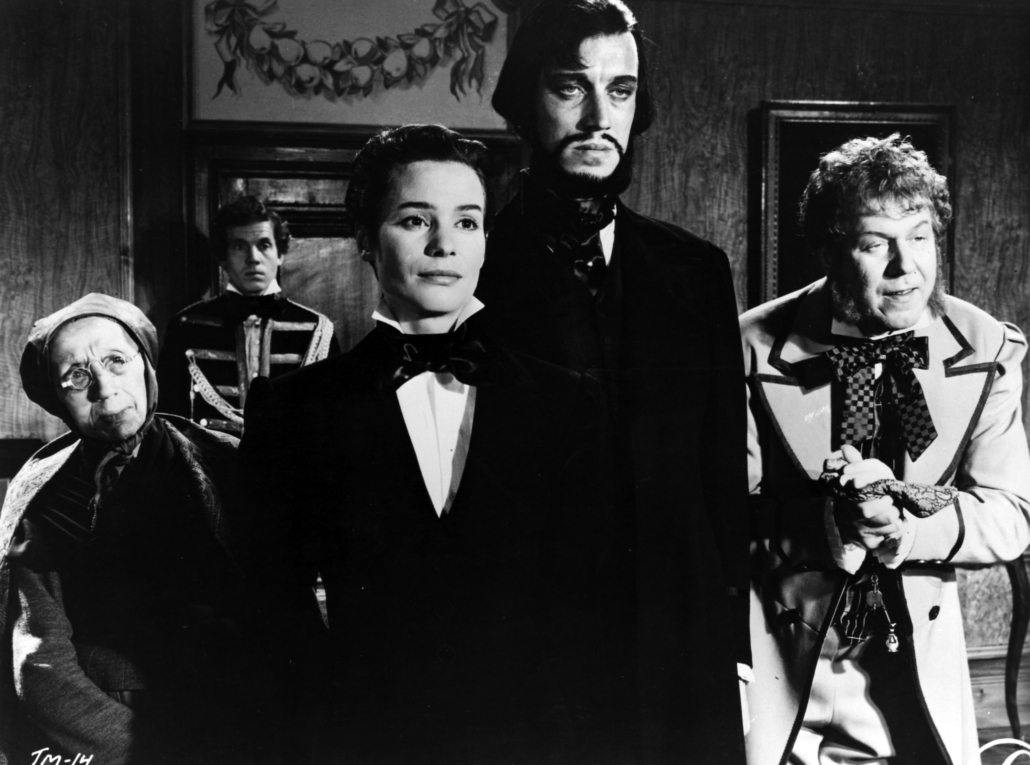
The basic gist is a traveling troupe led by a mysterious mute Magician (Max Von Sydow, of course) come upon a group of elites; a doctor, a police chief, their wives and companions; and they insist on Vogler (Sydow) proving his abilities by putting on a magic show. The most talkative of the bunch is his con-artist showman Tubal (Åke Fridell). Vogler’s young protegee is actually his wife in disguise as a young boy (Ingrid Thulin). The driver starts up a tryst with one of the servant girls. And a drunken actor the troupe thought had died in route suddenly re-emerges.
Much like with the two previous films I watched, SAWDUST AND TINSEL, this carries over the overt jealousy in Vogler’s marriage. From THE RITE, it’s a weird statement of “artists” and their distain for the audience that doesn’t “get” what they’re going for. It definitely feels like Bergman is making a metaphoric statement against those who have criticized his prior work. But even without all that subtext, it’s just a funny, creepy black and white movie with quirky, weird characters. Something that David Lynch would later master! Funny off beat scenes, and then a scene that’s terrifying. Gunnar Björnstrand’s Dr. Vergerus being “haunted” by Vogler was a great piece of scary cinema.
This now marks film number 28 (!) from my Bergman box set. Excited to further this journey.
NOVEMBER 2025:
THE MAGIC FLUTE (1975)
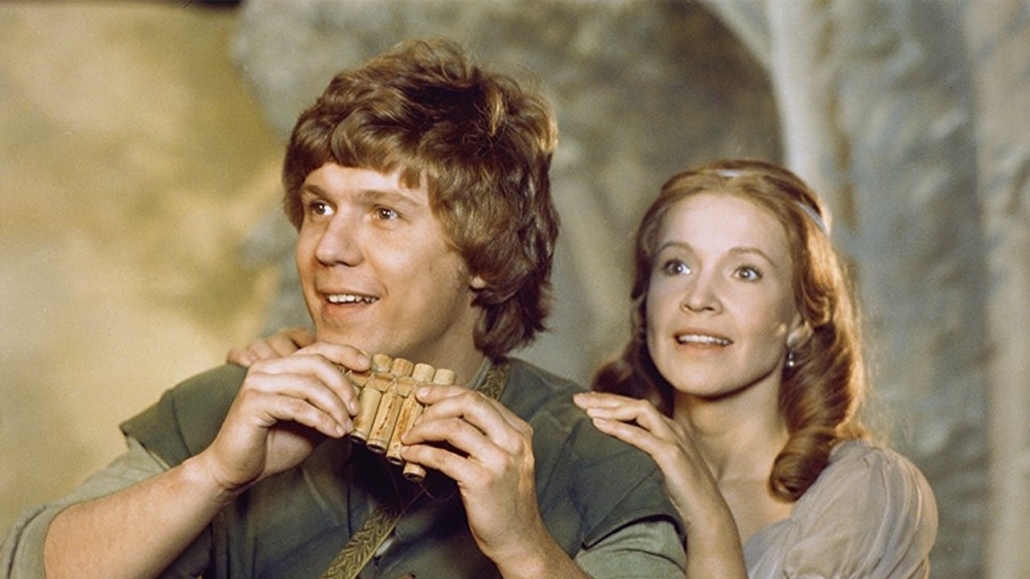
To be candid, this was my least favorite watch of the entire Bergman set so far, and its solely because I am incapable of connecting to “opera” as an art form.
That’s not to say I don’t recognize the craft in the making of this version of THE MAGIC FLUTE. At 135 minutes, I just found myself completely zoning out! It’s not shot like a traditional opera, which is to say, Bergman isn’t just putting on the opera and filming it, he’s employing his usual filmmaking techniques to deliver something unique about the way this story is told; right from the beginning focusing on the random faces of the audience spectators.
The story itself is based upon Wolfgang Amadeus Mozart’s beloved opera, something that Bergman himself has professed to love since he was 12 years old, so I can appreciate his pure enthusiasm for making this, especially at a point where he was already a successful filmmaker and in middle age.
It’s about Prince Tamino’s (Josef Köstlinger) quest to rescue Princess Pamina (Irma Urrila) from the evil priest Sarastro (Ulrik Cold), only to discover that the Queen of the Night might be the true villain. The saving grace is his friend Papageno (Håkan Hagegård), offering much needed comic relief to the proceedings.
I think, honestly, this wasn’t an appropriate watch for me and I had a tough time getting into it. Once I finish the Bergman box set, perhaps I’ll come back to this one, wake up early on a Sunday morning, make sure all my electronics devices are turned off and truly try to focus on nothing but this adaptation. Until then, onward on this Bergman journey!
AFTER THE REHEARSAL (1984)
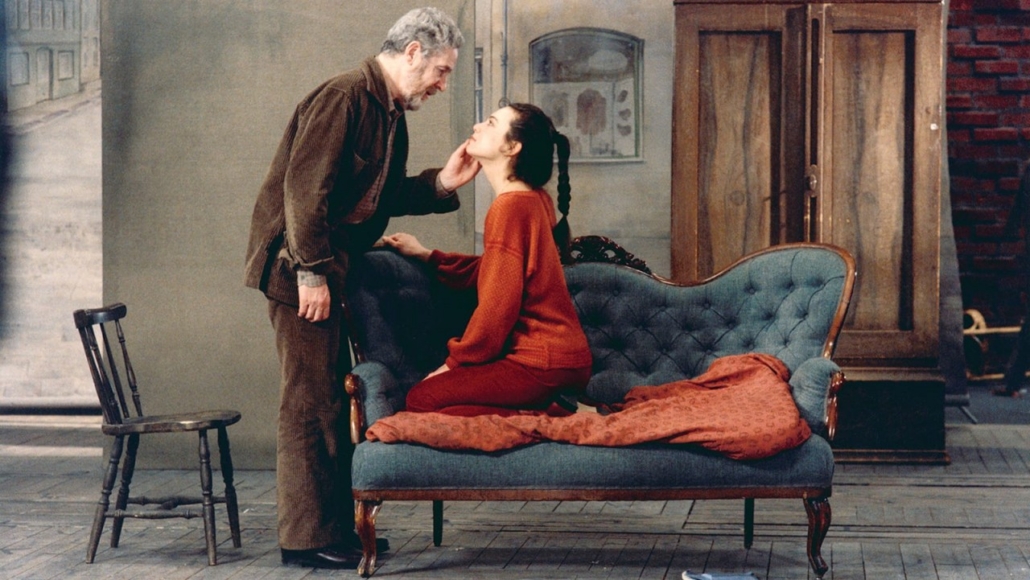
From the bloated runtime of THE MAGIC FLUTE, which was 135 minutes to the short and somber 70 minute runtime of AFTER THE REHEARSAL. These two Bergman productions are paired together in his epic Criterion Collection box set because they reflect on his views of the stage.
This one is staged like a play; an aging playwright Henrik Vogler (Bergman regular Erland Josephson) awakes on stage after a rehearsal to find himself alone with his thoughts. In enters his Anna (a very young Lena Olin!) claiming to be looking for a lost bracelet when in actuality she wants to confront Henrik about how harshly he’s treated her as the star of his new play. Henrik had feelings for Anna’s mother, now long deceased and the two volley back and forth about the complex dynamics of love and acting and their work.
It’s engaging enough but all a bit awkward as Henrik is implied to have had an affair with Anna’s mom (another Bergman regular, Ingrid Thulin), and is kind of leaning towards a romantic affair with the young Anna here. (Um, way, way too young for this old timer!) I mean, the dialogue is sharp and these two actors make it work but I couldn’t help but feel a bit icky the whole time with that underlining romance presence. Erland Josephson, bless him, always delivers and has such an incredible face. It was a pleasant surprise to see Olin in this! She’s in ROMEO IS BLEEDING, one of my favorite cult movies opposite Gary Oldman!
I understand the place of both of these works in Bergman’s career, life, and in the box set. But compared to some of the earlier films, these left me a bit cold. Anxious to get back to the narrative features!
THE TOUCH (1971)
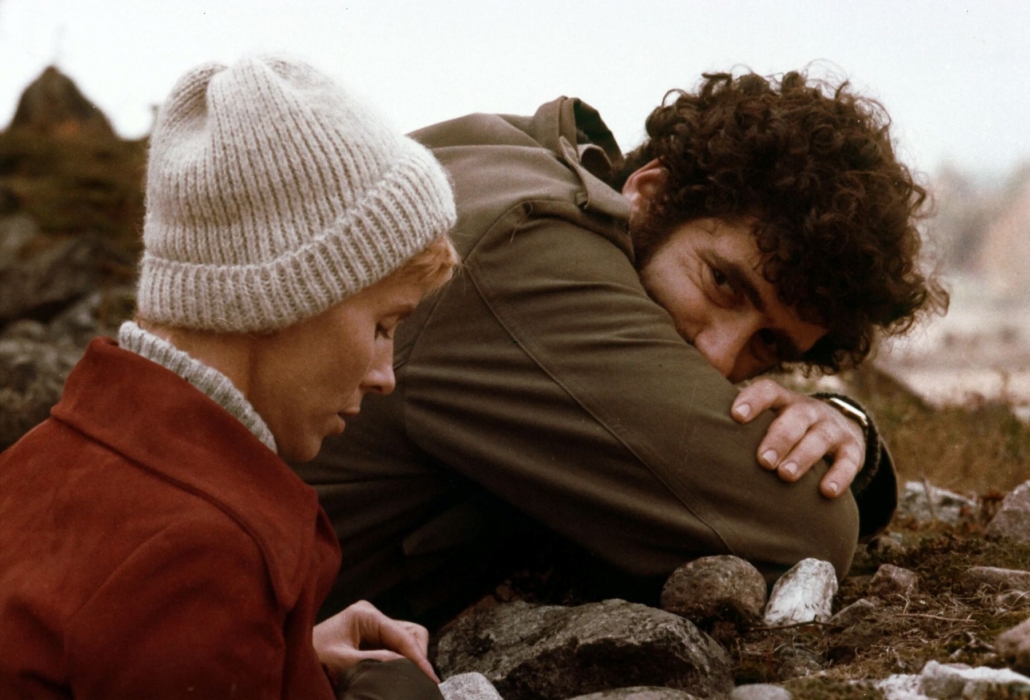
An interesting watch in my continued Bergman filmography binge, THE TOUCH is in color, is Bergman’s first movie in English, and is fronted by an American movie star in Elliott Gould.
Bibi Andersson plays Karin, a woman who loses her mother in the opening moments of the film. At home, she has the comfort of her doctor husband (an always welcome Max Von Sydow) and her two kids. Her husband brings home an American archeologist for dinner whom she actually crossed paths with in the hospital earlier, amid her grief, and within moments, David (Gould) confesses to her that he’s in love with her, and has been since the first moment he laid eyes on her.
Despite all sense and rational, Karin, smitten by the sudden attention, begins an affair with David. But it’s not all passion. David is a caring lover, but also volatile. He flies into a rage at a moments notice and even hits her at points! And yet, she can’t help engaging in this continued affair which lasts two full years. Eventually it all has to come to a head and there’s no way this could end well for anyone.
It’s not bad, it’s not great either. But it’s always interesting and compelling, as is the case with all of Bergman’s films. I wonder if part of the disconnect is the fact that it’s his first English film. Gould is doing his best and is good in a lot of the intimate moments, or the parts where he explodes, but he’s also got some clunky dialogue. There are fascinating aspects to his backstory that we never fully get. The loss of his family in the Holocaust, or even the fact that Von Sydow treated him after a suicide attempt. Bibi and Max, as always, deliver stellar performances.
This has always been regarded as one of Bergman’s “lesser” films, even by the auteur himself, but it’s still better than most modern films!
THE SERPENT’S EGG (1977)
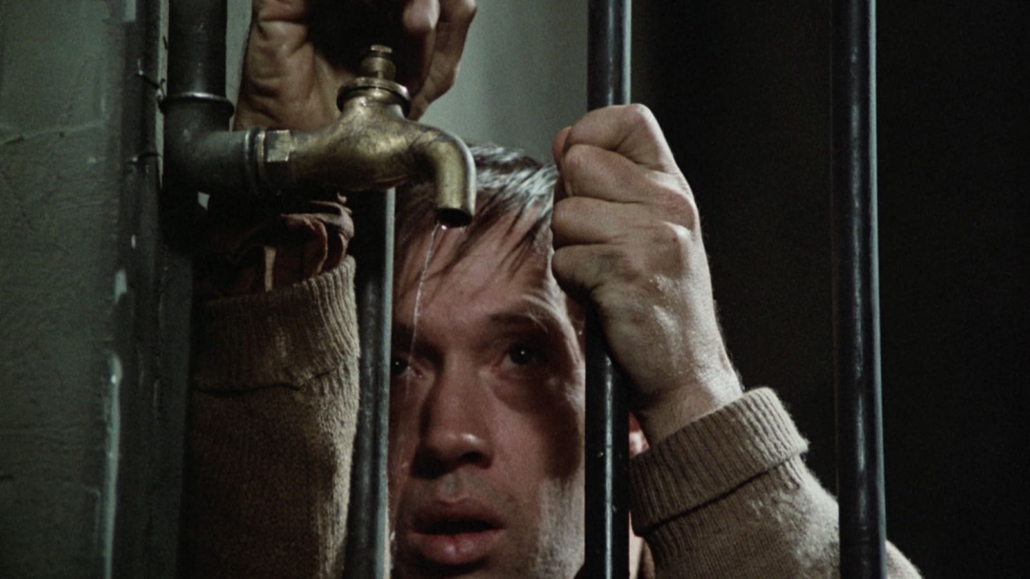
The second and last film Bergman made in English, this one stars David Carradine, apparently his fifth choice for the role of Abel Rosenberg.
THE SERPENT’S EGG is set in the early 1920’s in Berlin. Abel (Carradine) was part of a three-piece circus act. In the opening scene, he finds his brother has committed suicide. He goes to inform his former sister-in-law, now his sole companion in this dark, depressing backdrop where he only finds solace at the bottom of a bottle. The police bring him in for questioning when several other locals turn up dead. Him and Manuela (his sister in law) eventually find work at a hospital, but instead of stability, Abel discovers a doctor’s nefarious, inhuman tests on human subjects. Which included his late brother Max.
It’s a wild, sober ride, but not necessarily a good one. This one was produced by Dino De Laurentiis and the closest that Bergman got to making a movie specifically for “Hollywood,” but from what I’ve read, it was not well received by critics or audiences at the time of its release. It’s on par with the dark tone of his “silence of God” trilogy, and even features a few truly horrific moments, including a head-crush-by-elevator that rivals THE LIFT!
Interesting for its place in his filmography, but not a hidden gem either.
PERSONA (1966)
If ever there was a piece of work that inspired a young David Lynch, it had to be Bergman’s PERSONA! At a lean 83 minutes, this avant-guard work is pure expressionism. Light on plot and yet the visuals, fast cutting, striking images, and dialogue between a young nurse / caregiver Alma (Bibi Andersson) and a famous actress going through a mental breakdown, Elisabet Vogler (played by another Bergman regular Liv Ullmann).
The film opens on random images, most noticeably a boy, rising from reading his book to reach out and touch an out of focus image of a woman, (potentially his mother?) as if a window into another world. (Or quite literally, the movie screen that Bergman has so often invited us to.) It also happens to be the cover of the Criterion box set!
What starts as a young nurse caring for an older actress shifts to the pair being in a secluded summer house where Alma dominates the majority of the conversations since Elisabet refuses to speak. She tells provocative stories of a tryst with a friend and two boys, the abortion that followed, and the shame to her partner for the diversion from their relationship. But as the film progress, there’s a very obvious reason both women look very, very similar. Are they one and the same? Is the film just someone at their breaking point confronting another side of them? Hence, the title “PERSONA?”
Well, much like the latter half of MULHOLAND DRIVE, I believe that’s up to the viewer! I appreciated but didn’t love the last few films in the Bergman box set. This felt like a vibrant return to form, even though I’m sure it came, chronologically, before those other films. Whoever curated this set did a marvelous job!
THIRST (1949)
And now, back to the early works of Bergman again!
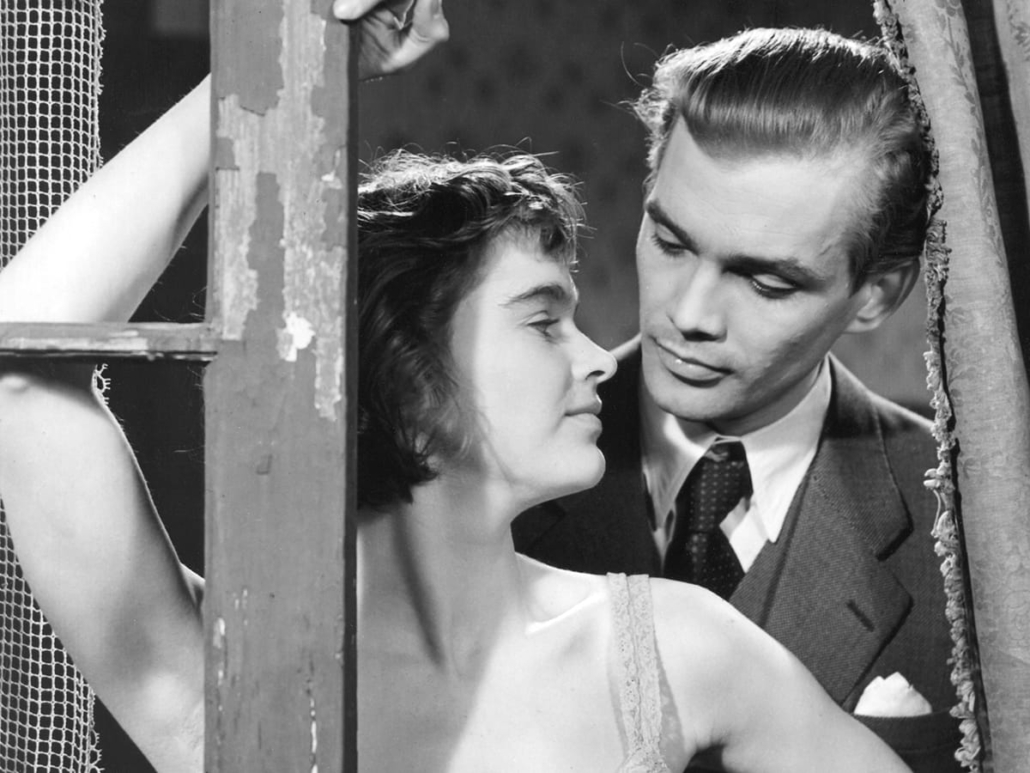
THIRST follows three concurrent and somewhat intertwined love stories. Young couple Ruth (Eva Henning) and Bertil (Birger Malmsten) are traveling by train back home to Stockholm. But their marriage is a mess! Ruth previously had an affair with an older married man named Raoul (Bengt Eklund). Bertil was comforting a lonely widow named Viola (Birgit Tengroth). Now, on the long trek back, they are constantly bickering at each other.
Viola is still in mourning and stuck between her overbearing Doctor who is desperately trying to bed her, and a fellow young widow she meets by fate who also has romantic intentions with her. As always, the relationships in these early Bergman movies are complex, humorous, and human!
At a brisk 84 minutes, there’s so much cinematic craft at work. The opening shot, for example, is one long continuous take of Ruth waking up, having a cigarette, going to the bathroom to brush her teeth, trying to wake her husband up, stumbling on an intruder, packing a bag, etc. It’s just so beautifully shot and executed.
Also known as THREE STRANGE LOVES which is a more accurate title!
PORT OF CALL (1948)
Another Bergman drama, this time from 1948! PORT OF CALL might have, dare I say, one of the more romantic, if not complicated, relationships in all of his filmography.
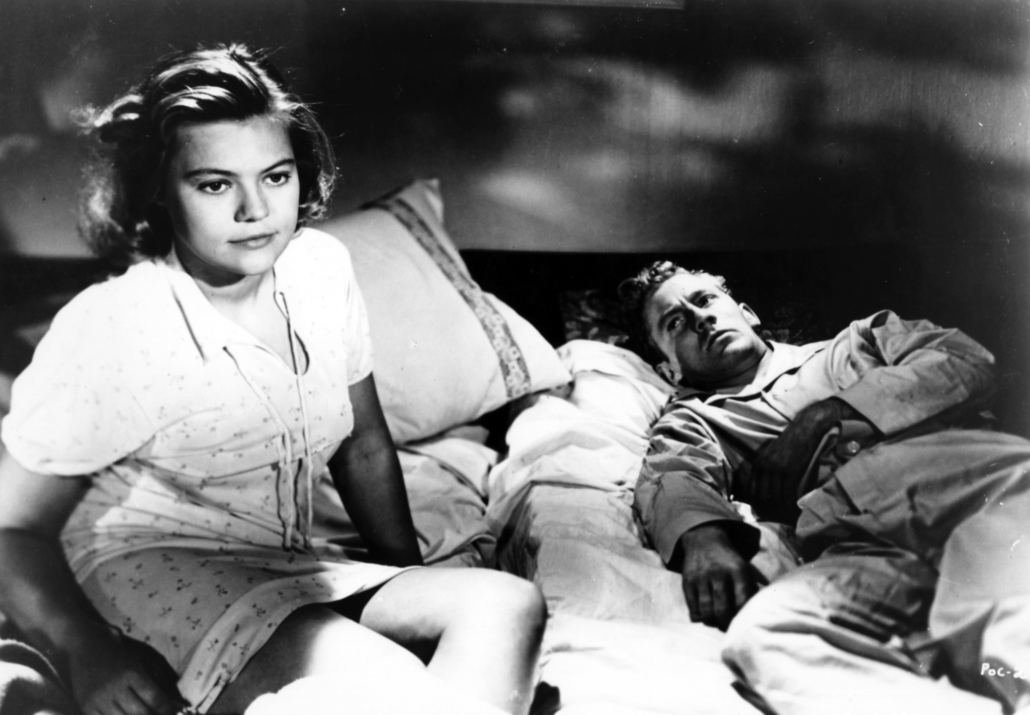
We meet young, idealistic sailor Gösta (Bengt Eklund) as he’s just arriving back home. Simultaneously, the troubled Berit (Nine-Christine Jönsson) attempts to throw herself into the ocean before being saved. The two just barely cross paths here until later at a dance club, Berit catches the eye of Gösta. He walks her home and they immediately start a sweet relationship together. On another date, some of her co-workers start harassing the couple and Gösta challenges them all to a fight! Three guys against one! And for the most part, he kicks their asses.
It isn’t until the two are married that Berit starts confessing her very troubled, complicated past and divulges her previous suicide attempts. She comes from a broken home and she has escaped in the past by getting into other relationships, something somewhat taboo for a young girl in the 1940s to be involved with. The harsh realities force them to confront the world’s odds against them, together.
Nine‑Christine Jönsson as Berit is absolutely terrific. Vulnerable, emotional, and just a beautiful performance, she expresses all her inner turmoil on her face every time she cries and yet, has the naivety of young love when it comes to Gösta. I found myself rooting for these two kids!
It may still be early in his career, but Bergman shows extreme confidence and craft in the way he executes this story. Truly a master from the very beginning.
CRIES AND WHISPERS (1972)
Wow. Bergman tackles life, death, and grief in his unique cinematic way with CRIES AND WHISPERS, a film about the complicated family dynamics that come to the surface when a loved one is dying.
Agnes (Harriet Andersson) is in the final stages of home hospice. And with her are her two sisters, Karin (Ingrid Thulin) and Maria (Liv Ullmann), as well as her loyal, faithful servant Anna (Kari Sylwan). As the sisters face the inevitable, we get flashes back to their lives and the somewhat cruel existences they’ve led. Maria, a vein woman, unfaithful to her husband and unsympathetic when he attempts to kill himself after finding out about her infidelities. Karin is even more cruel, cold, domineering, and troubled; at one point taunting her husband by shoving a piece of broken glass in her… well, you know, and trying to instigate painful sex.
The only pure soul in this entire household is Anna, the servant. We learn early on that she had a young daughter that died, and she is devoted to the ailing Agnes in a maternal kind of way.
If you’ve ever dealt with hospice care, this subject matter is a lot to handle and may be a bit triggering. Having experienced this first hand with my father, and then my mother, consecutively, I wondered during those lonely, hard times why no one had ever attempted to make a film about the unique loneliness that comes with waiting for a loved one to pass while enduring all of their physical pain in the process. I should’ve known that Bergman would depict this in one of his movies, but as I said to my friend Ryan, who I watched this with, it’s far, far worse in real life, and this is the cinematic, somewhat beautiful version of living through that extremely traumatic experience. (I still think I need therapy to unpack all of that stuff at some point.)
What’s even more shocking and original is that even after Agnes passes, it’s like her spirit can not be at rest. So, we get a third act where she confronts her two sisters. Its emotionally devastating and ends with one of Bergman’s most timeless images ever captured on film, the saintly Anna holding the rotting Agnes in her arms.
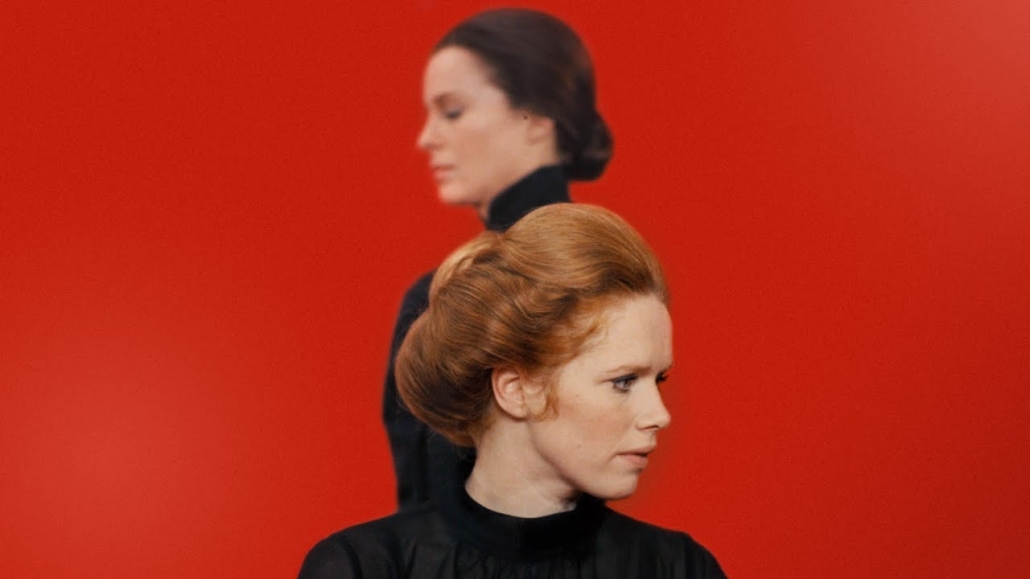
It’s one of Bergman best directed films. Anytime it fades to the next scene, it fades to red instead of the traditional black. Red is the common motif. And it’s always good to see his usual staple of actors returning in various roles in one of the more emotionally complex, yet simpler stories he’s ever told. It closes on a somber yet somewhat optimistic note. One that illustrates that we have to appreciate those moments in life when, if even for a fleeting moment, everything feels OK.
WOMEN WAITING (1952)
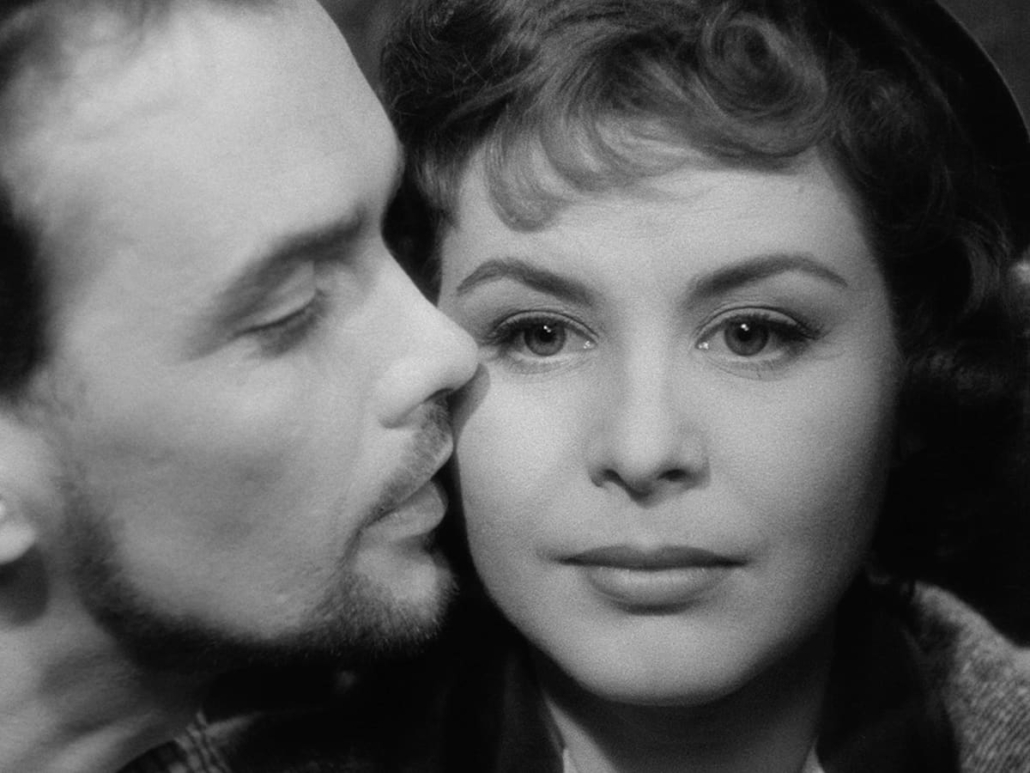
Ah, interesting. So, this seems to be Bergman’s anthology film, although I’m sure they didn’t refer to it as that at the time of its release. Basically, four women are waiting for their husbands to return to the summerhouse they’re all sharing and each one begins regaling a very personal tale from their relationship. Every 25-30 minutes or so, it shifts the narrative to the next woman.
The first segment revolves around Rakel (Anita Björk) and the love triangle that nearly destroyed her marriage. She was unfaithful once with a childhood lover and confesses the whole sorted affair to her husband Eugen (Karl-Arne Holmsten), who threatens to use his rifle on himself.
In the second segment, Marta (Maj-Britt Nilsson) tells the story of how her painter husband (my man, Birger Malmsten!) courted her. It starts out rather romantic until Martin (Malmsten) abandons their relationship to settle family affairs after his father’s death, all while she’s secretly pregnant with his child. It’s here where we realize that all of these women’s husbands are actually brothers, making them all sister-in-laws.
While the coffee is brewing, Karin (Eva Dahlbeck) recounts a comical story about how being stuck in an elevator with her husband (Bergman M.V.P. Gunnar Björnstrand) helped rekindle the spark in their relationship. (Partly brought upon by bluffing that she knew of a supposed love affair.) I loved seeing Dahlbeck and Björnstrand together again here as they were a “couple” in the very first film from the Bergman box set, SMILES OF A SUMMER NIGHT, where I started this journey!
And there’s a side story about a young couple in the family, ready and willing to run off for the summer.
SECRETS OF WOMEN is a much better, more accurate title, but I’m assuming that’s a literal translation of the Swedish title. But this is multiple perspectives on complicated marital relationships all from the point of view of the women. Classic Bergman.
BRINK OF LIFE (1958)
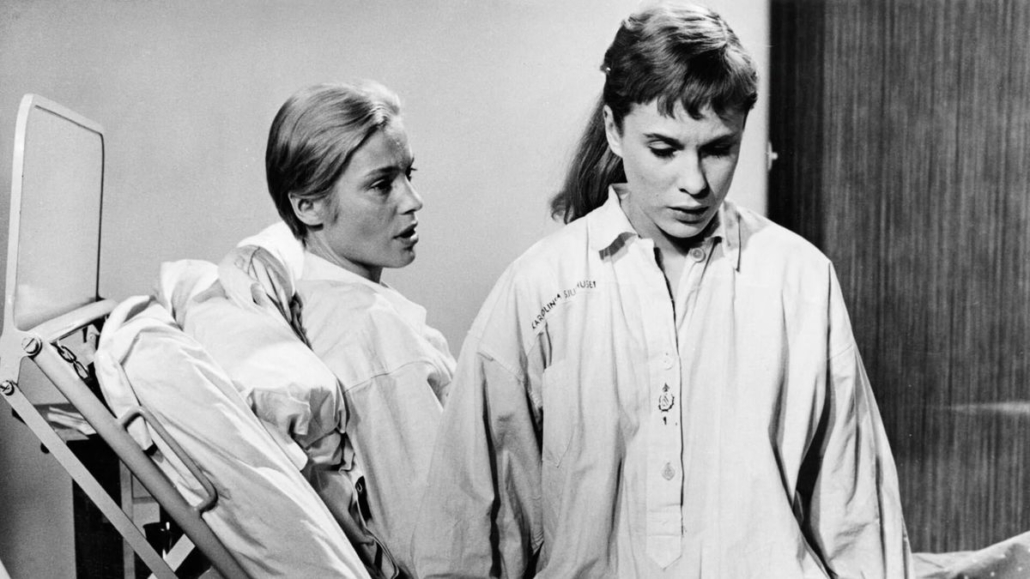
I see now why this was paired up with WOMEN WAITING on the Criterion disc. These are the two films of Bergman’s that specifically revolve around 3 or 4 women, told from their point of view, and are arguably his most feminist pieces of work. Ironic, considering he was married 6 times and maybe not necessarily a good guy when it came to his romantic relationships! But still, incredibly progressive and forward thinking for a pair of films made way back in the ’50s!
WOMAN WAITING was about four women waiting in their summer home for their husbands, all brothers, to return and recounting various stories of why and how their complicated relationships seem to work. (Or more accurately are worth staying in.) In BRINK OF LIFE, this takes place over the course of one 24 hour day and focuses on three women in the maternity ward at a hospital.
Cecilia Ellius (Ingrid Thulin) is the first one we meet as she’s being checked into the hospital, bleeding profusely, and very obviously suffering from a miscarriage. Shattered by the experience and questioning her own marriage, she wants her husband not to come visit and threatens to dissolve their relationship. Hjördis (Bibi Andersson) is a much younger girl that’s being treated after attempted to abort herself and failing. She’s tormented at the prospect of bringing a child into the world because she doesn’t know who the father is and she fears her pregnancy will disappoint her mother.
Meanwhile, Stina Andersson (Eva Dahlbeck) is there because she’s overdo to give birth and couldn’t be more excited to be a mom. The three women are all sharing the same room together and through their discussions, shine a spotlight on the fears of motherhood. What’s crazy to me, now that I’m 38 films deep into this Bergman binge, is that in the course of his life, Bergman asked every conceivable question a human being could ask, and tried to answer them through his films. Questions of life, of death, of relationships and marriages and affairs. Of being faithful and loyal. Of losing hope. Of facing death. Of fearing death. Of accepting death. Here, it’s two back-to-back films from a female perspective, with top tier actresses in their roles, about what’s expected of them and what they want.
In the essays that accompanies the Criterion box set, per Bergman’s IMAGES book, he apparently thought very little of BRINK OF LIFE, which is a shame because it shows such sensitivity towards the plight of women, and yet he himself admitted to not treating the women in his life very well. (He admits to requesting to witness a birth before making this film because he wasn’t actually there to witness the births of his own children. Oof.)
Regardless, some 67 years later, this 84 minute Swedish film about three women at the crossroads of their lives that happens when you give birth is a beautifully made, excellently acted, and brilliantly executed piece of art.
DECEMBER 2025:
AUTUMN SONATA (1978)
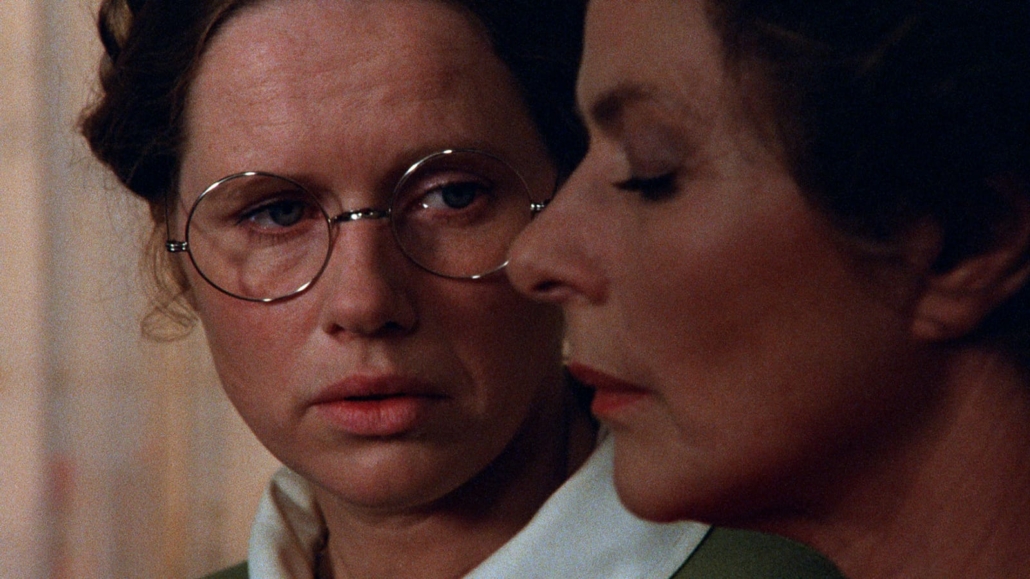
Ah, the two legendary Bergman’s unite! At a film festival, Ingrid Bergman handed a note to Ingmar Bergman to remind him that he promised they’d work together one day. And AUTUMN SONATA became the result of that letter.
In the disc’s introduction, Ingmar reveals that he knew he wanted to pair Ingrid with Liv Ullman as mother and daughter, but that when they did the first script read together, he was horrified by Ingrid’s interpretation of the character, being as bold as to call it “overacting.” It wasn’t until later in the shoot that he pulled her aside to address this issue. She requested to see the dailies, realized he was right, and they reshot those first few days to be more in line with what Ingmar wanted or saw for her character of Charlotte. You wouldn’t be able to tell from the final product that there was such friction between the two and it’s such a wonderful, powerful performance by Ingrid, but I can also understand why she fought for either levity or just to make her Charlotte more likable. This is some stark, somber stuff!
After losing her long-time second husband, Charlotte (Ingrid Bergman) is invited to spend quality time with her estranged daughter Eva (Ullman) and her husband Viktor (Halvar Björk). It’s been seven years since they last saw each other. When she arrives, Charlotte is surprised to learn that her other daughter, Helena (Lena Nyman) is also there; a long time suffering invalid that Charlotte had left in a home and never visited, but that now Eva cares for on a permanent basis. And this is just the beginning of the complexities between this mother and her daughters.
It seems that Charlotte, terrified of being a mother and sacrificing her career, chose instead a life as a pianist, often being away from home and in turn abandoning her family. An affair on her first husband, Eva’s broken father, comes up as Eva was left with the task of caring for him. Just a few moments with Helena and seeing the severity of her disability would bring any normal person to sympathetic tears, but Charlotte just wants to escape. When things are hard, Charlotte is incapable of facing them. She hasn’t seen Eva in seven years! She didn’t even reach out or console her when her and Viktor lost their 4 year old son.
It all comes to a head in a late night confrontation between Charlotte and Eva which plays like an intense scene from a stage play. How much damage can a mother do to her daughter? And is there any room for forgiveness?
Again, the performances from everyone involved are what make this stand out as one of Bergman’s best. In terms of emotional complexity, and also dealing with the ever impending specter of death, this lines up with CRIES AND WHISPERS quite a bit. This ended up being Ingrid Bergman’s final role in a feature film as she was battling cancer at the time they were making it, but wow. What a finale of a performance.
39 films into my Ingmar Bergman journey and one more film (with two different versions) to go!
FANNY AND ALEXANDER (TV Mini-Series Version 1983)
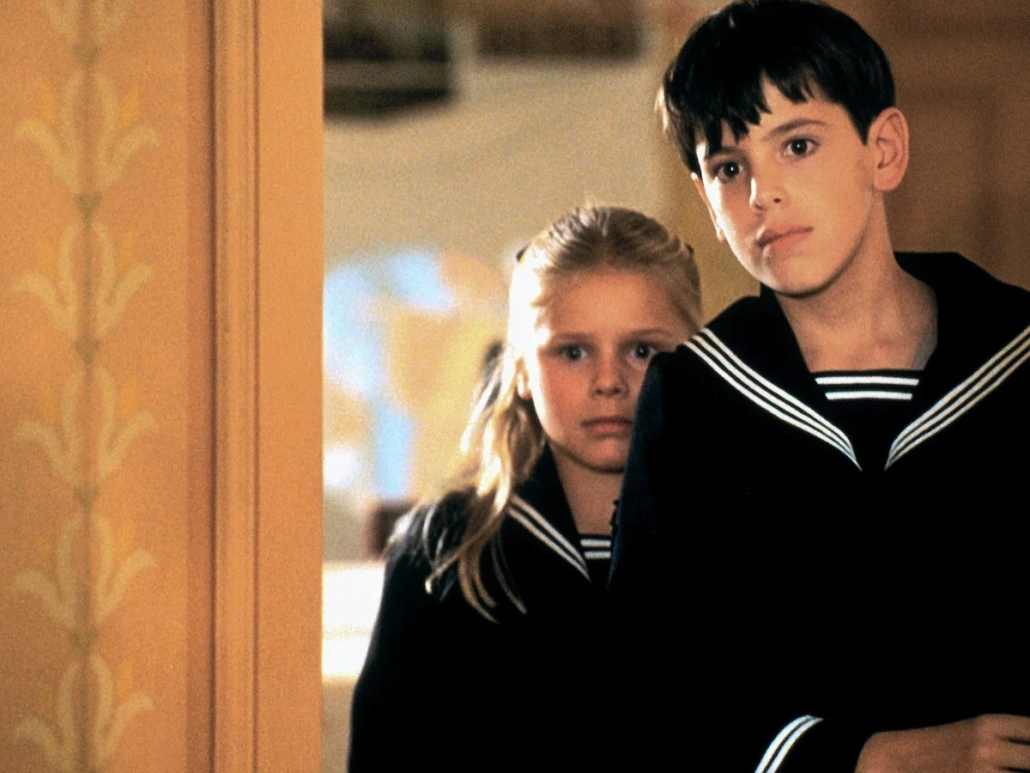
I’ve finally made it to the final film(s) of Criterion’s epic Ingmar Bergman box set, FANNY AND ALEXANDER! And I watched the TV version first, all 5 hours and 21 minutes of it! (The theatrical version awaits!)
It was a pretty epic journey and not quite what I expected, but I fully understand why it’s the last feature in the box set, and arguably Bergman’s last film (until the coda of SARABAND in 2003), because this is a celebration of everything Bergman flirted with throughout his entire career. All the questions of life and death and complex family dynamics and romantic relationships, filtered through the eyes of two 10 year old children and featuring most of his loyal actors returning, looking a bit older than we remembered them, for one last show.
It opens with some surreal footage of a boy (Alexander) exploring his big empty house and potentially seeing one of statues moving. (Or is he asleep? More on this later.) We then cut straight to a grand Christmas party hosted by Ekdahl family, a large group that owns a theater and performs as actors. It’s quite a spectacle, and takes up an hour and a half of the runtime! We meet a LOT of characters here, all the brothers from the family, their wives, the mom, the maids; we see their fights and quibbles, some getting drunker than others, some of the men running off to fool around. It’s overwhelming at first and features very little of the two title characters, but in the context of the rest of story, it’s important we get a feel for who everyone is in this family and how they fit in.
By episode two, it’s when Fanny and Alexander lose their father, Oscar Ekdahl (Allan Edwall). He grows ill in the middle of a rehearsal for HAMLET, and passes surrounded by his family later that night. About a year goes by with his widow, Emilie (Ewa Fröling), taking over the theater, but then she makes the rash decision to remarry their Bishop, Edvard Vergérus (Jan Malmsjö)! A devoted religious man who oversaw Oscar’s passing and is also a widow having lost both his first wife and their two children together. It’s a bit shady when any religious figure “takes a wife” but once Emilie and her kids move in with the Bishop and his overbearing sisters and mother, it becomes clear that there are strict rules abided by in this household. And Alexander isn’t the kind of kid to stick to any rules.
Alexander may see ghosts. Either that, or he has an extremely overactive imagination, and although it can be interpreted either way, I like to believe that Alexander does have spiritual sensitivity and CAN see and interact with ghosts. He often sees his father, wandering around lost in his own self-made purgatory. His hatred for his evil step father causes him to make up an elaborate story about how he abused his first wife and her kids, and they actually drowned while trying to escape his clutches! A maid (long time Bergman actress Harriet Anderson) reports this tale to the Bishop and he severely punishes and whips the boy. (He sees the ghosts of the two drowned girls too.)
It becomes clear that no matter how unhappy Emilie and the children are, Edvard is never, ever going to let them go. He will not allow a divorce, and should she leave and return to her family, he will use the legal system to force his stepchildren back. And this is when the Ekdahl family must intervene!
I’ve already read the accompanying essay by Molly Haskell from the Criterion box set and am somewhat prepped for the changes made for the theatrical version and I’m looking forward to watching that and seeing what scenes Bergman considered essential to this story. Going from 5 and a half hours to 3 is a lot of material left on the cutting room floor! I know a few bits – two of the Ekdahl brothers confronting the Bishop in a funny and tensely long interaction is NOT in the theatrical version, nor is Erland Josephson as Isak Jacobi reading a bed time story to the children after he initially steals them away from the Bishop. Great scenes on their own, but let’s see how the theatrical flows without them!
My Bergman journey is almost at its end, but before I delve into the theatrical cut of FANNY AND ALEXANDER, I most likely will cleanse my palette with a few Bergman documentaries! Looking forward!
…BUT FILM IS MY MISTRESS (2010)
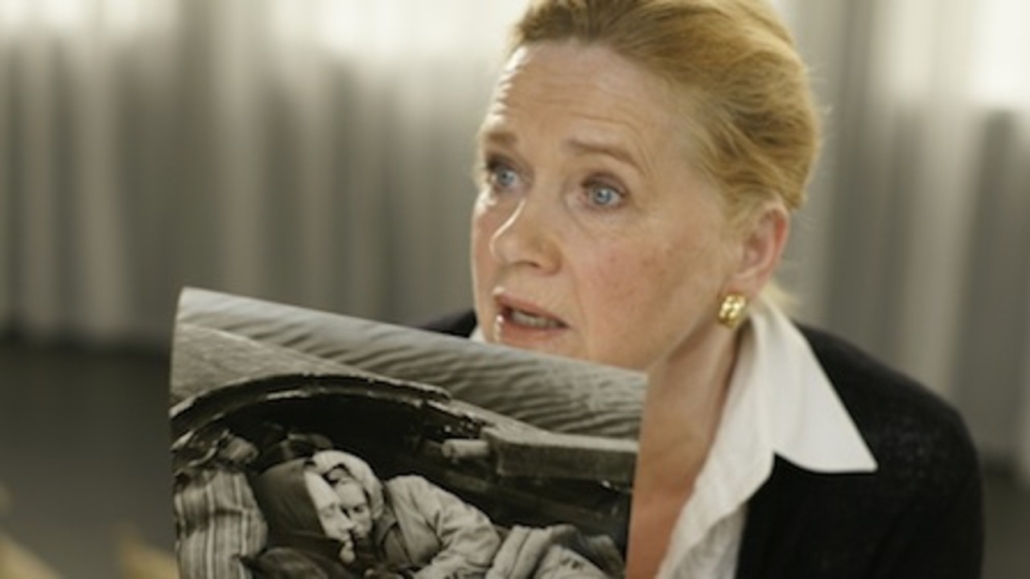
Now that I’m winding down in my marathon watch of Criterion’s Ingmar Bergman set, I’m starting to dig into a few documentaries before I wrap things up with the theatrical version of FANNY AND ALEXANDER. This doc, directed by Stig Björkman, came out a few years after Bergman’s death and explores some of the various themes from his films, edited against some behind-the-scenes footage and testimonials from a lot of the people that worked with Bergman, as well as admirers, such as Martin Scorsese, Woody Allen, and Lars Von Trier.
Now, I saw a quick clip of, I believe Scorsese on YouTube, and was hoping this would feature a lot of the modern master filmmakers, the ones that were clearly influenced by Bergman’s filmography talking about it in depth, but really, I was slightly disappointed by how little they factor into this. That said, some of the behind-the-scenes footage makes the completely worthwhile.
From Bergman shooting some of the indelible imagery from PERSONA, to his rapport with his regular trope of loyal actors, to his on set banter with Ingrid Bergman. You can clearly see their conversations and disagreements transpire in real time and the approach he takes to talking things out with her. Having just watched all these movies, it was quite something to now get glimpses of the incredible making of them all. Runs about an hour long and is worth a look!
BERGMAN ISLAND (2006)

“The demons don’t like fresh air. What they like best is if you stay in bed with cold feet.” Bergman’s opening lines in this documentary about why he takes a walk after breakfast every morning.
Filmmaker / journalist Marie Nyreröd goes down memory lane and interviews Bergman just a few short years before his death in this compelling feature length documentary. She’s the first person to have this kind of access to the infamous director in his remote home of Fårö and the result is a very poignant, fascinating conversation with a man looking back on his body of work and trying to live his twilight years in a world without his beloved wife Ingrid.
A lot of the Criterion films feature introductions by Bergman with Nyreröd and those all come from these sessions. If you’ve just gone on a similar journey as I have, watching all of Bergman’s films, I strongly recommend watching this because he touches upon a lot of them from a unique perspective late in his life and I found it all strangely emotional.
Bergman may have been with his late wife Ingrid for 24 years, and you truly get the sense he misses her terribly, but he was married 5 times before that and has lots of children from multiple relationships. When Nyreröd asks him about it, point blank, he comically responds, “well, I left puberty behind at 58.” He doesn’t hold back on his regrets or mistakes.
The key scene from SCENES OF A MARRAIGE where the selfish husband comes in to his excited wife and then casually and cruelly tells her he’s fallen in love with someone else and is leaving for France the next morning is something he did in real life to his first wife, leaving behind her and his four children, for a young girl named Gun. That was the first scene he wrote some 20 odd years later, having been haunted by how cruel he was in that moment, and what sprung from that one scene was the rest of SCENES FROM A MARRIAGE.
At the end, he lists off his demons. But he also gives quite a beautiful interpretation of death. I’m paraphrasing here, but he had an out-of-body experience when he went into surgery one day. And that convinced him that death is like the light of a candle suddenly extinguishing. You won’t know and it’ll be as if you never existed. But at the same time, he lamented that his biggest fear is the idea that he will never see his beloved wife Ingrid again. He feels her presence still, 8 years after her death, and so if he feels her presence, she has to still exist, right? Maybe he will see her again. That’s what he’d like to believe. And I’d like to believe that too.
FACE TO FACE (1976)
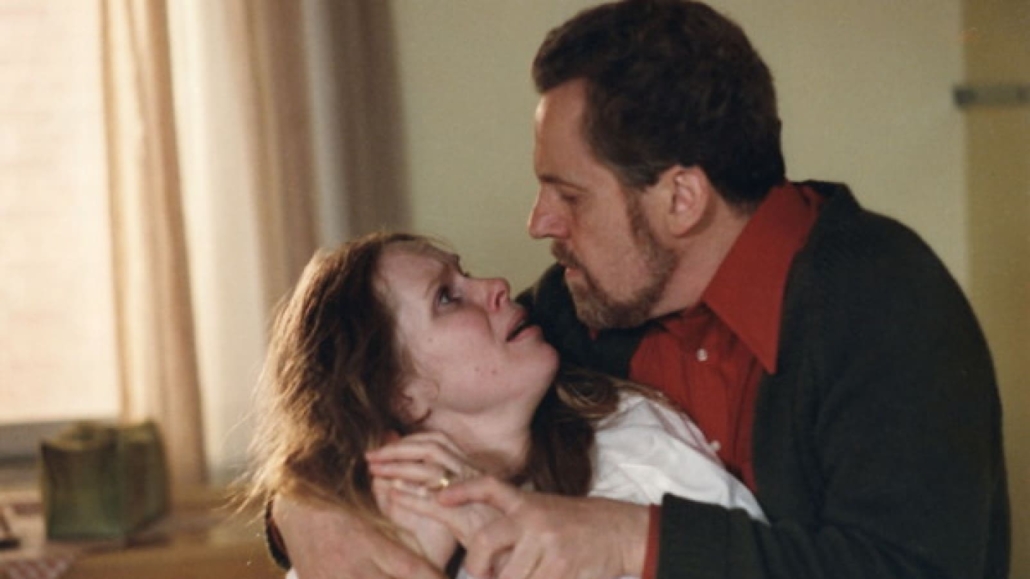
One of the glaring omissions from Criterion’s Bergman Cinema box set is this 1976 psychological drama, FACE TO FACE, which thankfully I was able to rent on Kanopy. (Seriously, all you need is a library card which you can get for free online, and you’ll find a lot of obscure and hard to find gems on Kanopy!)
Bergman regular Liv Ullmann plays Dr. Jenny Isaksson, a psychiatrist that takes care of mentally ill patients. She’s back living with her grandparents as her husband and daughter are away. She starts to have nightmares of a mysterious one-eyed, creepy old woman.
Things get very confusing and surreal at this key moment. While called to her old house where Mari, one of her more disturbed patients is, she’s nearly raped by two men in the house. Simultaneously, she’s beginning something of a emotional affair with a fellow doctor / recent divorcee, Tomas (played by her partner in SCENES OF A MARRIAGE Erland Josephson). Maybe the above incident caused some kind of psychotic break? Or maybe Jenny has been an unreliable narrator this whole time and has always been mentally ill? She attempts suicide, wakes up in a hospital and then has several various dream scenes. (It all gets a bit more fragmented as it goes along.)
I thought this would be Bergman’s attempt at a full on “horror” film, but it’s really not. In fact, I don’t think Bergman ever really did horror, properly. Although his 1980 film, FROM THE LIFE OF MARIONETTES which came a few years after, is the closest he got to a full on horror flick. I learned after the fact that he made this four episode mini-series for Swedish television. And the fact that the theatrical version is a Paramount release might be why it’s not in the box set. (Although, I’m sure Criterion has licensed stuff from Paramount before, right?) It’s good, but not great, and lacks the usual confident visual flair of Bergman’s main filmography. I’d only recommend this for Bergman completists going on a similar journey as me.
FAITHLESS (2000)
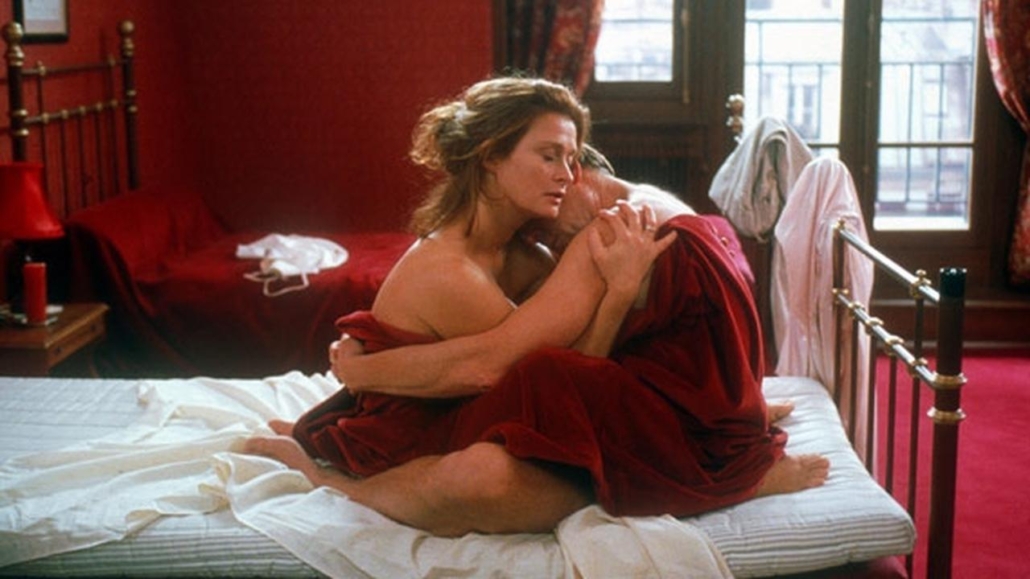
I felt like I had to make one last diversion before I completed the Criterion Ingmar Bergman Cinema box set with the theatrical version of FANNY AND ALEXANDER, and that’s with this 2000 film that he wrote the screenplay for, directed by long time partner and collaborator Liv Ullmann.
Knowing that Bergman was the writer, FAITHLESS features an old man (played by another Bergman regular Erland Josephson) interacting with a woman named Marianne (Lena Endre). While it’s not totally clear at first, it becomes obvious that Marianne is not really there. She’s recounting her dramatic affair to the old man either as a memory, or as an imaginary character from this story he’s writing and figuring out along the way. It’s almost as if he’s asking the character of his next piece to tell him the story.
Marianne is an actress, happily married to a composer named Markus (Thomas Hanzon) with a young daughter named Isabelle (Michelle Gylemo). David (Krister Henriksson) is the couple’s best friend. One night, when it’s just Marianne and David, he suggests they sleep together, which she brushes off considering they’re more like brother and sister. And yet, for some reason, once the suggestion is put out into the ether, neither of them can stop thinking about it, and so they begin a very passionate affair on a trip to Paris. What began as a mere fling grows into a full on affair with David being incredibly jealous and possessive of Marianna. Inevitably, they get caught and from there, she’s at the center of a lot of painful repercussions from her decisions, but also by being attached to two volatile, irresponsible men. It leads to an irrevocable tragedy.
It’s not until the end credits that we discover the name of the old man is simply “Bergman.” But is it really autobiographical? Based on what I’ve read, aspects of it certainly are. Towards the end of his life, Bergman seems to be racked with guilt by a lot of his past mistakes. Ullmann, who had a child with him, often told him he had to forgive himself, although the filmmaker never could. She gives him that moment in this movie where the Old Man caresses David’s cheek during one scene where David confesses to him. (David is meant to be a young Bergman.)
It’s definitely a fascinating drama with complicated dynamics. And while not directed by Bergman himself, Ullmann does an excellent job of weaving a narrative that feels very much like it’s a part of his vast filmography. One unique moment I’ve never quite seen in a movie; when Marianne and David are caught in bed together by Markus, the pair are nervously laughing in Markus’ face. Like two school children caught with their hand in the cookie jar before dinner. It’s awkward and humiliating for all involved. And human. It also makes the various things that Markus does for revenge all the more potent.
One of the things I’ve loved about this journey is that Roger Ebert was a huge Bergman fan, so after watching any of these films, I dig up his reviews. His review of FAITHLESS is worth a look right HERE:
As well as this wonderful interview he did with Ullmann about this film.
FANNY AND ALEXANDER (Theatrical Version 1982)
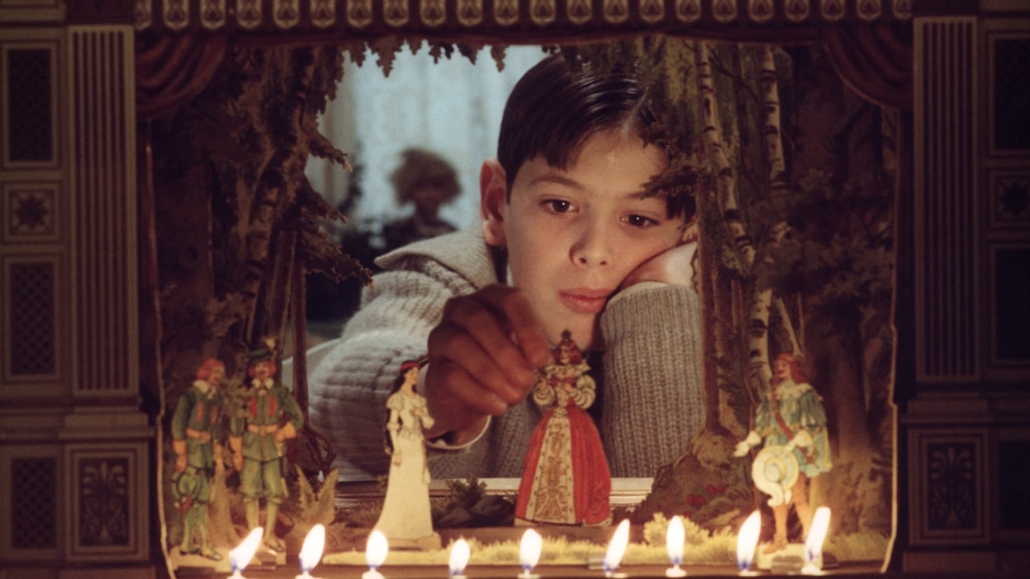
I have now finally made it to the end of my journey with the Criterion “Ingmar Bergman Cinema” collection, closing this thing out with the theatrical version of FANNY AND ALEXANDER! And it is definitely a much better, tighter version of this story! Between the pacing and the way it’s edited, it just flows in the traditional cinematic Bergman way.
The Christmas Party that takes up 90 minutes, the entire first episode of the TV series version, in this movie version whisks by in the first 30-45 minutes and is much more efficient way to introduce us to this large cast of characters. We meet the Ekdahl family in a much more condensed narrative, but we still get a sense of their personalities and place within the family dynasty in their short introductory scenes. They own a theater company, and shortly after the death of Oscar, his wife Emilie remarries a Bishop and brings her children, Fanny and Alexander (Pernilla Allwin and Bertil Guve), to begin their new life with the Bishop’s family. He’s a cruel, cold and demanding man of the household and abusive to the children, in particular Alexander. So, the Ekdahl family, with the help of their friend Isak Jacobi, set forth a plan to get the children back. And Emilie out of this doomed marriage!
Now, there was one scene I didn’t understand in either version, initially. Isak (played by he great Erland Josephson) offers to buy a trunk from the Bishop and when he isn’t looking sneaks the children out into the trunk. Convinced of his scheme, the Bishop attacks Isak and runs upstairs to check if the children are still in the attic. And mysteriously, they are! Yet next scene they are hiding in Isak’s home. Upon a little more investigating, Isak lets out a scream before the Bishop runs back upstairs, the screen turns to white, and through Jewish mysticism is able to conjure up an illusion, making the Bishop believe he sees the children sleeping there when they aren’t actually there. I’ll buy that since there are other supernatural elements playing through out the film anyways, like Alexander’s ability to see the dead.
I do think the second half of the theatrical version rushes through the story a bit too fast, and I noticed two key scenes were deleted from this cut. The first is an incredibly tense, yet hilarious confrontation between Emilie’s brothers and the Bishop where they’re consistently shifting the power dynamic. I know its, technically, not necessary to the story, but I loved seeing how this family came together when one of their own was in trouble. The second is a long sequence with Isak Jacobi telling the children a tale before bedtime. It’s just one of the more captivating and beautifully directed scenes from Bergman’s filmography and ironic that it’s only in the TV version.
That said, I do think the theatrical version is the superior version. But I’d recommend going back to the 5 hour TV cut if you want to spend more time with these characters, the way you would by going back to a great novel!
Thank you, Ingmar Bergman for this incredible cinematic tutorial. You spent your life asking all these questions about life and death and love and fear and family. And your films answer all these questions in various ways! It was incredible to hear those questions and answers but also to watch your loyal stable of actors and actresses appear at different points in their lives. I feel like for this past year, I got to know all of you and celebrate your entire lives and incredible careers. What a ride it’s been.
2026 goal? Perhaps… Federico Fellini?
ALSO READ:
Cinema Palette: William Lustig’s MANIAC PULP!
Cinema Palette: A Look Back At All The Films Of David Lynch!
Cinema Palette: Directed By François Truffaut!
*All of the above reviews have come from my personal Letterboxd account where I’ve gotten back into the habit of reviewing all of the films I watch. Please feel free to follow along: https://letterboxd.com/IconsRobG/
Blog Posts Archive
2026
- Cinema Palette: Directed By François Truffaut!
- Cinema Palette: A Look Back At All The Films Of David Lynch!
- Why Can’t Anyone Get ‘THE MUMMY’ Right? A RETROSPECTIVE!
- FREDDY IN 4K! A Look Back At The ‘NIGHTMARE ON ELM STREET’ Franchise!
- FLASHBACK: SLIPPED DISC, The Record Store That Made Me!
- A Return To Practical Action! A Look At Netflix’s “LOST BULLET” Trilogy!
- Cinema Palette: William Lustig’s MANIAC PULP!
- REVISITING THE CREATURE FROM THE BLACK LAGOON TRILOGY!
- FLASHBACK: The Movie Theater From Childhood That Made Me
- RobServations: The ART of CINEMA and the CINEMAS of PARIS, FRANCE!
- Konbini Vidéo Club in Paris, France! Robert Galluzzo’s Movie Picks!
- BoogeyMan Ben Presents: Discussing “The Psycho Legacy!”
- Cinemas In Paris! (JANUARY 2026 Edition)
2025
- Favorite Films of 2025!
- Cinema Palette! My Year Watching Every Ingmar Bergman Film!
- My Rejected Teaser Trailer for THE MAN WHO KILLED HITLER AND THEN THE BIGFOOT
- Talking ICONS OF FRIGHT, ANALOG LOVE, and PSYCHO LEGACY on Midnight Metal!
- THE PSYCHO LEGACY Is Finally Streaming FREE On YouTube For Our 15th Anniversary & As Our Halloween Treat For You!
- Watch All FOUR Episodes Of “Frights & Insights!” My LOST Hulu Series!
- Watch (Or Listen) To All FIVE Episodes Of The ICONS OF FRIGHT Podcast!
- The ICONS OF FRIGHT BOOK Is HERE!!!
- MY SONG IN Episode 7 of “DEXTER: RESURRECTION!!” Kill Your Ego by PIKE PROJECT!!
- CinemaCon 2025: A RobServations Report!
- We Made “DEATH OF A UNICORN” Back In 2012!
- Hitchcock’s PSYCHO Legacy! A PSYCHO Panel Hosting by Horror 101 with Dr. AC!
2024
- Favorite Films Of 2024!
- 2024, The Master Playlist… Is Here! My Favorite Music Of The Year in 8 Parts!
- Behind-The-Scenes Of The “HALLOWEEN II” Audio Commentary Recording with Dick Warlock
- The First Ever FRIGHT NIGHT Reunion Panel! FEAR FEST 2, Dallas TX, 3/8/2008
- ROBSERVATIONS! My First Podcast Appearance In Over 4 Years
- Behind-The-Scenes Of “THE HOUSE OF THE DEVIL”
- FAMOUS MONSTERS And The Return Of The “Monster Kid” Within
- Behind-The-Scenes of BEREAVEMENT: MALEVOLENCE 2
- CinemaCon 2024 Report!
- Behind-The-Scenes of Drew Daywalt’s KART DRIVER
2023
- Favorite Physical Media Releases Of 2023!
- Favorite Films Of 2023
- A HALLOWEEN FRANKENSTEIN PARTY! 6 MOVIE MARATHON!
- CinemaCon 2023 Report!
2022
2020
- VHS oddities, not available on Blu-Ray. 📼
- I Love THE BOONDOCK SAINTS Movies, And Don’t Care That You Don’t
- GROOVY! The Actual Necronomicon BOOK OF THE DEAD From EVIL DEAD 2013!
2019
- SHOCK WAVES Live! Top 5 Favorite Horror VHS with Gary Pullin: TEXAS FRIGHTMARE 2019
- TEXAS FRIGHTMARE 2019: SILENT NIGHT, DEADLY NIGHT Panel
2018
- Penn Jillette & Adam Rifkin Talk Director’s Cut in Exclusive New Clip
- TEXAS FRIGHTMARE 2018: SAW Reunion Panel
2017
- Adam Rifkin With End Of Year UPDATE on DIRECTOR’S CUT!
- My 10 Favorite (Non-Horror Genre) Movies Of 2017!
- TEXAS FRIGHTMARE 2017: A Q & A with Dean Cundey
- TEXAS FRIGHTMARE 2017: THE BATES MOTEL PANEL!
2016
- BATMAN RETURNS Is the Most Tim Burton-esque Movie Tim Burton Has Ever Made
- Behind The Scenes Of THE SERPENT & THE RAINBOW Commentary
2015
2014
- WE COME IN PIECES: THE REBIRTH OF THE HORROR ANTHOLOGY FILM
- KILLER POV Live Podcast Episode 58: TEXAS FRIGHTMARE 2014
- TEXAS FRIGHTMARE 2014: The CREATURE FROM THE BLACK LAGOON Panel

