
Cinema Palette: Directed By François Truffaut!
May 19, 2026
I began my cinematic deep-dive into the work of François Truffaut on January 9th of 2026 while I was in Paris, France. And completed it on May 18th by rewatching the film that started it all, THE 400 BLOWS! There’s something about analyzing the complete filmography of an artist that changed the medium by their contributions, and knowing it has a definitive beginning, middle, and end. The way emotions continue to shift when contextualizing when each movie came out, what people thought at the time of its release, and how something has held up in the subsequent time since. That’s what this “Cinema Palette” column is all about. Finding inspiration in the past. Let’s find that inspiration with all of the films directed by François Truffaut.
THE MISCHIEF MAKERS (1957)
It’s a new year, and since I celebrated the works of Ingmar Bergman last year, is this the year I jump on the François Truffaut train? I believe I shall! I want to explore and watch all of cinema’s greatest auteurs now.
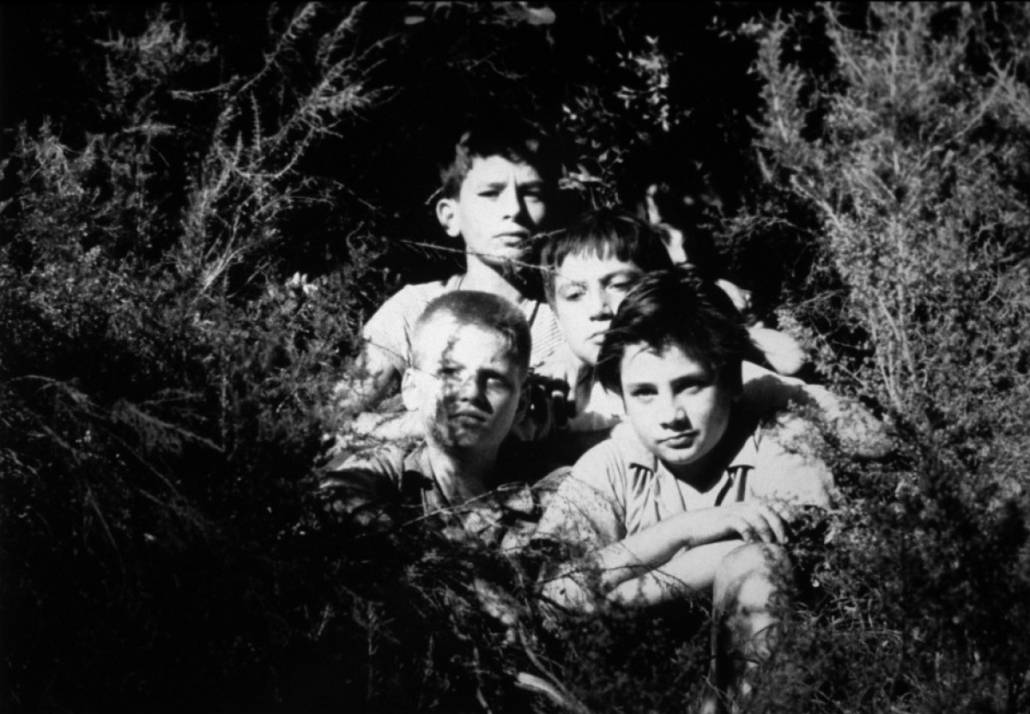
So, I’m starting with this early short film by Truffaut titled “Les Mistons” or “The Mischief Makers” which is streaming on Criterion Channel.
A group of five young boys, approximately around 10-12, are in love with a local teenage girl name Bernadette Jouve (Bernadette Lafont), angelically presented and beautifully photographed by Truffaut. These boys, completely infatuated, follow her and her boyfriend Gérard (Gérard Blain) around town; while they bike ride, play tennis, and even make out. They try to intervene in the relationship, but only out of jealousy versus malice, and in the childish way that only young boys could.
It’s short, sweet, and perfectly encapsulates that unspoken childhood crush boys have for that beautiful girl that’s just a tad bit older than us and stays with us forever. After all, it’s our first brush with those complicated feelings of “love.” And they’re called “crushes” for a reason. That’s what they feel like.
A STORY OF WATER (1961)
Second Truffaut short film as part of the Criterion Channel block and this is one he co-directed with Jean-Luc Godard!
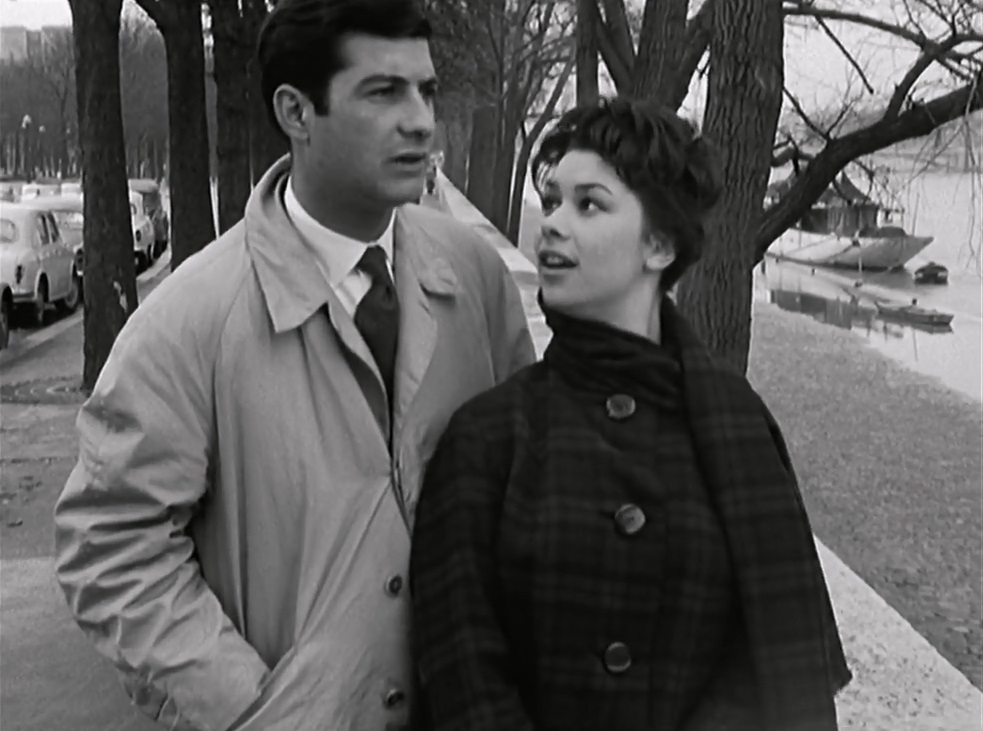
A young woman (Caroline Dim) needs to get to Paris but lives in the neighboring Villeneuve Saint Georges, some 38 miles away, and awakens to discover a great flood on the streets! With water everywhere, she makes her journey into the famed city after hooking up with a young man (Jean-Claude Brialy) and together, they face the multiple obstacles in their way in this light-hearted romantic little drama. It’s under the Eifel Tower that she realizes she is meant to be with this man. (At least for the night.)
What’s interesting about these two short films is that, although they are impressively directed as traditional narratives, because of the main character’s narration, they have a bit of a documentary / instructional-film kind-of vibe to them. In THE MISCHIEF MAKERS, it was one of the boys narrated, and in this, the Girl played by Caroline Dim. (With Godard himself also offering narration.) It’s just a treat to see France in 1961! That’s what I love about visiting these films; they are true time capsules.
THE 400 BLOWS (1959)
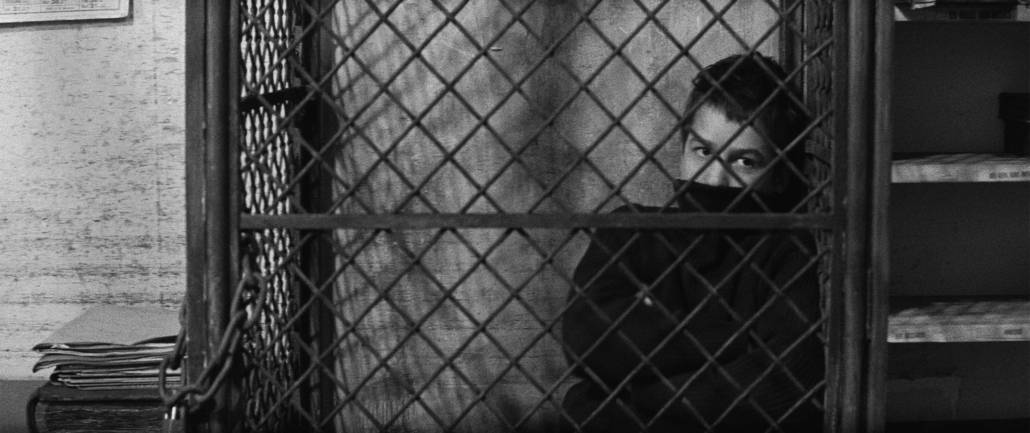
Ah! So, now I’ve made it to François Truffaut’s first feature length film, considered one of the greatest films of all time! And while it’s hard for me to declare that just yet with this only being the first viewing, it was, in fact, a magical cinematic experience. A beautiful time capsule of youth and France circa 1960. (The same year that PSYCHO came out! I always use PSYCHO’s release as my contextual comparison point.)
Antoine Doinel (Jean-Pierre Léaud) is a young troublemaker and obvious stand in for Truffaut’s own troubled childhood. He’s not an inherently “bad” kid, but both his mother and stepfather work long hours and are only home for the evenings. His teacher at school seems to have it out for him and singles him out as the delinquent of the group. And he just doesn’t have much attention or focus on anything he’s in school to learn. (I mean, that sounds like just about all of us, eh?)
At it’s core, it’s kind of a “hang out” movie. We just spend time with Antoine at a turning point in his childhood where he just can’t seem to do anything right and everyone is writing him off as a criminal-in-the-making. His mother tries, offering to be a confidant after one incident that he gets in trouble for. (Although she’s also covering for herself as Antonie caught her in the streets having an affair with another man.) They even take him out to the movies to see PARIS BELONGS TO US! (A movie I just saw for the first time myself recently.)
He skips school because he doesn’t have his homework. Gets caught. And the second time he skips school, he tells the teacher that his mother died, only for her and his stepdad to show up at school furious with his blatant, mean-spirited lie. The threat of delinquency school lingers! And eventually, with the multiple attempts to run away, and getting caught trying to steal and sell his stepfather’s typewriter, his parents have had enough and send him away to a boarding school.
What is his fate? Is he destined to continually be misunderstood and just unlucky? Will he eventually turn to a life of crime because everyone seems to think that’s his fate? He harbors love of films, music, and poetry, feeling a kinship with Balzac who he later unintentionally plagiarizes for a school essay. Is his fate (and Truffaut’s) to follow that artistic path and make THIS movie? Maybe. As it stands, it’s just a coming-of-age story, slice-of-life for a young adolescent.
I’m happy to learn that both Truffaut and young actor Jean-Pierre Léaud DO revisit this character several more times after this film in both short films and features. I’m looking forward to see where young Antoine Doinel goes next…
SHOOT THE PIANO PLAYER (1960)
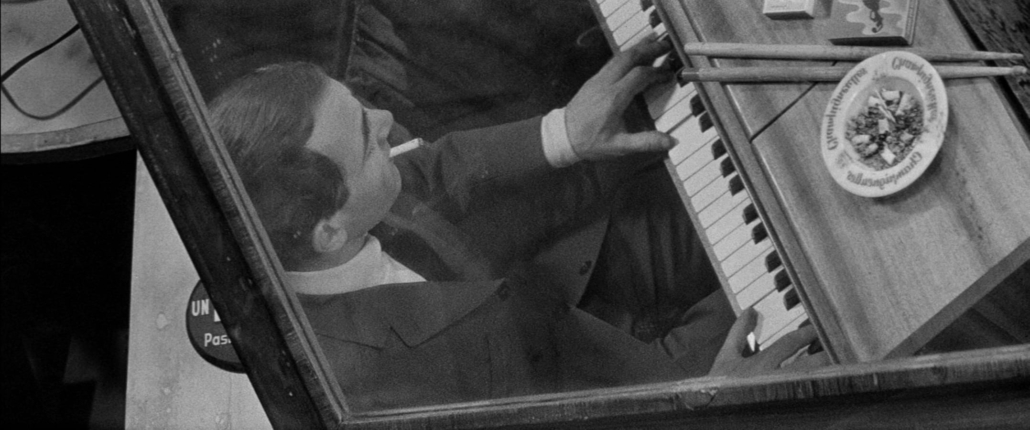
My François Truffaut binge continues, this time with SHOOT THE PIANO PLAYER, his 1960 feature film based upon the novel Down There by David Goodis.
At a lean 81 minutes, Truffaut packs in a lot into that time frame! Charlie Koller (Charles Aznavour) is a piano player at Plyne’s Bar, a low key joint in Paris. In stumbles in his older brother, black eye, disheveled, and in need of help. It turns out he was part of a crime with some gangsters and the two are now hot on his trail. Charlie doesn’t really want anything to do with it, but helps his brother escape their initial search.
Charlie is shy but secretly in love with the waitress Léna (Marie Dubois), although he does have the affections of Clarisse (Michèle Mercier), a local prostitute and friend that sometimes takes care of his kid brother Fido. Léna, however, harbors feelings for Charlie and knows his true identity. He was once a famed pianist named Édouard Saroyan who left his career behind after the suicide of his wife.
Now, the two thug gangsters are not giving up on finding Charlie’s brother. It all leads to a conclusion that’s shocking but not surprising. All in all, very good stuff. Tonally, a bit of everything. It’s got its humor and charm in between the seriousness of the criminals chasing after them.
I appreciated it for what it was, which apparently was Truffaut’s attempt to make a very traditional, straight forward “American” film. If anything, despite the “French New Wave” tag, felt like a traditional “noir.” Apparently, he wanted to just make something completely different from THE 400 BLOWS, and that initially didn’t sit well with French critics and audiences, even though this has become more well regarded with time.
This was my favorite tidbit from Wikipedia. “Film critic Marcel Martin called it a disappointment after The 400 Blows and wrote that it would “only please the true lover of movies.””
Who else are movies made for if not movie lovers?! I guess he means general audiences? But is THE 400 BLOWS a “general audience” kind of movie? Anyways, time always tells the truth on a long enough line, and François Truffaut was always a master filmmaker.
ANTOINE AND COLETTE (1962)
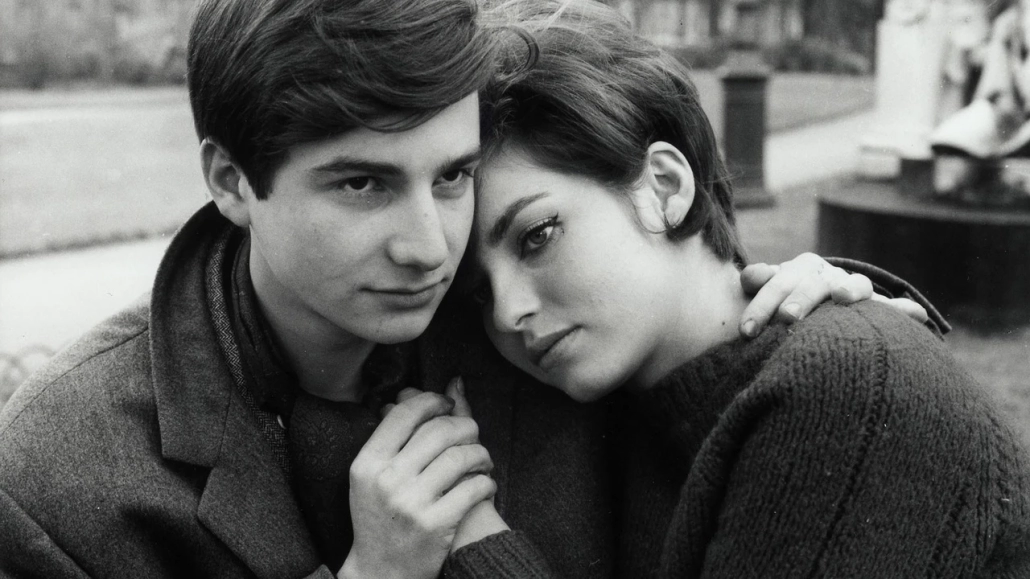
Ah! It’s the return of THE 400 BLOWS’ Antoine Doinel (Jean-Pierre Léaud) in this 30 minute short film that François Truffaut made as part of the anthology film LOVE AT TWENTY, presenting on the Criterion Channel on its own. And man, I don’t know what it is, but there’s something so magical about getting to revisit characters from other films. I guess it feels like checking in with old friends to see what they’ve been up to. That’s why I love Linklater’s BEFORE trilogy so much.
Antoine is now 17 years old and we learn that 5 days after his escape from the delinquency center, he was returned but put under the guidance of a more sympathetic councilor. And so, he lives on his own, has a cool job at a record plant, and still meets up with his childhood friend, René (Patrick Auffay, also returning from THE 400 BLOWS). He attends the local concerts almost every night and is completely smitten when he spots Colette (the stunning Marie-France Pisier).
He makes it his mission to get in her orbit and eventually strikes up a friendship when he sits next to her at a concert. She’s utterly charming and beautiful, she loves all the same books and music as Antoine, and her down-to-earth parents also seem to take a liking to Antoine. But his feelings do not seem to be reciprocated. Ah yes, Antoine has been “friend zoned.” One of the most lonely places for a love struck person to be.
Can their friendship continue as a friendship? Or is Antoine in over his head?
Beautifully executed, I found myself smitten by Truffaut’s simple, humble little tale of teenage crushes. So happy to see Jean-Pierre Léaud back and from what I understand, I’ll be seeing him three more times as this character! Very cool.
JULES AND JIM (1962)
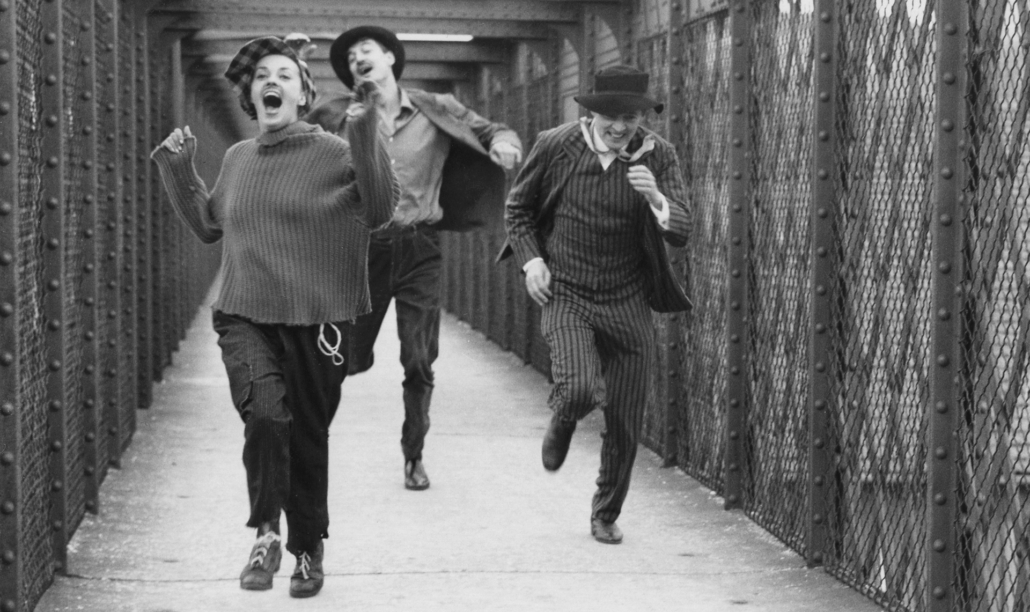
I wasn’t sure what to expect from JULES AND JIM, one of Truffaut’s most celebrated films and considered to be the epitome of the “French New Wave.” Having minimal experience in this movement, at first I thought it referred to the very fast paced and comic nature of the storytelling. The narrator whisks us through the lives and friendships of Jules (Oscar Werner), an Austrian writer that’s living in Paris, and how he met and became best friends with Jim (Henri Serre), a truly extroverted Parisian! I’d read after watching this that Martin Scorsese was a huge fan of the French New Wave (and this film in particular) and you can see a direct line from this film to GOODFELLAS; the manic, fast paced energy of it all.
But then, the movie shifts and surprised me quite a bit and became something a lot more dense than a traditional comedy. Jules and Jim have their different girlfriends. Jim has the more steady girlfriend in Gilberte (Vanna Urbino), although he refuses to commit to her. But then they meet the beautiful Catherine (Jeanne Moreau), whom Jules immediately falls in love with and marries. Then, both men are called away to War! Fearing that by being on opposing sides, they might accidently kill each other.
But the war comes and goes, Jules and Catherine move to a chalet in the Black Forest in Germany and invite Jim to come join them for a vacation. What follows is some of the most complicated relationship dynamics I’ve ever seen depicted in a movie! In short, Catherine is… (from my diagnosis) crazy! She has a child with Jules but is bored of him and clearly is itching to run off and be unfaithful as she’s admitted to being in the past. For Jules, he doesn’t want to lose her forever, and he doesn’t want her to end up with their forth friend, Albert (Serge Rezvani). He proposes to Jim start a relationship with her because that way, even if Jules isn’t with her romantically anymore, they’ll all still be in each others lives. (Easier said than done!)
What follows is a tug of war between the triangle that’s doomed from the start. Seriously, it is unbelievable the back and forth and changes in alliances that goes on between these three people. When it reaches it’s conclusion (which, while abrupt, is probably inevitable) you realize that you’ve lived with these characters through a 25 year chunk of their lives and are not sure how to feel about the whole thing. Maybe slightly heartbroken? Disappointed? Angry? All the emotions that come from a young, intense love.
While I liked all of the Truffaut stuff I’ve watched this far, this one was a leap ahead in terms of storytelling craft and I now understand why this became his smash hit. Despite the complexity and sometimes unlikeable antics of Catherine, the performance by Jeanne Moreau is incredible and her beauty indelible. One of the all time cinematic greats and I’m glad I’ll see her again in the works of Michelangelo Antonioni, Louis Malle, and Wim Wenders. And wow, she was briefly married to William Friedkin? Wild!
THE SOFT SKIN (1964)
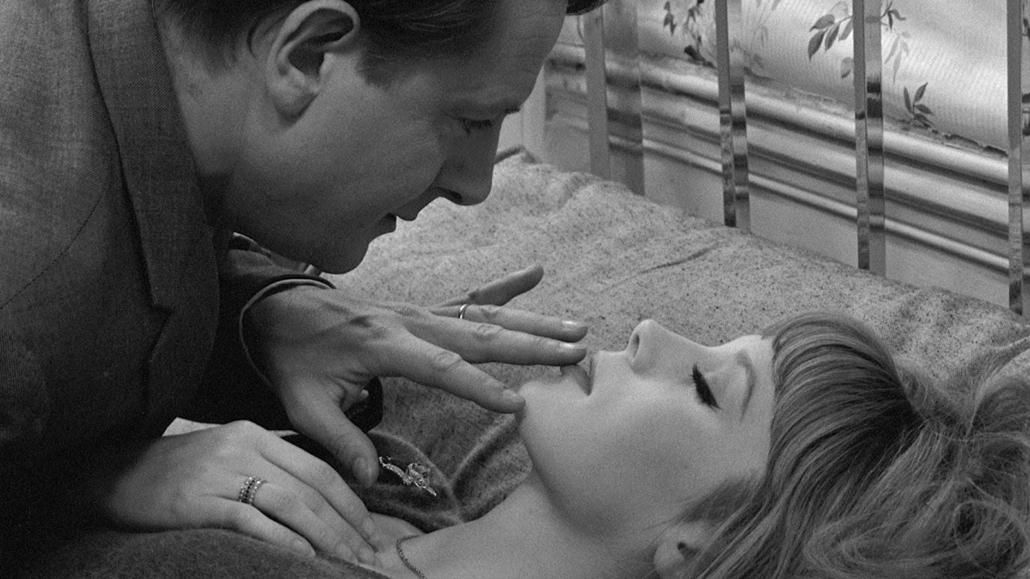
An interesting follow-up to one of François Truffaut’s most successful films, JIM AND JULES. The notes about this film, THE SOFT SKIN, say that this was a time when Truffant really immersed himself in the work of Alfred Hitchcock and that influence is clearly making its way into THE SOFT SKIN. I can definitely see that with the frantic opening scene, in which Pierre (Jean Desailly), a well known author and magazine writer is rushing to catch a flight to give a lecture. There’s nothing all that exciting about someone getting stuck in traffic and just barely making it to a flight and yet, Trauffant shoots it with that touch of Hitchcock suspense!
Pierre is happily married to a beautiful wife, Franca (Nelly Benedetti) and has a beautiful daughter, Sabine (Sabine Haudepin) and yet, on this particular flight, he first meets a young stewardess named Nicole (Françoise Dorléac). It’s inexplicable but there is an undeniable attraction between the two. They share an elevator ride, and then Pierre boldly calls her room asking if she’d meet him for a drink. This sets off their affair.
The thing is… we’re following Pierre who is a terribly selfish person. Let’s be honest, he’s much older than both women. His wife is gorgeous and loving. And Nicole is also striking and beautiful, but he’s trying to juggle both lives and he doesn’t deserve either! In other words, it’s not a matter of if this will all blow up in his face, it’s a matter of when. And it does with a rather shocking, abrupt finale that I definitely did not see coming!
It’s a complicated look at the fragile ego of a man who can’t decide what he truly wants in this life. He seems to want to be with Nicole because she’s new, young, and exciting. And yet, when push comes to shove, and he’s put in a position to leave his wife for her, I get the sense that Nicole doesn’t want to just be a replacement “wife” that he’ll eventually grow to despise. All fascinating stuff, but Pierre is most certainly the villain of the piece. This is the film Truffaut made proceeding his infamous interview that made up the book HITCHCOCK/TRUFFAUT, so you can see the influence of the master filmmaker on Truffaut from that experience. Great performances all around, and Truffaut is on top of his game with new-found inspiration, but this isn’t one I’d want to revisit often.
STOLEN KISSES (1968)
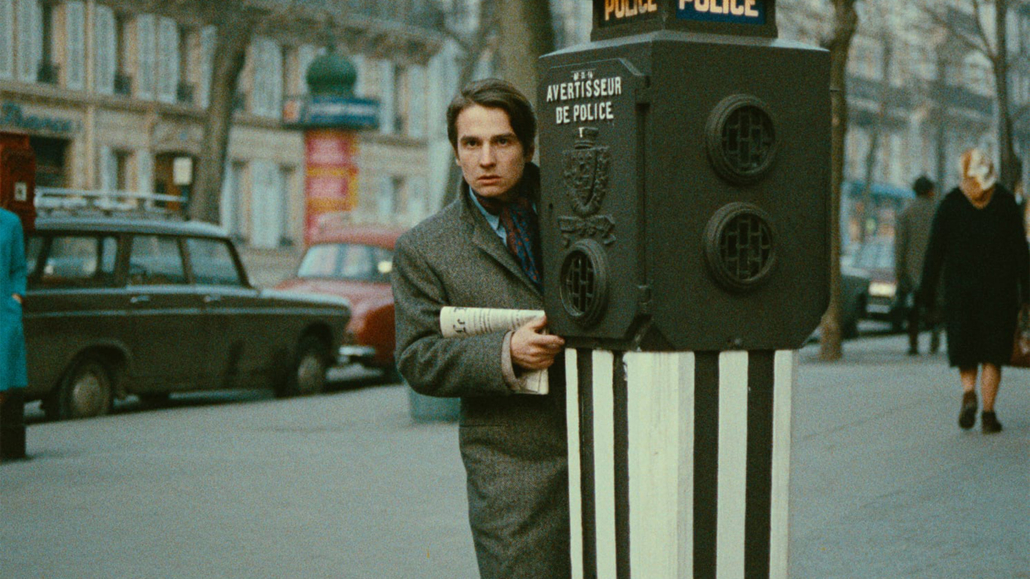
Ah, another evening spent with François Truffaut and revisiting the character of Antoine Doinel, for the third time now, as played by Jean-Pierre Léaud!
Antoine starts the film in the army! But he’s in the process of getting discharged for constantly getting into trouble, even though he willingly enlisted! The sergeant implies that he only joined to run away from a girl, which I thought was initially referencing the last time we saw him in the short film ANTOINE AND COLLETTE. But then we meet the parents of a Christine (Claude Jade) and it becomes clear, THIS is the girl he’s obsessed with. He even wrote her 19 letters in one week!
Freshly out of the army, Christine’s parents manage to get him a job at a hotel, but he gets fired on his second day for (comically) letting an angry husband in on a room where his wife was in bed with another man! He follows the private investigator that instigating that entire incident and feeling bad that he got Antoine fired, he offers him a job at his private investigator agency!
So, Antoine becomes a private investigator and is really, really bad at it at first, following someone while holding the newspaper upside down, for example. For another case, he’s tasked with following a magician around, all while trying to solidify a confusing relationship with Christine who wants to just be friends. (He brings her to the magic show “for work.”)
He then gets hired to work undercover at a shoe shop to find out why no one likes the boss, Mr. Tabard (Michael Lonsdale). He meets his wife (Delphine Seyrig) and is immediately smitten by her. It turns out his agency theorizes she might be having an affair because she keeps buying men’s ties and yet none of are ever worn by her husband. It’s because she bought them for Antoine and enjoys flirting with him, full knowing he has a crush on her! Let’s just say Antoine acting on these err… impulses doesn’t end well for his career as a private detective.
When we last see him, he’s now a TV repairman (third job this movie, fourth if you include him getting kicked out of the army!) where he randomly gets in a car accident with Christine’s dad. And what do ya know? Later that day, Christine is in need of a TV repairman! It seems that fate was destined to bring these two together. And then there’s a somewhat awkwardly funny resolution to this mysterious man that’s been following Christine around the whole movie.
Of the three Antoine Doinel movies, this one is, by far, the funniest of the bunch adopting a less serious tone than the predecessors. It’s just a lot of fun to have now watched this character grow up on screen, and next on the Criterion block is yet another one of his (mis) adventures. Can’t wait!
BED AND BOARD (1970)
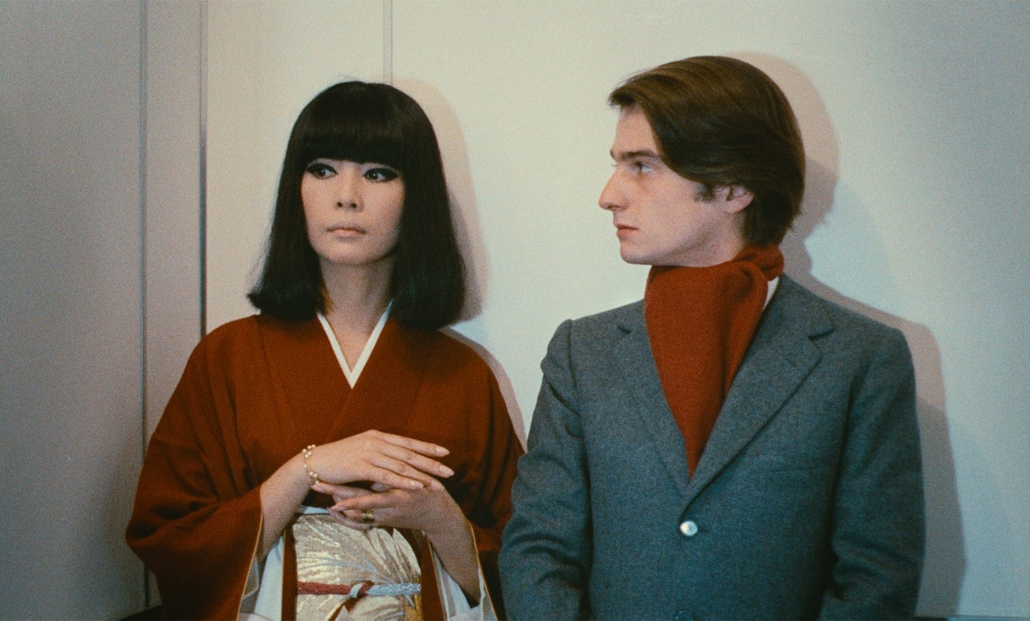
The further adventures of Antoine Doinel (Jean-Pierre Léaud) is his fourth appearance in a François Truffaut film! We pick up with him now happily married to Christine (Claude Jade) from the last film! They live on a fun community block where Antoine sells re-colored flowers and Christine gives violin lessons. Among the crazy cast of neighbors, a few shop owners, the woman that works there that’s constantly throwing herself at Antoine, an older man that never leaves his apartment, and a peculiar tenant they all call the “strangler.” There’s also the quirky guy that is constantly asking Antoine for a loan that becomes a funny ongoing joke.
With a baby on the way, Antoine decides he needs to get a new job, goes in for an interview with an American hydraulics company and gets the job when the letters of recommendations get mixed up with another, more qualified candidate, and the boss doesn’t realize! So, by fate, he lucks into this gig. When a Japanese family visits the company as a potential client, Antoine is immediately smitten by the daughter, Kyoko (Hiroko Berghauer). And so begins an unexpected affair! (Despite there not being anything wrong in his relationship with Christine, just the usual marriage monotony.)
It’s kind of bonkers how he gets caught though. Kyoko puts a bunch of subliminal notes and messages in a batch of tulips she gifts to Antoine. Antoine tries to throw them out, but his kid neighbor sees it and runs them up to the apartment! Thinking fast, he pretends like they’re a gift to Christine. One night, literally all the notes fall out in front of Christine. (Were they some kind of spell to force Antoine to fall in love with Kyoko?!) When Antoine comes home, Christine is dressed like a Japanese geisha! This film isn’t quite as funny as the previous one, STOLEN KISSES, but the third act gets pretty hilarious with several moments that made me laugh out loud. (The Christine reveal being one of them!)
They separate and now he’s in a very bored relationship with Kyoko, and he’s constantly pining to come back to Christine. It’s obvious this relationship is doomed (Kyoko tells him she would like to commit suicide with him!) and was a big mistake, but he decides to go to a brothel before going back to Christine where he bumps into Cristine’s father because, shrugs, he implies it’s just the normal way of life for French men!
Yet again, it’s fun to continue seeing the evolution of Antoine Doinel and the whacky misunderstandings he constantly gets into. While I can draw a straight line from the work of Ingmar Bergman to Woody Allen, I think Allen was probably also heavily influenced by Truffaut and the complicated dynamics between people in relationships acting (stupidly) on impulse rather than thinking things through.
The “strangler” neighbor turns out to be a TV actor, which earns him instant respect once all the neighbors see him on the tube. There’s a guy at Antoine’s job that’s pretty much the textbook instructional video for at-work sexual harassment. And by the finale, Antoine is almost finally finished with his long-in-development novel he’s been trying to write, which when described sure sounds a lot like the plot of THE 400 BLOWS! His wife even says to him, “I don’t like this business of writing about your childhood, dragging your parents through the mud. I don’t know much, but one thing I do know – if you use art to settle accounts, it’s no longer art.” Also, and I had to look this up, there was a random guys at the metro pulling off some oddball physical comedy. Seemed to out of place, but it turns out to be a tribute to the great Jacques Tati.
This is the one and only screen credit for Hiroko Berghauer, listed as Mademoiselle Hiroko, one of the first famed Japanese “supermodels” that worked out of Paris. (She passed in 2003.) Bless Claude Jade for returning as Christine. Her quirky chemistry with Jean-Pierre Léaud is so fun to watch. Onward to the fifth and final film in “The Adventures of Antoine Doinel,” LOVE ON THE RUN!
TWO ENGLISH GIRLS (1971)
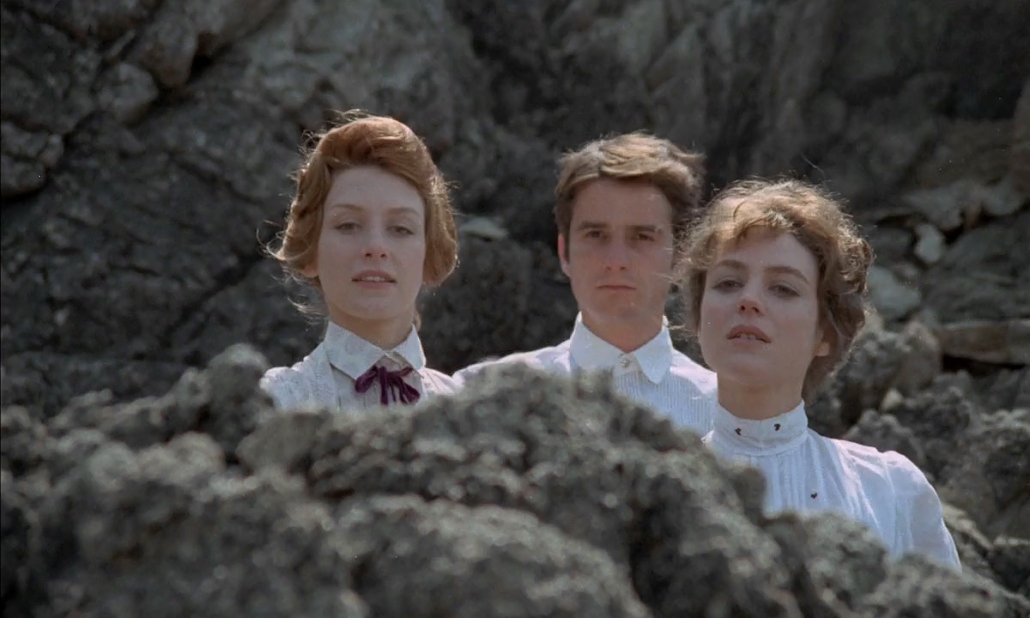
The thing I love about periodically coming back to François Truffaut films is that they remind me of how movies are supposed to make you feel. I’ll watch a bunch of newer movies, enjoy them at face value, maybe have a decent enough night but then forget about them or have no real emotional connection to whatever the hell it is I just watched. And yet, within a few minutes of any François Truffaut film, I’m captivated, drawn in, and mesmerized almost immediately. Each of his films, and Bergman as well, feels like a full meal. Like, you’re experiencing a great novel, cinematically. So, it’s not surprising that this is, in fact, based upon a novel of the same name by Henri-Pierre Roché.
Returning is actor Jean-Pierre Léaud, Truffaut’s frequent collaborator and stand-in, who plays Claude Roc, an aspiring writer that lives with his widowed mother. She is good friends with an English woman and encourages that Claude take out her daughter Ann (Kika Markham). The two immediately hit it off, taking long walks, visiting museums and spending a lot of time talking. She invites him to spend time at her family home in England, and despite the clear chemistry between the two, Ann is insistent that Claude should be with her younger sister Muriel (Stacey Tendeter). The two girls live with their widowed mother and Muriel is reluctant to reveal herself at first, citing visual problems and hiding in her room. When she eventually does emerge, the unlikely trio become the best of friends. But who will Claude choose to be with? They keep pushing him to be with Muriel.
When he finally decides he wants to marry her, she promptly rejects him! But… then she changes her mind? Feeling the kids are rushing into something, the mothers decide the couple should spend a full year apart without any contact to truly test if their love is genuine.
Claude goes back to Paris and becomes an art critic. And suddenly, is content with his single life there, meeting new women. He breaks up with Muriel mere months into their year long separation pact. Ann eventually comes back to Paris in pursuit of her dream to be a sculptor and, as I expected, ends up starting an affair with Claude! (Again, from my point of view, it seemed obvious to me that these two should be together!) But their relationship isn’t easy either. They choose to see other people, much to Claude’s discomfort.
And as time goes by, Muriel resurfaces again. There are unspoken feelings between them. But Claude knows he must confess his relationship with Ann to her. We get conclusions to all of these complicated relationships and again, this is what I love about Truffaut films. Like in a novel, we live with these characters for their whole loves. We get their full stories, and hence it feels like this movie is delivering us a full story. As all movies should!
This movie runs 130 minutes long, longer than most of Truffaut’s other films. But from what I understand, he put back in 20 minutes after this didn’t do well upon its initial release. As it stands today, it’s yet another one of his great works about the complications of love.
LOVE ON THE RUN (1979)
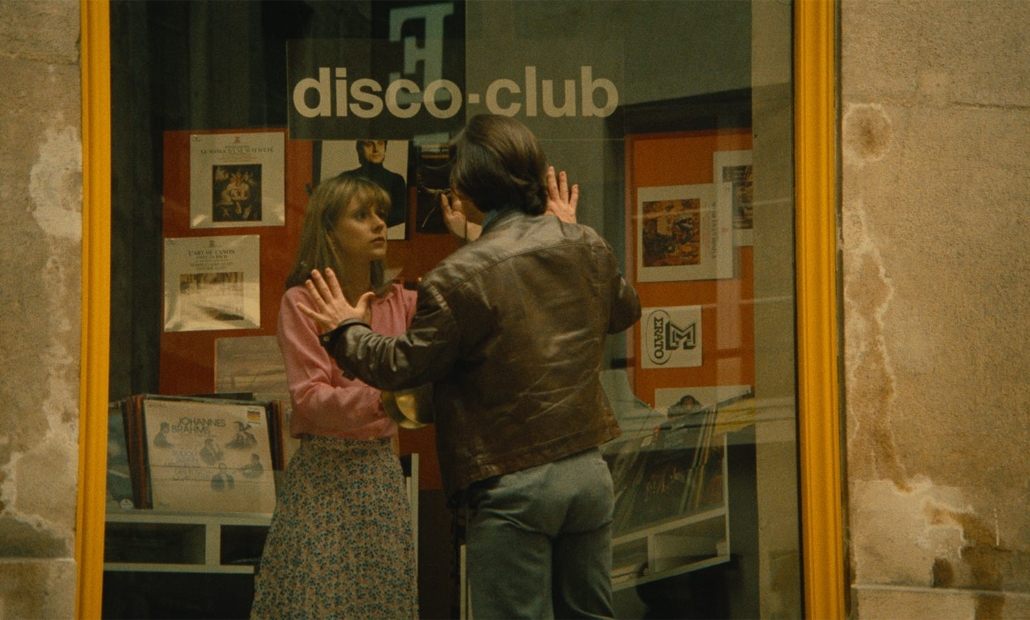
The fifth and final film of François Truffaut’s infamous character Antoine Doinel as portrayed, once again, by actor Jean-Pierre Léaud. I love LOVE ON THE RUN because it really does bring the whole thing full circle, consistently flashing back to scenes from all of the previous films, and paying them off in a way that’s both poignant and truly satisfying.
When we catch up with Antoine in this film, he’s in a relationship with the young and beautiful Sabine (Dorothée), a record store clerk, and he’s in the process of finalizing his divorce from his long-time on-and-off partner Christine (Claude Jade), whom he shares a child with, Alphonse (Julien Dubois).
As he’s leaving the courthouse with Christine after the pair have officially finalized their divorce, he’s spotted (with curiosity) by a lawyer, Colette (Marie-France Pisier). Back in her teenage years, she had something of a friendship / relationship with Antoine, and that’s when I realized this is the same girl from the short film ANTOINE AND COLETTE! Colette goes to the bookstore where her boyfriend Xavier (Daniel Mesguich) works and picks up Antoine’s novel. She’s taking a train to take on a case and decides it’ll give her something to read on the way.
By fate, Antoine is dropping off his son to catch a train to “music camp” where this exchange of dialogue takes place:
“If you practice hard, you’ll be a great musician!”
“What if I don’t?”
“If you don’t, you’ll wind up a music critic.”
This legitimately made me laugh out loud!
Antoine spots Colette on the opposite train and, impulsive as he’s always been, hops on that train in the hopes of catching up with her. She’s reading his book and it turns out it’s mostly autobiographical and tells his side of the events of his relationship with Colette without any of the context!
Between their interaction, they come to learn that they both need to set things right with their respective lovers; Colette with Xavier, and Antoine with Sabine. There’s a pretty great sequence where Antoine bumps into Lucien (Julien Bertheau), a former lover of his mother’s whom we get glimpses of way back in THE 400 BLOWS. It forces him to recontextualize his childhood and the way that he saw his mother, now as a parent himself! We get the culmination of four films in this one movie through the usage of LOTS of flashbacks to those events which helps pad out its lean 94 minute runtime.
A few things struck me. I didn’t know that these films were all connected when I started my Truffaut binge! So, I was pleasantly surprised with each subsequent movie, and I loved going on this crazy journey with a character we’ve watched since he a was boy, and the way through his teenage years, through complicated relationships in adulthood, and to being a (failed) husband and (fairly decent) father. Considering that Antoine’s work within the context of the films is autobiographical, I have to wonder how much Truffaut put of himself in these movies too! I’d have to assume a lot!
The other thing I thought while watching; I often thought that Richard Linklater took a lot of influence from Ingmar Bergman, in particular with his BEFORE SUNRISE trilogy. While I still consider that true, I’m now seeing how much of a huge influence Truffaut also was, both to the BEFORE trilogy and BOYHOOD. In particular, you can draw a straight line from the train scene in this one to BEFORE SUNRISE. And even Jesse (Ethan Hawke) writing a book that’s semi-autobiographical about the things that happened in previous movies, which is exactly what Antoine did first! It all just has a beautiful synchronicity to it and I’ve been loving the intimate world François Truffaut has invited us into. Antoine is far from a perfect person, and some of his antics with pursuing his love interests may be looked at with a different lens in modern times, but… feelings are complicated! Men are complicated. Women are complicated! Humans, in general, are complicated, especially when it comes to knowing what we want and dealing with our feelings. Being able to live with this character of Antoine from a difficult childhood to the later part of his life showcases all of that, all the things we face on this crazy journey called life. And it’s a gift to see it all play out cinematically.
I loved these 5 Antoine Doinel films so much that I ended up using Shazam to figure out the song playing over the end title credits, which was “L’Amour En Fuite” by Alain Souchon, and bought the vinyl 45 of it on Discogs!
FAHRENHEIT 451 (1966)
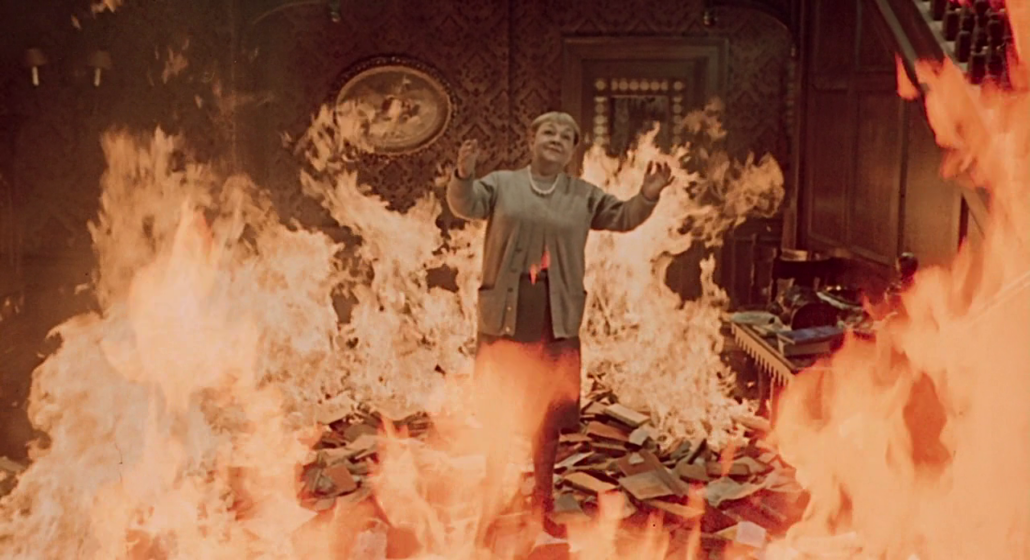
I’ve made it to the last three feature films directed by François Truffaut that are on the Criterion Channel as part of their Truffaut block, but I realized there are glaring omissions! So, before I could wrap this up, I had to go back and make sure I didn’t miss key works in Truffaut’s filmography such as FAHRENHEIT 451, his first big Hollywood-style movie (but filmed in the UK) based upon the Ray Bradbury novel.
The opening title sequence reads aloud all the key principles of the film in English, Truffaut’s first color film and only one in English! But right away, you realize the extreme talent in front of and behind-the-scenes. Directed by Truffaut! Based on a book by Ray Bradbury. Starring Julie Christie. Shot by Nicolas Roeg!
In a Dystopian future, there are “firemen” who round up anyone hiding books and immediately burn the books. No one is allowed to have independent thought because it’s believed its much better to just think the same things so that all people are considered equal. Guy Montag (Oskar Werner) is one of these firemen and gets to talking to his neighbor, a teacher named Clarisse (Julie Christie). She asks if he’s ever been curious what’s inside those books he burns, but he refutes that no, never. Because it’s against the law.
But secretly, he is curious and one day reads Charles Dickens’s David Copperfield. Discovering what’s inside these books slowly starts to eat away at him and realize the wrongdoing in the government’s restrictions. It comes to a head when they find an old woman harboring an entire library! And she would rather burn up with the books than abandon them.
There is a secret group of book people, secluded and living out in the woods and their role is to memorize one book each. They even go by the name of the book they memorize. This way, no matter what, they are able to preserve this lost art form!
It’s actually an incredible film and the kind of science-fiction that asks the difficult questions. It’s all the more relevant by modern times. What information do we suppress? How much noise gets out there that distracts us?
Christie does a wonderful job on the duel roles as both Montag’s neighbor and wife. Overall, I thought everyone was quite good in the film, despite learning after the fact that Truffaut didn’t speak English and felt the French dub was a better version. While not exactly a “Hollywood” production, this is the closest Truffaut got to making a traditional popcorn Hollywood film. And the results were pretty darned good!
THE BRIDE WORE BLACK (1968)
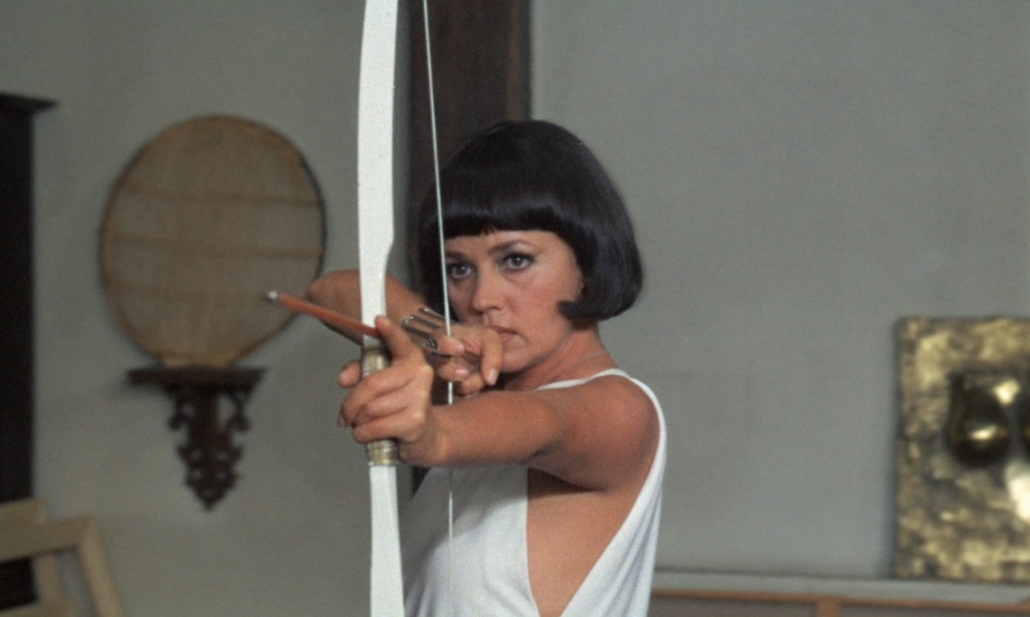
François Truffaut serves up a tale of revenge in the Hitchcock-ian style with THE BRIDE WORE BLACK!
Jeanne Moreau stars as Julie Kohler, a troubled widow, who in the opening scene, tries to jump out a window before being stopped by her mother. With nothing to live for, she plans and makes a list with the name of five men on it. These are the five men responsible for the death of her husband on their wedding day. And she is going to get them, whatever it takes!
She manages to track down the first man, Bliss (Claude Rich) at his own engagement party. She flirts and lures him out onto the balcony during his own party, asks him to get her scarf, hanging from an awning, before pushing him to his death! Ouch! The next poor sap, she poisons! And then she masquerades as a school teacher of a would-be politician’s son to get to her third victim. It’s kind of humorous that the further along her list she gets, she definitely saved the sleaziest of the men for last! Her fourth victim is such a scummy womanizer that she gets him while dressed as huntress Diana with her bow and arrow.
What exactly happened on her wedding day? These five men have very little in common except for playing cards and hunting. Messing around with a rifle, one of them shoots absentmindedly into a crowd at the church below and kills the husband-to-be. It turns out, however, that it’s not just something Julie can get over. Her husband-to-be, David (Serge Rousseau), was also her childhood sweetheart; her one true love since they were kids. So, with nothing left to live for, all that matters to her is finishing her revenge!
It’s a pretty cool movie with Truffaut’s love and admiration of Alfred Hitchcock on full display, some say to the detriment of the filmmakers own unique style. But that’s not a bad thing. It’s kind of cool to see one master filmmaker inspire another. And Jeanne Moreau delivers a powerful, haunted, somewhat passive performance through out. She is out to accomplish one thing and one thing only. Crossing off every name off her list. (It’s a visual nod that we see much later in Quentin Tarantino’s KILL BILL, although he claims to have never seen this before making that.) I’d watched the Twilight Time Blu-Ray release previously in its original French language track, so I decided to watch it this time with the English dub, which wasn’t too bad and paired up nicely with the film he made right before this, FAHRENHEIT 451. We are now in the middle of his series of Hitchcockian movies, and I’m all for it!
MISSISSIPPI MERMAID (1969)
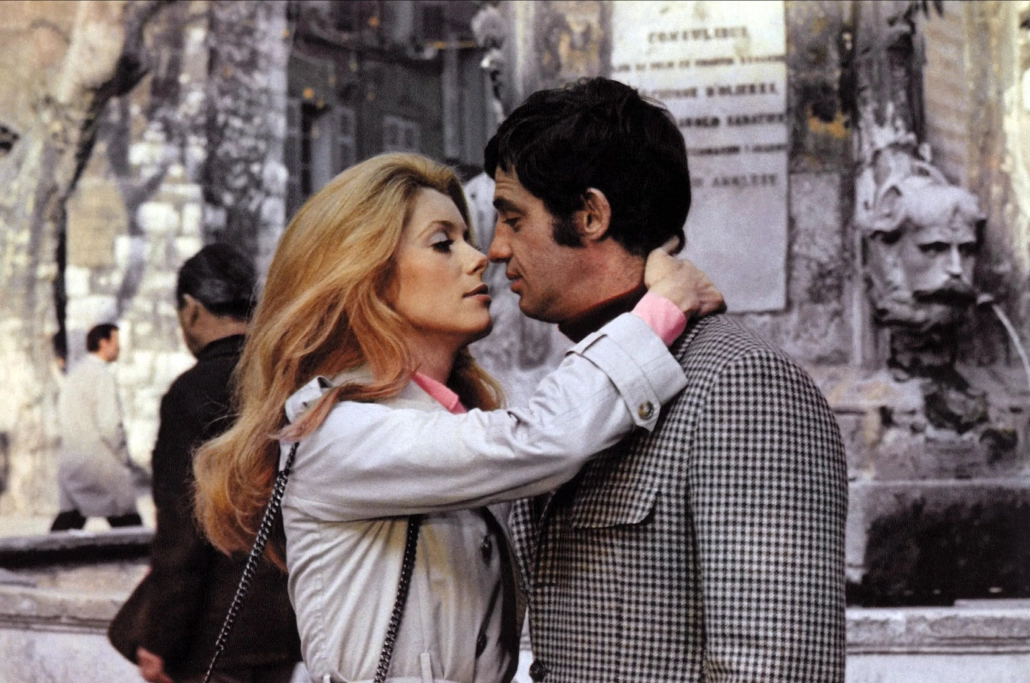
When there are titles missing from François Truffaut’s filmography on Criterion Channel, where else can you turn? Why on Tubi, of course!
MISSISSIPPI MERMAID starts out as a traditional Truffaut romance, but then abruptly veers into Hitchcock territory! A director that Truffaut had a lot of affinity for and tried to emulate on several movies from this time period. And it mostly works! At least the first half does.
Based upon the novel “Waltz into Darkness” by William Irish, Louis Mahé (Jean-Paul Belmondo) lives on the remote island of Réunion and is ready to meet his bride-to-be at the port. He’s been corresponding with Julie Roussel through the classifieds and although they’ve never actually met in person, he’s proposed to her. But when Julie arrives, she doesn’t match the photo he has. She claims to have lied about her appearance, but he carries on as the couple gets to know each other. It turns out that Louis picks up on several discrepancies from the woman he was writing back and forth with, but doesn’t think too much of it. That is until he decides to let her have access to all his bank accounts. It turns out he’s a pretty wealthy owner of a tobacco company. And as soon as Julie gets access to his funds, she clears them out and disappears!
Now, it’s clear that the real Julie Roussel never made it to the island and this woman was an imposter! Julie’s sister arrives shortly after sending a concerned letter to Louis. (One of the film’s cooler sequences is Truffaut holding on the letter and super imposing the actress playing Julie’s sister transparently over the page.) Louis and the sister hire a private investigator to find the faux Julie, but Louis does some investigating of his own and, by fate, manages to see her in the background of a news clip on TV for a hip club called the Phoenix. His intention is to track her down and kill her for this betrayal. And that’s the first hour of the movie! Which I really loved! But then the second half happens.
Now, Truffaut adapted this from a novel, so he may have just been following the book’s narrative, but once they reunite, Louis kinda just forgives Julie, real name Marion Vergano (Catherine Deneuve) and the two begin a second, codependent, very toxic relationship. Is it true love? That Detective isn’t far behind! In fact, in one of the movie’s more unbelievable moments, Louis literally bumps into the Detective while walking the busy streets of Paris.
Overall, it’s still an excellently made film, but the second half hurts it from being higher up in my ranking of great Truffaut works. Belmondo and Deneuve have great chemistry. But as the movie goes on, it shifts more into a “doomed couple on the run movie.” And neither of them is as likable for that second half. I do love this one line Louis says to Marion. He’s talking about his correspondence letters with the real Julie and how people look for love in the classifieds section because “in five lines, they try to transform their lives.” When broken down like that, it’s a beautiful sentiment.
THE WILD CHILD (1970)
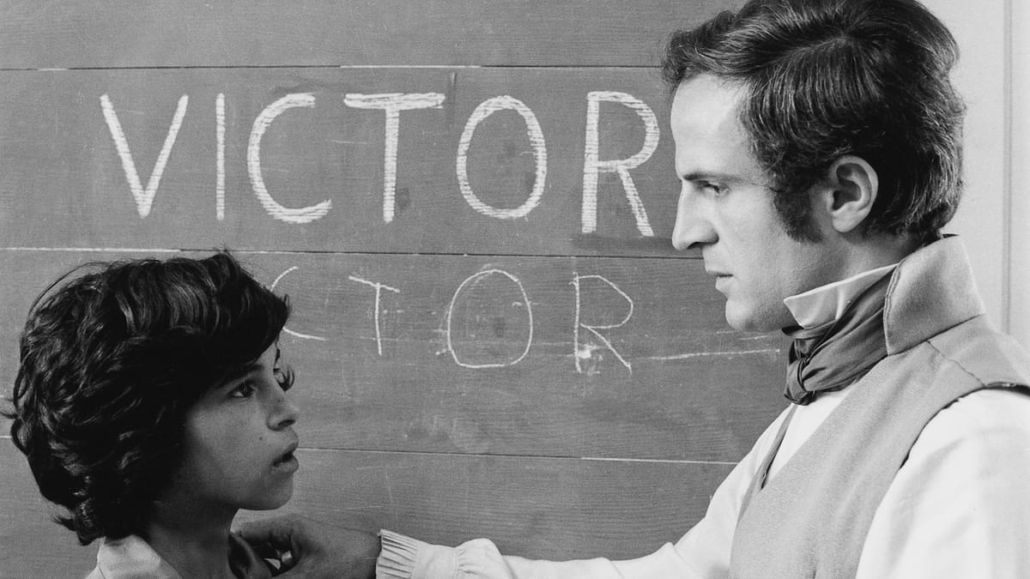
In 1970, François Truffaut made this beautifully shot black & white drama, loosely based on the true story of Victor of Aveyron, The Wild (or “feral”) Boy. Clocking in at just under 85 minutes, it’s one of Truffaut’s most straight forward films that happens to have some of his strongest emotions too. It’s very much tonally in line with what David Lynch would do 10 years later with THE ELEPHANT MAN.
The year is 1798, and three hunters stumble upon a naked, feral boy wandering the woods and hiding out high in trees. They manage to capture him and bring him to town where he’s first put in an orphanage, and thought to be deaf and mute. Given his time in the woods, he even walks on all fours.
Dr. Jean Marc Gaspard Itard (played by Truffaut himself) reads about the boy in the papers, and decides to take him in, host him at a house on the outskirts of Paris alongside a hired live-in maid, Madame Guérin (Françoise Seigner) and try to gage his intelligence and potential for acclamation into society. The boy’s behavior is erratic, and sometimes even wild, but the more time he spends with his surrogate parents, the more he becomes like a wounded infant, longing to be cared for.
There’s not too much more to it than that! And yet, under Truffaut’s direction, a lot of these scenes have an emotional core, a sense of poignancy that this poor boy was abandoned, probably at 3 or 4, and had to fend for himself in the woods for several years. How could anyone do this to a child? Itard is in it for scientific purposes at first, but after a while, stern as he is, he does start to develop a warm fatherly role over the boy he names “Victor.” Madame Guérin, in particular, seems to fall comfortably into the role of “Mother” and its hard not to sympathize with this struggling child.
About this film and where it stands in his overall filmography, Truffaut said, “I realized that THE WILD CHILD is bound up with both THE 400 BLOWS and FAHRENHEIT 451. In THE 400 BLOWS, I showed a child who missed being loved, who grows up without tenderness; in FAHRENHEIT 451, it was a man who longed for books, that is, culture. With Victor of Aveyron, what is missing is something more essential – language.”
And in front of the camera, Truffaut is quite a good actor!
This one definitely took me by surprise but is one of the better, more unique movies in his vast filmography. Recommended.
A GORGEOUS GIRL LIKE ME (1972)
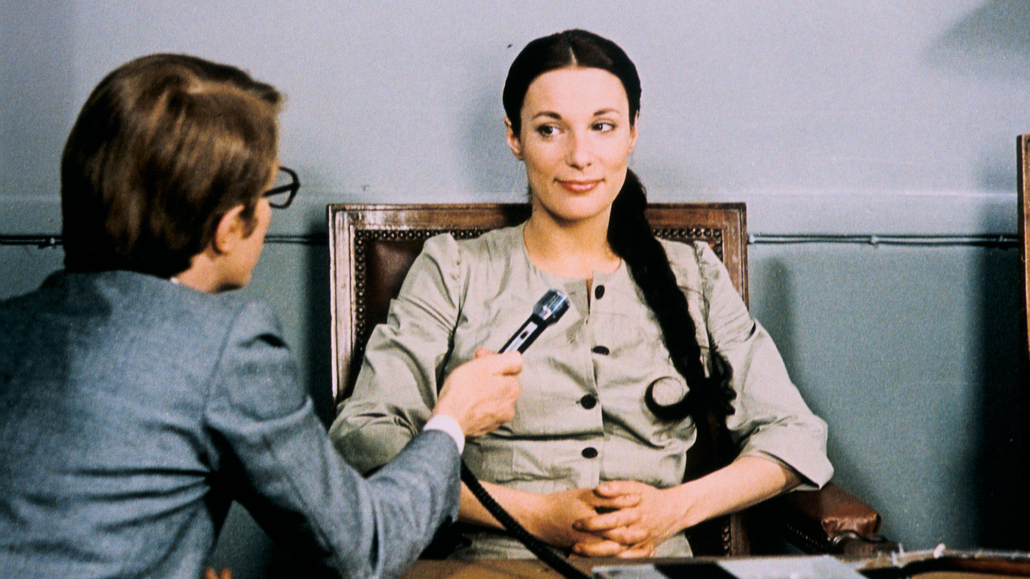
I’ve gotten to the point where I stumbled upon two of François Truffaut’s films that are NOT available to stream, are out-of-print physically, and near impossible to find! This, his 1972 dark comedy A GORGEOUS GIRL LIKE ME, and the film that immediately follows this one, DAY FOR NIGHT. But then, my friend Scott Reynolds reminded me that I should check Vidéothèque, a LA based video store that still rents obscure titles, and low and behold, they had ’em both!
Coming in at a lean 94 minutes, A GORGEOUS GIRL LIKE ME is a fast paced, darkly humorous, crime drama unlike anything else in Truffaut’s filmography. And for that reason, coupled with its obscurity, I consider it quite a gem!
Nerdy Stanislas Previne (André Dussollier) is a young sociologist doing a thesis on women who commit crimes! He arranges to interview Camille Bliss (Bernadette Lafont), serving time for the supposed murder of two people. Her father, accidental but implied, and a former lover. Almost immediately, there’s a frantic, whimsical chemistry between Stanislas and Camille. Or maybe, as we learn through her stories, Camille just thrives on the attention!
Through a series of taped interviews, she begins to tell her whole life story about how she ended up in jail. The tale with her (supposedly) abusive father is that she waited for him to climb up into their barn and then purposely removed the ladder so he’d fall to his death. In her words, she didn’t mean it, she considered it a “fate-bet.” The outcome of her decision COULD benefit her, so she likes to let fate decide. And in this case, it decided for her father to fall to his death!
She shacks up with this young man Clovis (Philippe Léotard) and his mom, and fakes a pregnancy just so Clovis would marry her. They steal a bit of money from the mom, hit the road, and she ends up working at a night club called Colt Saloon. There, she meets a smooth musician and singer that becomes yet another one of her lovers. She also is stringing along a lawyer that’s trying to get money from an accident her husband has that she caused! And a fourth lover, Arthur the exterminator, who also comes to an untimely demise that may have also been murder.
It’s pretty bonkers, and it’s clear that Camille is a sociopathic psycho! Manipulative, as well as charming, and Stanislas falls in love with her almost immediately, despite his secretary Hélène (Anne Kreis) harboring feelings for him. In one of the films more comical scenes, Stan and Hélène track down a young aspiring filmmaker, probably about 12, who may have footage that proves Camille’s innocence. He pushes back on seeing his dailies because he “doesn’t let anyone see his unedited films.” Truffaut is having fun with every but if this material, inspired by Henry Farrell’s 1967 novel of the same name.
Camille becomes famous for all the wrong reasons, and the ending might be considered a downer depending on how you interpret it, but considering it’s strange comic tone, there’s no other fate for Stan besides the one he picks, as if learning nothing from all his interviews. There is a tinge of hope by ending on Hélène, furiously typing away and potentially finishing his “Criminal Women” thesis.
I was unfamiliar with Bernadette Lafont before but she has a unique, timeless beauty and darkly playful sense of humor, with a slight mean streak just underneath the surface. In other words, the bad girl we all always fall for that we know we shouldn’t. I’ve made a note to check out Jean Eustache’s THE MOTHER AND THE WHORE which she stars in with Truffaut regular Jean-Pierre Léaud! Speaking of, one reviewer commented that Camille is a similar reinterpretation of fellow Truffaut misfit Antoine Doinel (in 5 of Truffaut’s films and played by Léaud), and I can kind of see that in the sense that Truffaut often tells stories of troubled youths. But Antoine didn’t go out of his way to hurt or murder people! He was just a traditional French misfit.
Truffaut himself said A GORGEOUS GIRL LIKE ME was “a sarcastic comedy thriller.” And he is correct! There is like nothing else in his vast filmography. And it’s fascinating how many of Truffaut’s films were based upon novels or books he had read. This one definitely stands out as his most “Hollywood-influenced” because of the pacing and overt-humor. And it’s a shame it’s not more readily available because it should be discussed! It’s the complete opposite of something like TWO ENGLISH GIRLS or JULES AND JIM. And all of them are great!
DAY FOR NIGHT (1973)
“A movie for people who love movies.”
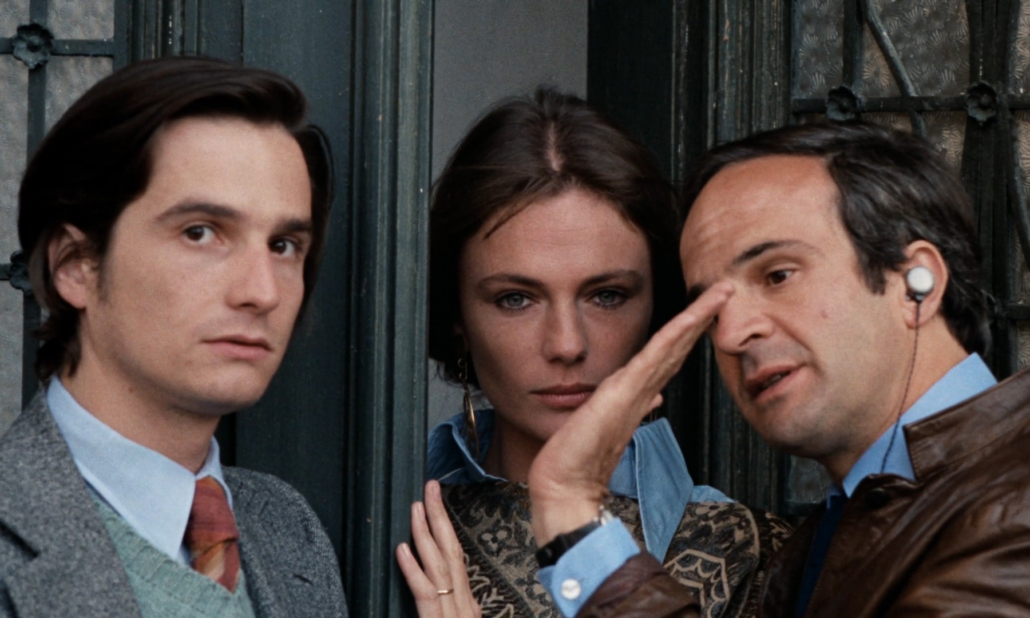
That’s the poster tagline for François Truffaut’s 1973 feature DAY FOR NIGHT, and it’s quite true! I wonder if the average audience member will get the same experience as a die-hard cinefile while watching this, but it is, hands down, the most accurate depiction of the lunacy that goes into a film production! From day one of principle photography straight through to the last day. All the drama, the pressures, the relationships, affairs, friendships, etc! And after marathoning so many of Truffaut’s narrative films, it was a nice change of pace to see this, which I consider a funny celebration more than anything, of what making movies meant to him.
The opening shot shows a busy street in Nice, and Truffaut regular Jean-Pierre Léaud walking out from the metro, slowly meeting an older gentlemen on the sidewalk, and slapping him across the street! At first, you can see the operatic Hitchcock influence on full display. But then we hear “cut!” And we realize we’re actually watching the making of a scene from a film! The movie is called “MEET PAMALA” and it’s plot is a melodramatic story about a young man bringing his fiancé to meet his parents, and the fiancé falls in love with his father. (Um… Louis Malle’s 1992 DAMAGE?!)
From there, we get the playful insanity of a hectic film shoot with Truffaut playing himself. Jean-Pierre Léaud plays Alphonse, the young lead of the film within the film that’s having a tough time concentrating because of his girlfriend Liliane (French singer Dani), one of the script supervisors on set, who goes on to have occasional flings with other people on set like the photography and eventually the English stuntman. Meanwhile, Alphonse constantly is asking all the men on set, “are women magic?”
Jacqueline Bisset is Janet Baker, the American movie star that flies out with her new husband Doctor after suffering a mental break the year prior in the States. Séverine (Valentina Cortese) in one scene with her former lover, older, distinguished Hollywood heartthrob Alexandre (Jean-Pierre Aumont) can NOT get her lines right for a short simple scene. So, the crew posts cue cards with the dialogue and even then, she repeatedly opens the wrong door at the end of every take. If you’ve ever been on a film set, this kind of monotonous mistake is something you’ll be all too familiar with!
Or in another attempted scene, the crew is trying to get a damned cat to go over to a bowl to lick milk, a feat that proves impossible with the “actor cat,” until Joëlle (Nathalie Baye), the other script supervisor just finds another cat wandering on set. This one does it on the first try!
I don’t know if I’ve ever seen another movie about the making of movies that captures so perfectly the anxieties of every thing that goes wrong. And it does it in a comical, yet real way, as opposed to something like BOWFINGER (which I love) that is played for laughs the whole way through.
It’s so, so great, and easily one of Truffaut’s best. Which makes it all the more infuriating how hard it is to find! There is a Criterion Collection Blu-Ray release, but it’s currently out-of-print. And the film is NOT available to rent or stream anywhere. I lucked out by finding a good ol’ fashioned video rental store to watch it.
Interesting are some of the supplemental materials on the disc, which talk about how this film fractured the friendship between Truffaut and Jean-Luc Godard, who, quite frankly, between Richard Linklater’s NOUVELLE VAGUE and the letters he sent to Truffaut after seeing DAY FOR NIGHT, seems like kind of a narcissistic dickhead to me. (Don’t worry, I’ll eventually go on the Goddard deep dive too and judge those films by their own merits!) He basically sent Truffaut a letter after seeing DAY FOR NIGHT and calling it complete bullshit. (It’s not!)
Some critics comment that the film within the film is meant to be melodramatic farce, but it feels like Truffaut is riffing on his own film THE SOFT SKIN which is acclaimed now (and really, one of his best) but not well received at the time of its release. And if people think the plot about a woman having an affair with her future father-in-law could never make a decent film, then why did Louis Malle do it with DAMAGE in the 90s?
I’ve got several more Truffaut films to watch, but DAY FOR NIGHT has been a highlight.
THE STORY OF ADELE H (1974)
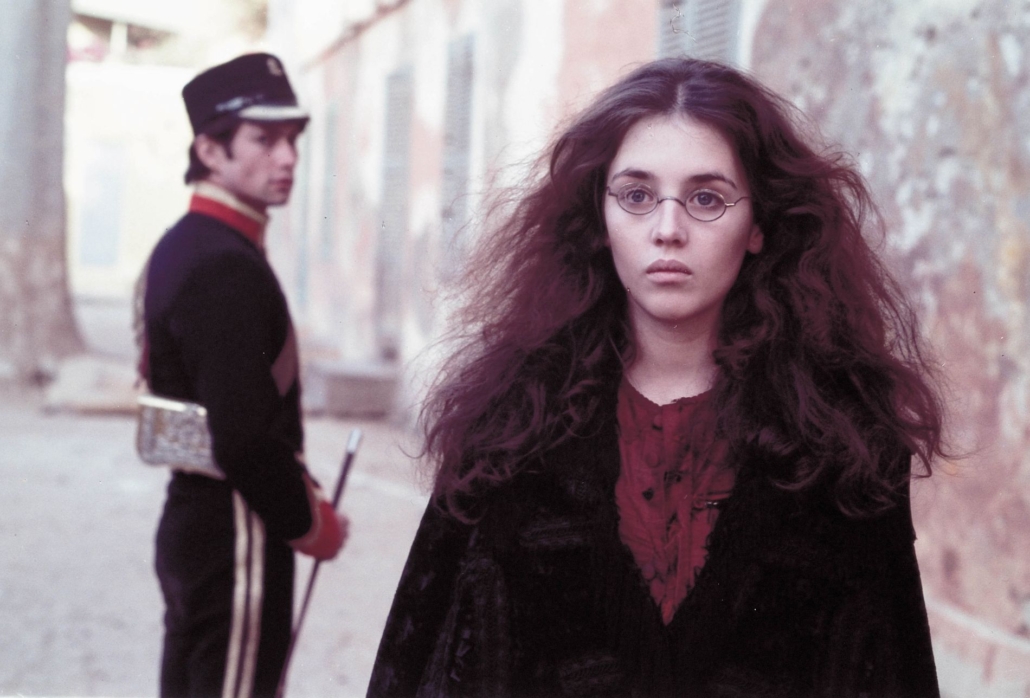
THE STORY OF ADELE H is a historical drama about the daughter of Victor Hugo, Adele (Isabelle Adjani), traveling incognito to Halifax, Nova Scotia, to basically stalk a solider she once had a thing for.
His name is Lieutenant Albert Pinson (Bruce Robinson) and for whatever reason, Adele is hopelessly in love with him, despite the fact that he doesn’t reciprocate these feelings. (Which I find near impossible to believe as its Isabelle Adjani!! One of the most beautiful women ever put on film.)
Like her father, she has a gift for the pen, and continuously writes her thoughts and feelings as narration, even though she is somewhat delusional in what’s actually happening. She befriends the local book store owner, who clearly is smitten with her, and I was hoping she’d come to her senses, but her obsession with Pinson continues and as the movie goes on, it becomes painfully uncomfortable to watch. (I guess that’s the point and this is all historically accurate.)
Of all of the Truffaut movies I’ve watched recently, I have to say this is the one that I struggled with the most. It was a bit of a slog, which is a bit shocking considering this came right after A GORGEOUS GIRL LIKE ME and DAY FOR NIGHT! Most of his films either have a fast-paced urgency to them or a vibrant energy that immediately draws me in from frame one. But THE STORY OF ADELE H was missing that. I seem to be in the minority because the big film critics of the time, Roger Ebert and Pauline Kael loved it. Isabelle Adjani’s performance can not be denied. In fact, she was the youngest person ever nominated for Best Lead Actress by the Oscars for this role, but it’s still my least favorite of Truffaut’s filmography thus far.
SMALL CHANGE AKA POCKET MONEY (1976)
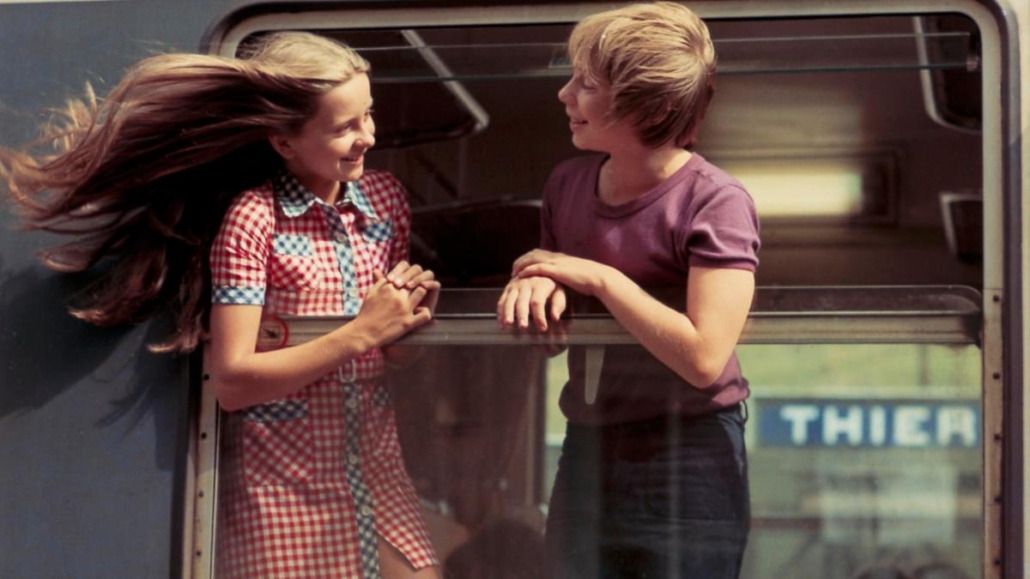
This begins with a young girl sending a postcard from the center of France to her cousin, and then lands us at a school in Thiers, France during the summer of 1976! (The year of my birth!)
At first, we meet an overwhelming number of kid characters, and for the first 20 or so minutes, I thought Truffaut was going for an updated version of his classic debut feature THE 400 BLOWS. But then the canvas widens and really, we’re being introduced to all of the quirky characters in this small town. The kids, the parents, the teachers, the neighbors; and most times they all intersect in some capacity. I also wasn’t sure at first if it was OK to laugh or if this was meant to be serious and dramatic, because right at the 30 minute mark, I was terrified over an infant boy playing with his cat on a terrace some 10 stories up! Let’s just say that scene does NOT end the way I was thinking it would, and thankfully I was able to let out a sigh of relief.
There are two young brothers at the school. Also, a Don Juan named Bruno (Bruno Staab). A girl, who when left alone, bullhorns to the entire community that’s she’s hungry and locked in her apartment as punishment. The two brothers strategically and comically fill a basket with food and roll it into the window of her place. The main teacher is expecting a baby with his wife. And then there’s poor Julien Leclou (Philippe Goldmann), a welfare case that’s obviously suffering from parental abuse at home but doing his best to hide it.
While the adults play their roles in this community, this movie really focuses on the kids and their antics. Patrick Desmouceaux (Geory Desmouceaux) is probably who we would consider the lead. He’s a shy young boy that’s just starting to develop an interest in girls. When his friend Bruno manages to score them a double date to the movies, he’s too shy to make a move, and Bruno ends up making out with both girls! Then Patrick gifts one of the older women in town with a bouquet of roses, only for her to mistakenly miss that he has a crush on her and assumes it’s from his father.
Patrick finally figures it out by the finale, and I think that’s the strength of this movie; Truffaut manages to capture the awkward, sometimes humiliating, sweet natured feeling of what it was like to be an adolescent, experiencing all of these feelings for the first time. In the last 3 minutes where Patrick and Martine (Pascale Bruchon) share their first kiss, at the teasing and insistence of their nosy classmates, I had flashbacks to myself in elementary school, desperately trying to have my friend Michelle tell this girl Aubrey that I liked her at the end of a lunch recess. (On a Friday so that after this news was delivered, I wouldn’t have to face her for the whole weekend. It failed.) In fact, a lot of scenes in this movie feel so real to life that it’s hard not to be enamored. (The first kiss bit in the finale is apparently based on Truffaut’s own personal experience.) It’s beautiful to see this all captured in a movie, and overall, it’s just magical. One of Truffaut’s best, and apparently one of his biggest financial hits too!
THE MAN WHO LOVED WOMEN (1977)
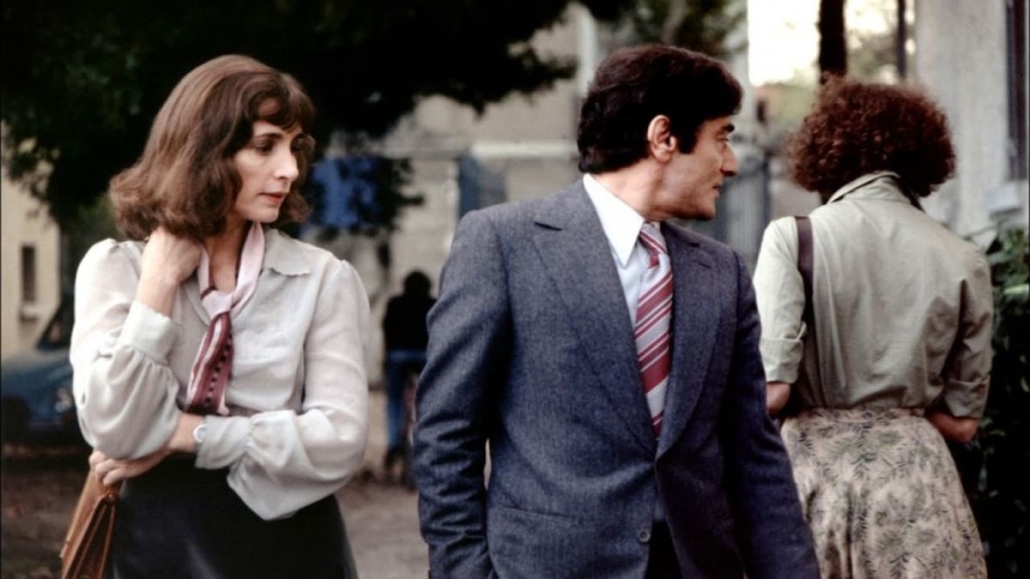
Written while François Truffaut was shooting his role as an “actor” on Steven Spielberg’s CLOSE ENCOUNTERS OF THE THIRD KIND, THE MAN WHO LOVED WOMEN begins with a funeral! The poor, recently departed soul is Bertrand Morane (Charles Denner) and all of the mourners in attendance are all women.
We flash back a bit to learn that Bertrand has always had an obsession with women. In the first actual scene, he happens to just get a glimpse of this gorgeous woman’s legs walking by. He doesn’t catch up with her to talk, but instead gets her license plate number. Hellbent on tracking her down, he fakes a car accident in an attempt to get her insurance company to give away her address. When he calls her and convinces her to meet at a Cafe, she realizes, “I think you saw my cousin when she borrowed my car and she’s left France now.” Don’t fret, he manages to hook up with the blonde girl, Bernadette (Sabine Glaser), at the car insurance place that slipped him the info. And that’s just one crazy example of how this guy repeatedly finds himself in odd relationships and one night stands is the most comical of ways.
When he goes out with lingerie star owner Hélène (Geneviève Fontanel), she confesses that she only likes to be with younger men, and this, for whatever reason, sparks Bertrand’s inspiration to write. He starts crafting a novel all about his sexual conquests and complicated relationships with women, starting with his mom in his youth.
For example, Delphine Grezel (Nelly Borgeaud) is a married woman he meets in a restaurant that only enjoys making-out in public places with the danger of being caught! She ends up going to jail for trying to kill her husband. Later on, when she gets out, she sneaks into Bertrand’s apartment and somehow manages to get into a threesome with him and his current “date.” The typist he hires to retype his book pages ends up quitting abruptly because of how this material is making her feel. Regardless, he sends his manuscript out to four publishers and while, at first, he gets rejected, he finds a support from a editor named Geneviève (Brigitte Fossey). In fact, she’s the only one at her publishing company that champions the manuscript. Ironically enough, it’s her three male colleagues that have a problem with the book’s material, tone and likeability, when she’s the only one that sees it for what it is; raw, real, honest, and from a contradictory narrator, which is what we all are in real life.
It isn’t until he bumps into his one true heartbreak, Véra (Leslie Caron) that he realizes she’s been the inspiration for his behavior all these years. I mean, the book is originally titled “The Skirt Chaser,” but is then changed to “The Man Who Loved Women.” And Geneviève becomes yet another one of the women he crosses paths with to become smitten by this unconventional guy. Even she says, you are NOT a Don Juan.
I feel like Truffaut is working through a lot of is own demons and personal obsessions with women here. In his infamous public split with filmmaker and collaborator Jean-Luc Godard, after watching DAY FOR NIGHT, a semi-autobiographical movie about the making of a Truffaut movie, Godard accused Truffaut of always trying to bed his leading ladies. (In other words, Truffaut was girl crazy all the time, just like Bertrand.) If anything, I wonder if the primary influence of this was Ingmar Bergman’s 1964 film ALL THESE WOMEN. It has to be. That movie also begins with a funeral service and several female mourners attending the funeral.
Apparently Blake Edwards did a loose remake of this with Burt Reynolds in 1983, but as far as Truffaut’s filmography goes, this is one of his best and one that, I can guess, has a lot of him personally in it.
THE GREEN ROOM AKA THE VANISHING FIANCEE (1978)
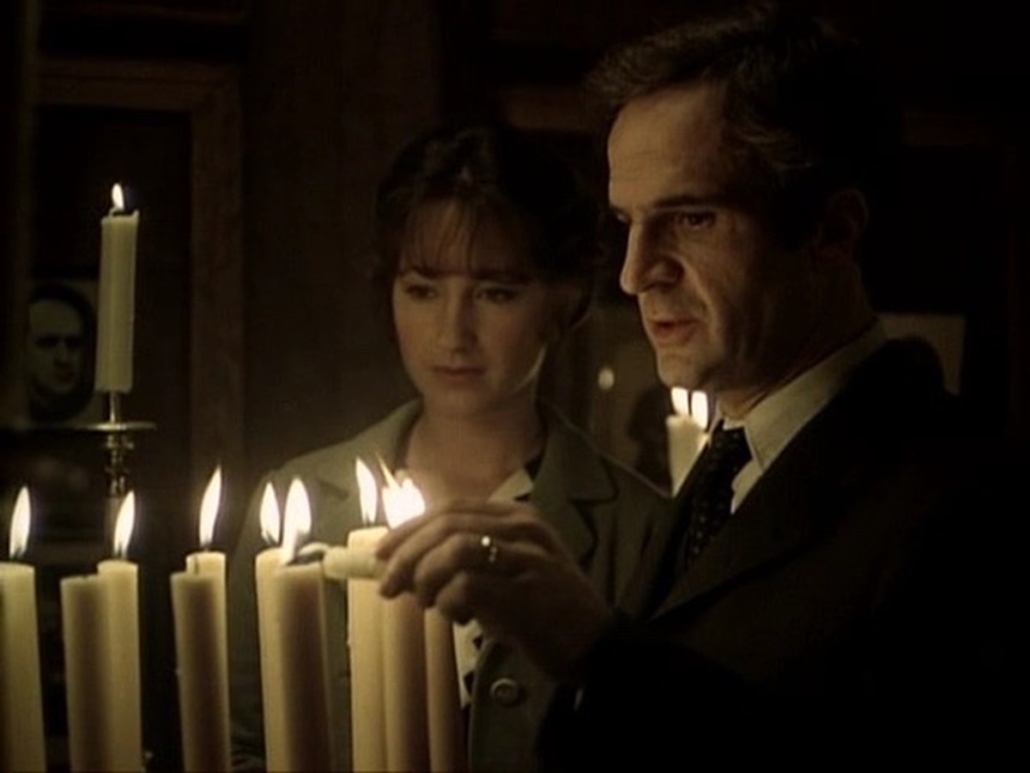
Having now watched 20 films directed by François Truffaut, I think THE GREEN ROOM aka THE VANISHING FIANCEE needs to be analyzed in the context of his entire filmography. Much like with Ingmar Bergman, Truffaut seemed to ask and answer a lot of questions about life through his films. THE 400 BLOWS represents his complicated childhood, whereas DAY FOR NIGHT is a heightened semi-autobiographical look at the craziness that goes into making a movie. THE MAN WHO LOVED WOMEN, my most recent watch, seemed to grapple with a man who was obsessed with women his entire life. And now, THE GREEN ROOM is all about grief. And pondering what happens after we die. Are we remembered only if there’s someone left to grieve us? I think about this a lot since losing both my parents.
François Truffaut himself plays the lead role of Julien Davenne, a widowed World War 1 survivor and newspaper writer, primarily of obituaries. Having lost many friends in the war and his wife 11 years earlier, he has a strange fascination with death and keeps a shrine to his departed love in the house he shares with an elderly housekeeper and a deaf mute little boy.
One night during a thunderstorm, lightning strikes his home shrine, burning it all down. He stumbles upon an abandoned chapel by fate, and believes this is the spot where he’s meant to resurrect a shrine not only to his wife, but to all of the dead people he mourns and carries with him. He begins a friendship with a local auctioneer named Cécilia (Nathalie Baye) but it’s complicated when he learns of her relationship with Paul Massigny, a recently deceased French politician and former best friend of Julien. We never know why the two had such a terrible falling out, but Julien displays an unfair hatred for this man, as well as another local friend whom he feels remarried and moved on too soon after the death of his wife. In other words, he’s pretty judgmental of those around him, and simultaneously, obsessed with living to remember the dead instead of living for the living. It’s clear Cécilia has feelings for him.
It’s all worth it for one beautiful scene when he first shares the chapel with Cécilia, hundreds of candles burning, one for each of his departed friends. She goes around pointing to pictures, and he briefly explains who each person was and what they meant to him in his life. Every picture was a human being, who had a story to tell, and Julien’s obsession is to be the one to share those stories so that the dead he once knew still have someone who loves them.
There are a lot of fascinating things under the surface of this particular film if you look at both Truffaut’s filmography up until this point, as well as what was going on in his personal and professional life. For starters, he had since ended his friendship with fellow filmmaker and French New Wave pioneer Jean-Luc Godard. I have to wonder if his character’s irrational dislike of the fictional Paul Massigny is a thinly veiled knock at Godard.
Originally, Truffaut wanted Charles Denner to play Julien, carrying him over from his previous film THE MAN WHO LOVED WOMEN, but when he was unavailable, François seems to have filled the role himself because of his personal connection to the material, technically an adaptation of three short stories: “The Altar of the Dead,” “The Beast in the Jungle” and “The Way It Came,” all written by Henry James. There are plenty of other Truffaut regulars in this including Marcel Berbert, Jean Dasté, Thi-Loan N’Guyen, and of course Nathalie Baye as Cécilia. I know Baye didn’t actually wear glasses in real life but I can’t shake how cute she was in DAY FOR NIGHT as the devoted script supervisor. She’s great in this too, delivering the most emotional performance of all her Truffaut characters.
He has screened THE GREEN ROOM prior to release to several trusted colleagues and former collaborators like Isabelle Adjani, Alain Delon, Éric Rohmer, and Antoine Vitez; all of which loved and praised it as one of Truffaut’s best films! But then, it came out and bombed! Proving to be his least financially successful film ever! Because of that, although he has considered the story of Antoine Doinel (Jean-Pierre Léaud) finished with BED AND BOARD, he immediately followed THE GREEN ROOM up with a fifth and final sequel to his 400 BLOWS series with LOVE ON THE RUN, a quick and easy way to be financially viable again. This now makes sense considering a lot of LOVE ON THE RUN reuses footage from the previous films as almost a “best-of” montage film, but hey! I love that! And I think it turned out to be a far more satisfying conclusion to Antoine’s story! I’m glad Antoine got to see Colette again and that all the threads of his previous films were wrapped up nicely there.
I think THE GREEN ROOM resonated with Truffaut so personally because the theme of “death” started permeating all his work at this point. In THE MAN WHO LOVED WOMEN, Charles Denner’s Bertrand Morane dies far too young, and his novel about his exploits with women are meant to be left behind as a reminder that he was once alive, on this planet. In the same regard, I think Truffaut was cranking out these films also seeing the urgency to be remembered. Because sadly, he would die at age 52, a mere 6 years and three films after this.
Again, it’s something we all grapple with. Life, love, death, grief. But was our life worth it if there’s no one to remember us after we’re gone? We all hope that we’re loved enough to be remembered. Or can leave behind a body of work that someone can watch and find solace in in 2026. Thank you, François. I see what you’re trying to say here.
THE LAST METRO (1980)
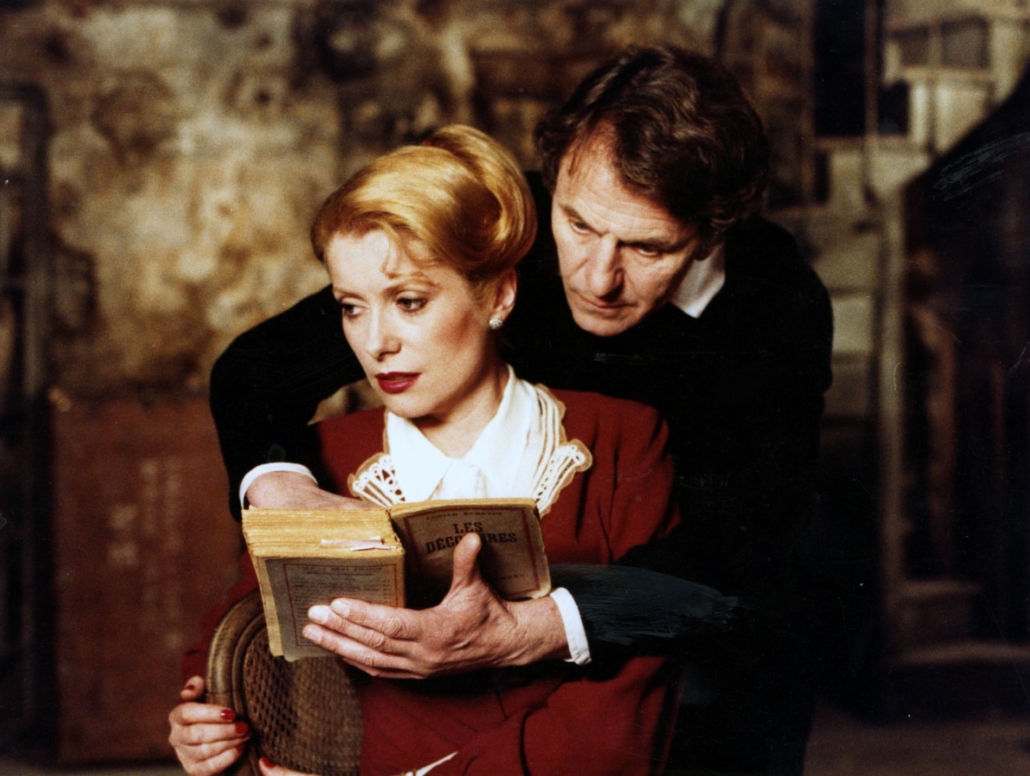
François Truffaut’s THE LAST METRO is set in Nazi-occupied Paris in 1942 and takes place at the Théâtre Montmartre where Marion Steiner (Catherine Deneuve) is trying to stage a production of “The Vanished Woman,” her husband’s passion project before he was forced to flee France to avoid capture by the Germans. Only, he didn’t really leave, he’s hiding in the basement!
Bernard Granger (Gérard Depardieu) is a young, brash actor that joins the troupe to play the lead among a colorful cast of characters. They include fill-in director Jean-Loup Cottins (Jean Poiret), costume designer (and the initial target of Bernard’s affections) Arlette Guillaume (Andréa Ferréol), Nadine Marsac (Sabine Haudepin), the young actress hustling between multiple jobs, and stage handyman Raymond (Maurice Risch).
For context, “The Last Metro” title “refers to the strict curfew imposed by German occupiers, which forced Parisians to hurry home after evenings out—such as theater performances—to catch the final subway train.” (Thank you, Google!) So, forms of entertainment like the movies and theater were considered salvation amid such dark, dismal times for Parisians. Hence, the importance of putting on this play.
Lucas Steiner (Heinz Bennent), Marion’s husband, technically directs it from the basement as he’s fashioned a hole in a pipe to be able to hear what’s going on above. Meanwhile, Bernard is secretly working as a member of the Resistance. Every one in the theatre is hiding from some form of persecution. Director Jean-Loup is gay, while two of the other women involved are having a secret affair behind closed doors. And by the finale, Marion is torn between her love and devotion to two different men. (Which… I had a tough time really believing.)
There are some funny bits here, in particular when Bernard drags a theatre critic out of a restaurant and into the streets to beat him up for a bad review; supposedly based on the real life story of Jean Marais (FANTOMAS!) fighting critic Alain Laubreaux. (#LEGEND!) Something I’m sure Truffaut related to himself!
Despite being beautifully made, and regarded as one of Truffaut’s best films, I had a really tough time connecting to this one, personally! Maybe it’s because I was never a theatre kid, or I just don’t relate to the lives of a theatre group. But it’s still a great piece of filmmaking and much needed reminder of WWII history!
THE WOMAN NEXT DOOR (1981)
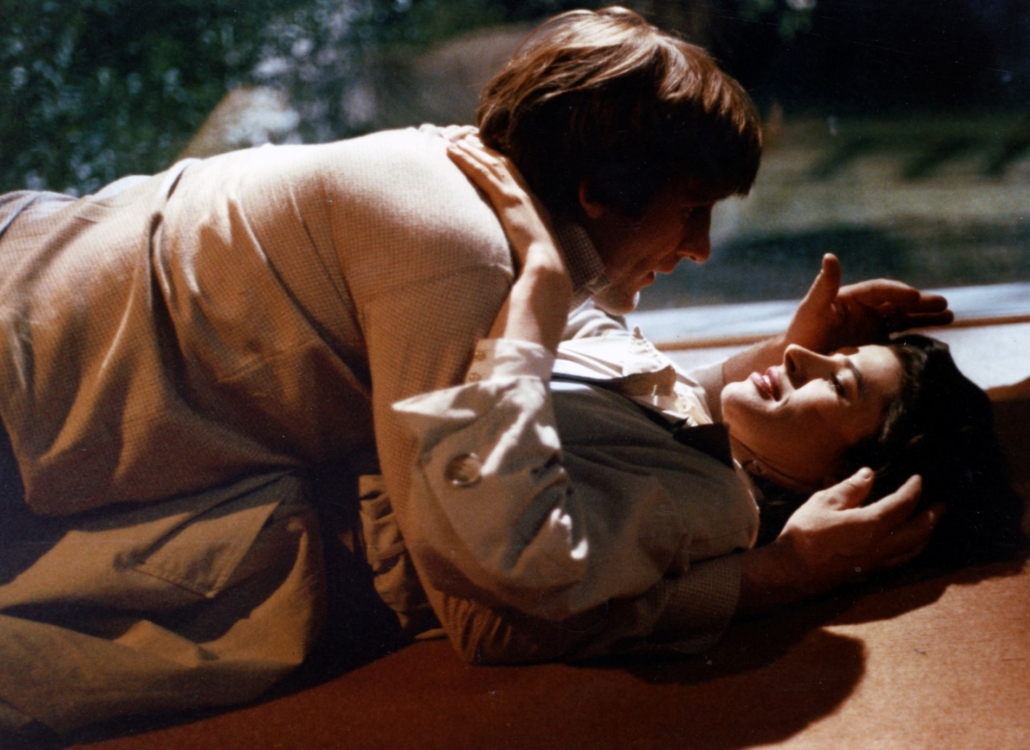
I’m now up to Truffaut’s second to last feature film, and it’s a mature, very adult oriented story that reminded me quite a bit of Ingmar Bergman’s work. (I’m sure an influence!) Confidently directed, beautifully acted, and depicting a very complicated relationship.
Bernard Coudray (Gérard Depardieu, returning from THE LAST METRO) works as naval engineering instructor, and lives a humble life in this small village in the South of France with his devoted wife Arlette (Michèle Baumgartner) and their son Thomas (Olivier Becquaert). One morning, he meets Philippe (Henri Garcin) who has just started renting the house next door. It isn’t until several days later when Philippe is fully moved in that the Coudray’s meet his wife, Mathilde (a stunning Fanny Ardant). It turns out that Bernard and Mathilde are exes and had a toxic relationship eight years prior, the type of affair that ended badly, and damaged both of them severely.
At first, Bernard tries to completely ignore her, but then a chance encounter at the supermarket, Mathilde insists that they should act like adults and try to be friends. Almost as soon as he agrees, he kisses her, passionately. And now, they reignite their dangerous affair, meeting weekly at a hotel outside of town. The more they try to end their affair, the harder it becomes for both of them. And with spouses, and in Bernard’s case, a child in their lives, there is no way this can end well. (And it doesn’t!)
The film is framed (or bookended) by secondary character Madame Odile Jouve (Véronique Silver), an older, invalid woman that lost one of her legs in an accident when she jumped out an 8-story building, heartbroken by the breakup with an ex. (And our cautionary tale about the consequences of toxic relationships.) It’s the one person Bernard confides in.
Mathilde is actually an incredibly talented artist and is collaborating with one of Jouve’s friends on a children’s book. She has a promising career ahead, but it seems her feelings for Bernard threaten to disrupt everything.
This is one of the earliest acting roles for Fanny Ardant (Mathilde) and she is so strikingly beautiful. I haven’t quite seen an actress that commands such presence or admiration from the camera as her. (She thankfully returns for Truffaut’s next and last film CONFIDENTIALLY YOURS.) Michèle Baumgartner who plays Bernard’s wife also has a unique, familiar on-screen presence. I could have sworn I’d seen her in a dozen other films but, sadly, she died in 1985 at age 31.
I think the hardest thing for me to accept in this film (and I’ll keep the spoilers as mild as possible) is the last act, the way that Mathilde is the one that emotionally crumbles, when Bernard shows that he’s the far more volatile person in the relationship. I’ve noticed, in general, it’s just the way Truffaut depicted women in his films, especially these last few. (And I’ll have more to say about who he treats Ardant in the last act of CONFIDENTIALLY YOURS too, which is that film’s only misfire!) Maybe it was just a reflection of the times.
It’s a great, great film, and at this stage in his career and life, Truffaut is a master of filmmaking. But it’s also a dour “adult” movie, and I’ve read other critics say that Truffaut was always at his best when it came to capturing youth on screen, hence why THE 400 BLOWS holds up the way it does. I can agree to an extent, but like with my deep-dive of Bergman, I just feel like Truffaut also asked every conceivable question on the mysteries of life, and tried his best to answer them through his films. It’s an incredible filmography to have left behind.
CONFIDENTIALLY YOURS (1983)
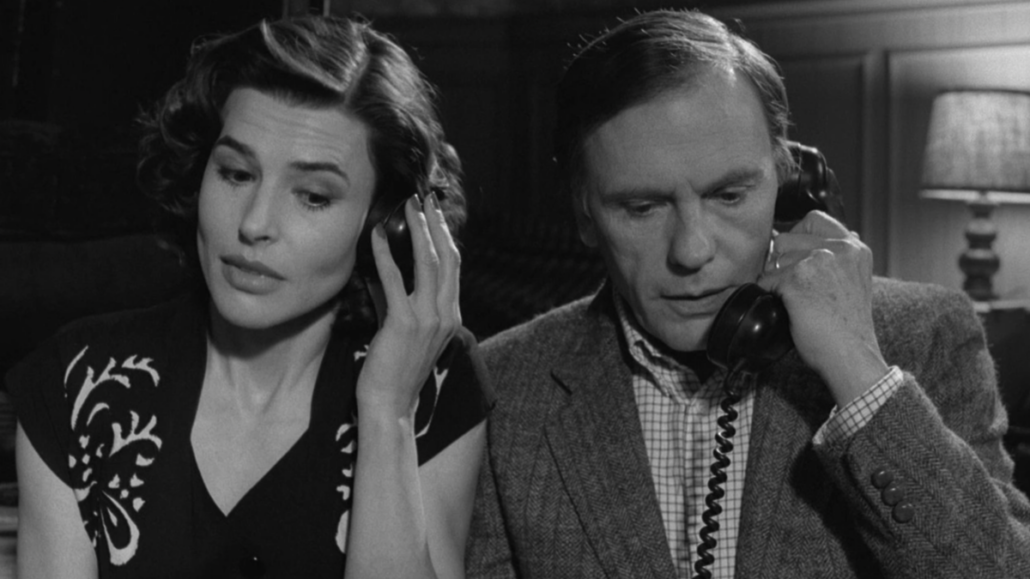
It seems almost bittersweet to be at François Truffaut’s final film, but CONFIDENTIALLY YOURS ends his career on a high note. It goes back to the basics by being a loving tribute to Hollywood “film noirs,” shot in black-and-white, and filled with quirky characters, a murder mystery, and an off-kilter funny tone, despite it involving murders! Truffaut’s love of film noir and Hitchcock are on full display here, and I’m surprised this one isn’t mentioned in Stephen Rebello’s latest book HITCHCOCKIAN THRILLERS, which recommended a handful of titles that I’m slowly making my way through now!
After the dour subject matter of THE WOMAN NEXT DOOR, Truffaut brings back the beautiful Fanny Ardant, this time to show off her comedic side as Barbara Becker, a full-time secretary to real-estate agent Julien Vercel (Jean-Louis Trintignant) and sometimes part-time actor. In the opening, we witness the shocking murder of one of Julien’s rivals, Massoulier; shot while out hunting for ducks!
Just as Julien is in the process of firing Barbara over a phone argument with his demanding, spoiled wife, the inspectors show up because Julien is the prime suspect in Massoulier’s murder! At first, he cooperates fully, but then when his wife also shows up dead, he goes into hiding at his Real Estate office, and Barbara begins sleuthing for the truth! She travels to Nice and tries to investigate his wife’s mysterious past there, and stumbles on a true mystery of deception, debts, secret lives, and beyond!
It’s fun, breezy, and features all the classic hallmarks of good ol’ fashioned classic Hollywood movies. (With a French sensibility, of course.) Fanny Ardant is great and looks even more stunning in gorgeous black-and-white. However, and I don’t know if this was the way it ended in the 1962 novel “The Long Saturday” (by Charles Williams) or an invention of Truffaut’s script, but in the finale (mild spoilers! Sorry!), I was disappointed that Barbara professes her love to Julien! Her boss! Really?! I think this all takes place, at best, within a 48 hour period. Meaning his wife was murdered a day or two ago, and she’s already making a move, and he’s reciprocating? I don’t know. Seemed like a stretch to me! And it’s the one element I wish didn’t close the film out. But in 1983 terms, maybe this is the “happy” ending people expected. Just felt off to me in an otherwise great little film.
And that’s the bittersweet thing. This is Truffaut’s last film. He would pass away the following year, but this seems like such a perfect bookend to an incredible filmography. What a cinematic journey it’s been…
LES 4 GOLPES (1962)
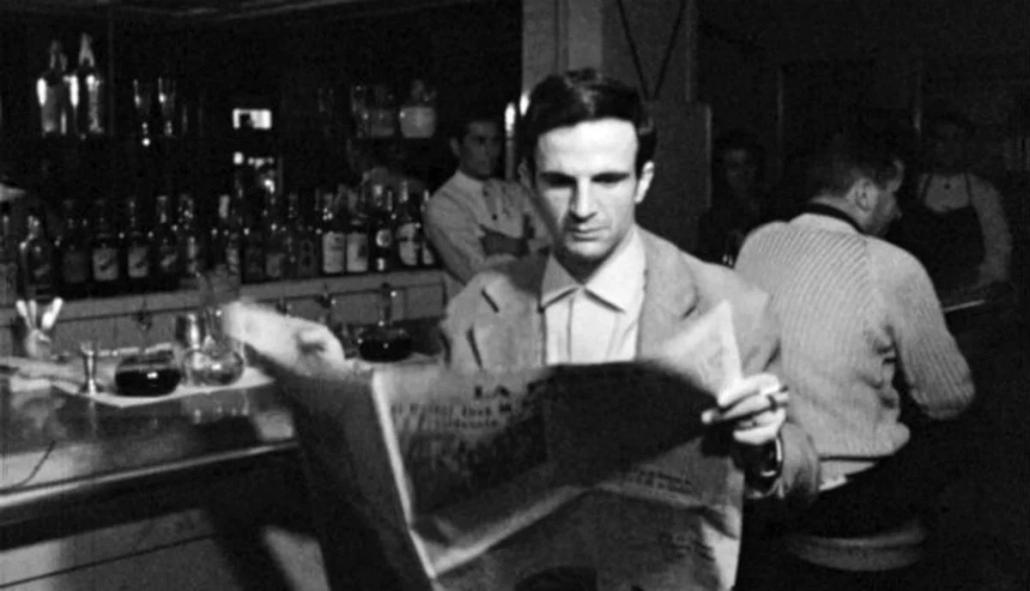
What can I say? I’m a film completist. So, I had to find this 3 minute comedic short film that François Truffaut shot on 16mm in 1962. All it is is him staging a murder scene in the lobby of a hotel after chasing a girl in circles in a revolving door. Quirky, short, and silent(!), the version I found was on YouTube from a group screening, so hearing the audience laugh at it while watching was fun.
According to both IMDb and the Letterboxd listings, this was shot Mar del Plata International Film festival in ’62 in the lobby of Hotel Hermitage, and that’s Gloria Algorta as the “strangling” victim.
Cheers! (That’s how it ends.)
TWO IN THE WAVE (2010)
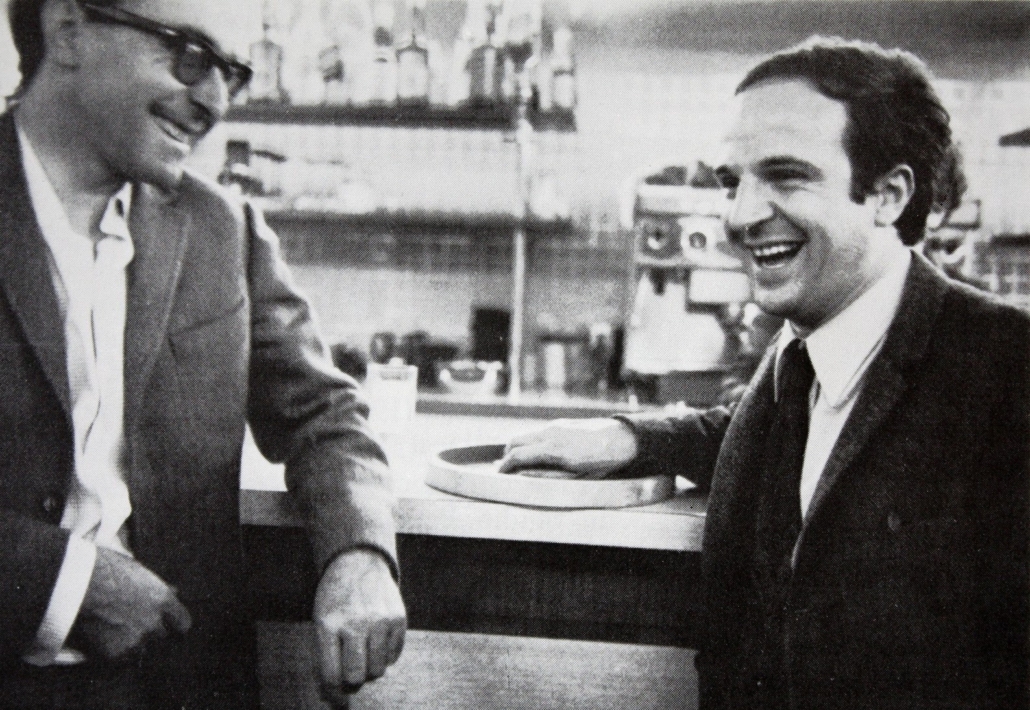
A pretty detailed chronological documentary on the birth (and death) of the French New Wave, primarily focusing on the friendship and eventual nasty split between its two most influential directors, François Truffaut and Jean-Luc Godard.
Having just finished watching all of Truffaut’s films (and a handful of prominent Godard movies), this doc was the perfect chaser. From their humble beginnings as young film critics to launching their own filmmaking careers, moving on parallel paths which eventually come to a head when Truffaut makes DAY FOR NIGHT in 1973. Which is kind of mind blowing to me because Godard was wrong about that one and being a prick.
The pros of this doc are contextualizing where they both were with each film, and also what other filmmakers of the time were doing. And also, the different paths they took, personally. While Godard sought out Fritz Lang to interview him, Truffaut was doing his legendary interviews with Alfred Hitchcock.
I didn’t realize that Jean-Pierre Léaud (THE 400 BLOWS) had done so many films with both of them and that he felt torn between the two directors. Sure, Godard gave him different kinds of roles to play, but the character of Antoine Doinel is a pure delight and, let’s face it, cinema history. When Godard got all radical and political, Truffaut made DAY FOR NIGHT, one of THE best movies depicting what it’s like to make a feature film. And it, along with all of Truffaut’s films, stands the test of time.
I’m surprised the doc relegates the dissolution of their friendship at the tail end. And they don’t actually go into enough detail about the letter Godard wrote to Truffaut after seeing DAY FOR NIGHT, which prompted Truffaut to write back an angry 20 page rebuttal. I believe these only came to light after Truffaut’s death, but the doc says after this they never spoke again. I believe Godard saw him at a restaurant sometime after, tried to come over and speak to him, but Truffaut was having none of it.
At the end of the day, it’s amazing that both of these guys changed French cinema as drastically as they did, at the same time, while they were young and best friends. What are the odds? It’s like something out of a movie.
HITCHCOCK/TRUFFAUT (2015)
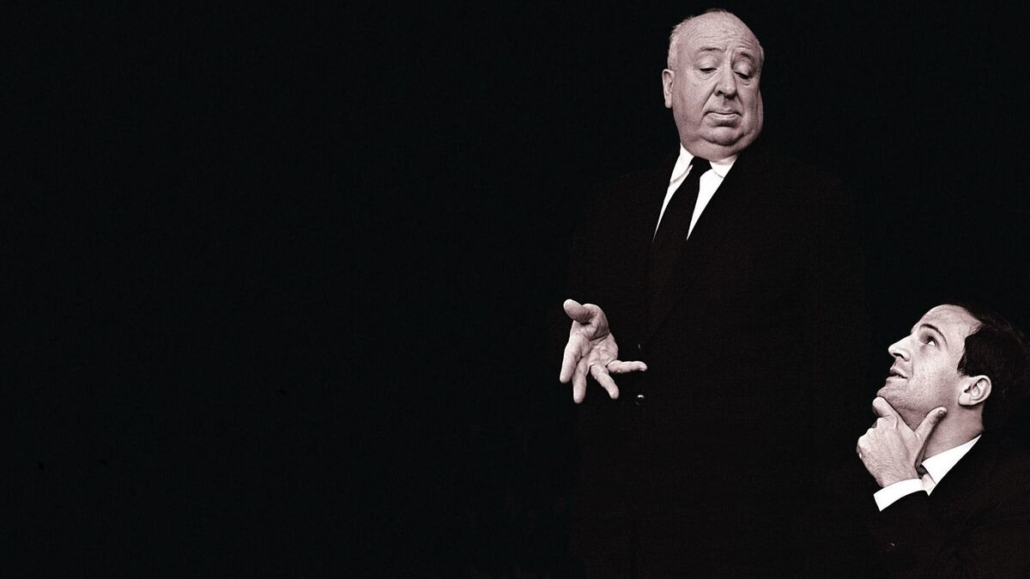
Now that I’ve officially watched every single François Truffaut feature film, I thought it was time to revisit Kent Jones 2015 documentary HITCHCOCK/TRUFFAUT, based upon the quintessential book of Truffaut’s interviews with the master of suspense!
In 1962, with only his first three films under his belt, Truffaut made a request to sit with Sir Alfred Hitchcock for a full week and interview him extensively about his entire career. The director made be well revered now, but at the time, he was 63 years old and never felt appreciated by the American press. However, in France, film critics-turned-filmmakers like Truffaut and Godard considered him to be one of the greatest living directors; a true artist in the language of cinema. And so, those conversations became something of a bible to aspiring filmmakers because it talked about the process of filmmaking in a way that had never quite been discussed before.
So, how do you make a movie out of that? What Kent Jones does, creatively, is use some of the original audio tapes, clips from Hitchcock movies, and new interviews with a lot of those filmmakers that grew up with that book explaining its historical importance. We’re talking Martin Scorsese, David Fincher, Wes Anderson, Peter Bogdanovich, Olivier Assayas, Richard Linklater, James Gray, and more! Despite Truffaut leading the conversation, make no mistake, this is a true love letter to Alfred Hitchcock and his filmography.
Of note, I thought they (the film) spent maybe a little bit too much time on VERTIGO, but then you get certain context; how that film was neither a success nor a true bomb. Or how hard it was to see for many years! Paul Schrader confesses that he first saw it in the ’70s thanks to Martin Scorsese! (In 2012, VERTIGO was named the greatest movie of all time by the British Film Institute’s Sight & Sound magazine! How the times have changed!) But hey, we also get a nice chunk of time devoted to PSYCHO, so I’m all for hearing Scorsese and Fincher talk about why PSYCHO is still so great!
It’s also very charming to hear the audio of the two directors figuring out how to stage their (now infamous) photos for the book, with Hitchcock “directing” Truffaut. The whole thing is the foundation for a beautiful life long friendship, filled with mutual admiration and respect. Hitchcock only made 3 more films after this interview, but he and Truffaut kept in constant touch, and would share their latest scripts and screen their films for each other. There’s a great bit where Truffaut is honoring “Monsieur Hitchcock” at the American Film Institute (AFI) Life Achievement Award ceremony in 1979, one year before Hitchcock left this mortal coil.
Even more tragic, Truffaut was half of Hitchcock’s age, and yet he died a mere 4 years after the master did. So, it’s bittersweet, but also amazing to have both the filmographies they left behind, as well as this legendary conversation about the art of making films, the first of its kind which has since spawned thousands of similar books.
I don’t think this will appeal to the average movie goer, but for true cinephiles, for people that love cinema and all it has to offer, this documentary is a gift.
THE 400 BLOWS Rewatch (1959)
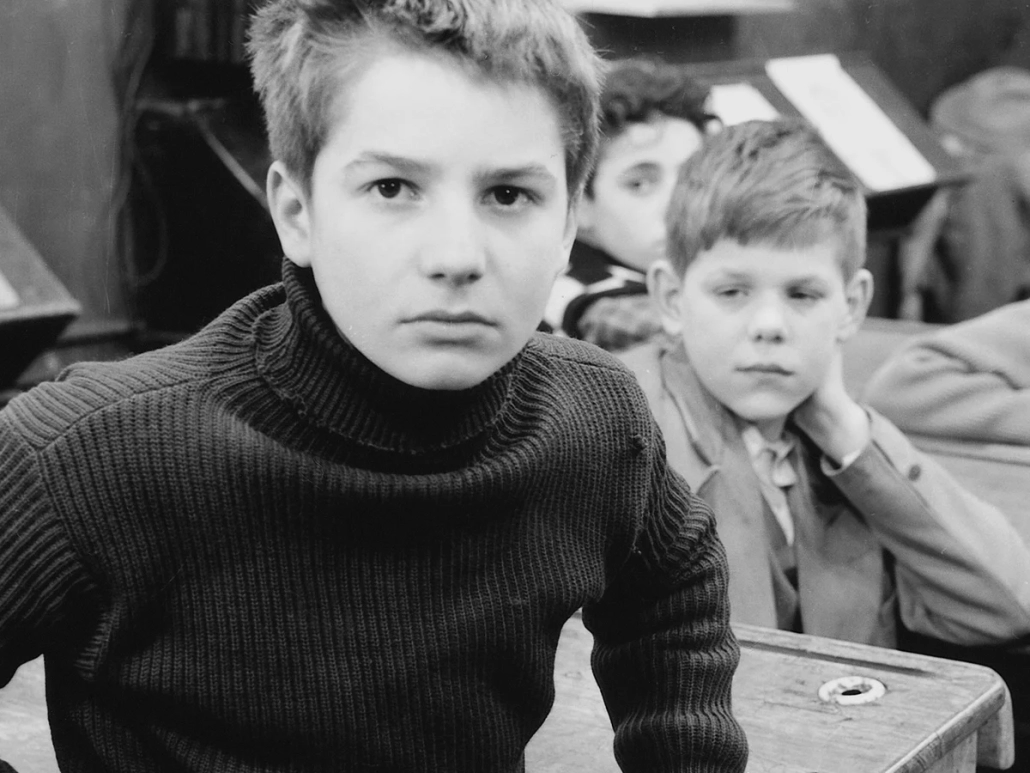
I started with THE 400 BLOWS at the beginning of the year, and I knew once I made it to the end of my François Truffaut binge I’d want to revisit it again with new context. And sure enough, I absolutely loved coming back to this after not only seeing all 5 Antoine Doinel films, but also in the context of Truffaut’s entire filmography. It really is that rare special debut that only gets better with viewings, a “hang out” movie, a tribute to troubled youth, and just trying to find your place in this world, that means something so different when you see where the rest of Truffaut’s filmography would go.
There’s not much in way of a traditional plot, but it feels like a slice of (French) life for a young Parisian boy. Antoine has to be about 12 years old, the most impressionable year for a young person. His mom is way too hard on him, and yet, he catches her having an affair on his stepdad. His stepdad seems OK enough. But when your parents and even the teachers don’t believe in you, and you can’t focus on the monotony of school, it’s hard to find motivation in yourself. He seems to take solace when he cuts school and goes to the movies. I love watching these kids walk through the streets of Paris in the late ’50s, the very streets I’ve walked now nearly 70 years later! it’s just magical.
On its own, we worry about the fate of Antoine Doinel (played by Jean-Pierre Léaud). THE 400 BLOWS is famous for closing on, what I believe to be, the first freeze-frame final shot in cinema history, where the audience is left to wonder what will become of this poor troubled boy. Ironically enough, in the subsequent films, he becomes more neurotic and comedic. Jean-Pierre Léaud may play the character of Antoine, but he’s obviously a Truffaut stand-in, the cinematic version of the filmmaker in his troubled youth. And yet, Truffaut often returned to him when things got serious in his other films, as a comfort; a familiar old friend, and when he just wanted to laugh and smile again. There’s something whimsical, silly, and fun about Antoine’s future “adventures” in life, love, parenthood, divorce, and falling in love all over again. And when you look at this kids face here, he has no idea what’s in store for him!
The things that stood out to me on this rewatch. I love Antoine’s genuine love for the poet Honoré de Balzac. I don’t think he was intentionally trying to plagiarize him for his school essay, I think he truly found inspiration in his writing! Early in the movie, Antoine and his parents go to the cinema to see PARIS BELONGS TO US, but I noticed it came out in 1961, after THE 400 BLOWS was premiered and released. Apparently, Truffaut put that in there as a bit of a nod / inside joke to director Jacques Rivette who had already shot PARIS BELONGS TO US when Truffaut was shooting this. Later, the kids run out of a screening of Ingmar Bergman’s SUMMER WITH MONIKA and steal a photo of Harriet Andersson from the lobby!
Getting caught in a lie at school by saying he missed school because his mother had died is one of the great, hilarious mishaps in movie history, especially when his angry mother shows up and asks why he couldn’t say it was his stepdad instead.
While Truffaut made a lot of great, diverse films in his life, he really had a very unique understanding of how to cinematically capture what it feels like to be a kid. In THE 400 BLOWS, of course, as well as the future Antoine Doinel movies, and later SMALL CHANGE, and even something like THE WILD CHILD, which I think strikes the perfect balance of youth and adulthood with Truffaut himself playing the father figure trying to nurture a “wild” young boy, as if trying to tame his younger self. Like Ingmar Bergman before him, Truffaut worked through the great mysteries of life by trying to depict them in his films and see if they made any sense when seen cinematically. I don’t know if Bergman or Truffaut ever really figured out the meaning of life through their films, but they both sure gave us a lot to think about. And I’m sure thankful for that.
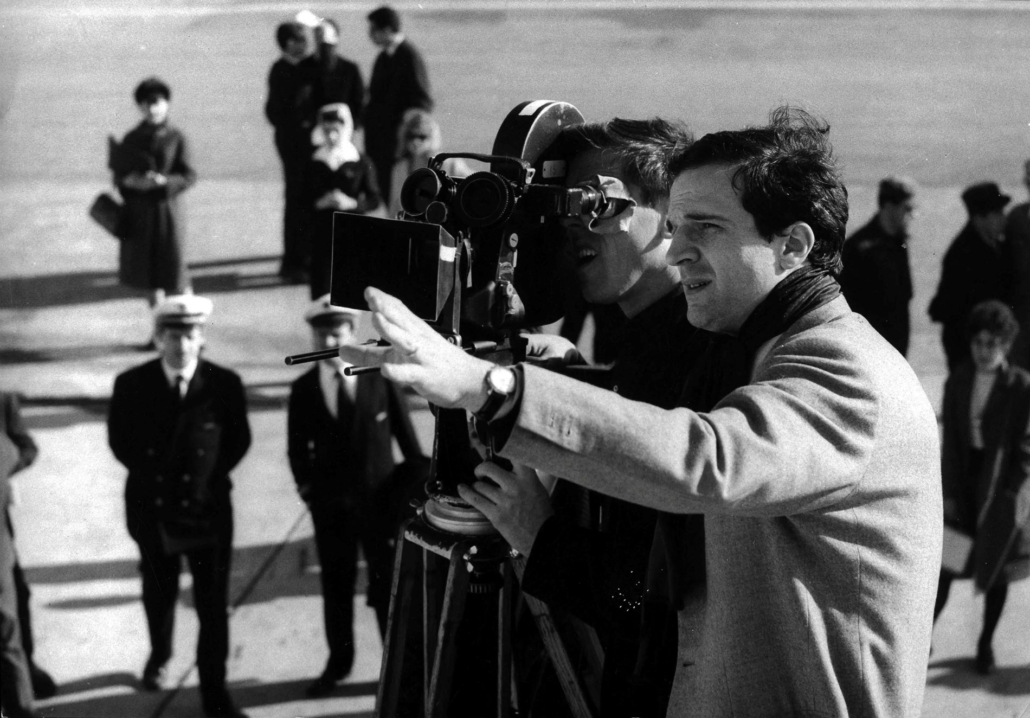
Read my previous Cinema Palette columns!
Cinema Palette! My Year Watching Every Ingmar Bergman Film!
Cinema Palette: William Lustig’s MANIAC PULP!
Cinema Palette: A Look Back At All The Films Of David Lynch!
*All of the above reviews have come from my personal Letterboxd account where I’ve gotten back into the habit of reviewing all of the films I watch. Please feel free to follow along: https://letterboxd.com/IconsRobG/
Blog Posts Archive
2026
- An Introduction Into THAI HORROR! 8 Features To Start With!
- Cinema Palette: Directed By François Truffaut!
- Cinema Palette: A Look Back At All The Films Of David Lynch!
- Why Can’t Anyone Get ‘THE MUMMY’ Right? A RETROSPECTIVE!
- FREDDY IN 4K! A Look Back At The ‘NIGHTMARE ON ELM STREET’ Franchise!
- FLASHBACK: SLIPPED DISC, The Record Store That Made Me!
- A Return To Practical Action! A Look At Netflix’s “LOST BULLET” Trilogy!
- Cinema Palette: William Lustig’s MANIAC PULP!
- REVISITING THE CREATURE FROM THE BLACK LAGOON TRILOGY!
- FLASHBACK: The Movie Theater From Childhood That Made Me
- RobServations: The ART of CINEMA and the CINEMAS of PARIS, FRANCE!
- Konbini Vidéo Club in Paris, France! Robert Galluzzo’s Movie Picks!
- BoogeyMan Ben Presents: Discussing “The Psycho Legacy!”
- Cinemas In Paris! (JANUARY 2026 Edition)
2025
- Favorite Films of 2025!
- Cinema Palette! My Year Watching Every Ingmar Bergman Film!
- My Rejected Teaser Trailer for THE MAN WHO KILLED HITLER AND THEN THE BIGFOOT
- Talking ICONS OF FRIGHT, ANALOG LOVE, and PSYCHO LEGACY on Midnight Metal!
- THE PSYCHO LEGACY Is Finally Streaming FREE On YouTube For Our 15th Anniversary & As Our Halloween Treat For You!
- Watch All FOUR Episodes Of “Frights & Insights!” My LOST Hulu Series!
- Watch (Or Listen) To All FIVE Episodes Of The ICONS OF FRIGHT Podcast!
- The ICONS OF FRIGHT BOOK Is HERE!!!
- MY SONG IN Episode 7 of “DEXTER: RESURRECTION!!” Kill Your Ego by PIKE PROJECT!!
- CinemaCon 2025: A RobServations Report!
- We Made “DEATH OF A UNICORN” Back In 2012!
- Hitchcock’s PSYCHO Legacy! A PSYCHO Panel Hosting by Horror 101 with Dr. AC!
2024
- Favorite Films Of 2024!
- 2024, The Master Playlist… Is Here! My Favorite Music Of The Year in 8 Parts!
- Behind-The-Scenes Of The “HALLOWEEN II” Audio Commentary Recording with Dick Warlock
- The First Ever FRIGHT NIGHT Reunion Panel! FEAR FEST 2, Dallas TX, 3/8/2008
- ROBSERVATIONS! My First Podcast Appearance In Over 4 Years
- Behind-The-Scenes Of “THE HOUSE OF THE DEVIL”
- FAMOUS MONSTERS And The Return Of The “Monster Kid” Within
- Behind-The-Scenes of BEREAVEMENT: MALEVOLENCE 2
- CinemaCon 2024 Report!
- Behind-The-Scenes of Drew Daywalt’s KART DRIVER
2023
- Favorite Physical Media Releases Of 2023!
- Favorite Films Of 2023
- A HALLOWEEN FRANKENSTEIN PARTY! 6 MOVIE MARATHON!
- CinemaCon 2023 Report!
2022
2020
- VHS oddities, not available on Blu-Ray. 📼
- I Love THE BOONDOCK SAINTS Movies, And Don’t Care That You Don’t
- GROOVY! The Actual Necronomicon BOOK OF THE DEAD From EVIL DEAD 2013!
2019
- SHOCK WAVES Live! Top 5 Favorite Horror VHS with Gary Pullin: TEXAS FRIGHTMARE 2019
- TEXAS FRIGHTMARE 2019: SILENT NIGHT, DEADLY NIGHT Panel
2018
- Penn Jillette & Adam Rifkin Talk Director’s Cut in Exclusive New Clip
- TEXAS FRIGHTMARE 2018: SAW Reunion Panel
2017
- Adam Rifkin With End Of Year UPDATE on DIRECTOR’S CUT!
- My 10 Favorite (Non-Horror Genre) Movies Of 2017!
- TEXAS FRIGHTMARE 2017: A Q & A with Dean Cundey
- TEXAS FRIGHTMARE 2017: THE BATES MOTEL PANEL!
2016
- BATMAN RETURNS Is the Most Tim Burton-esque Movie Tim Burton Has Ever Made
- Behind The Scenes Of THE SERPENT & THE RAINBOW Commentary
2015
2014
- WE COME IN PIECES: THE REBIRTH OF THE HORROR ANTHOLOGY FILM
- KILLER POV Live Podcast Episode 58: TEXAS FRIGHTMARE 2014
- TEXAS FRIGHTMARE 2014: The CREATURE FROM THE BLACK LAGOON Panel

